How to Identify the Part of the Cow for Roast Beef
To identify the part of the cow for roast beef, focus on key signs like marbling, fat distribution, and muscle location. Cuts from the rib or loin, such as prime rib and sirloin, are tender and have good marbling, making them ideal choices. In contrast, shoulder and round cuts tend to be tougher and require slow cooking to enhance tenderness.
Look for bright, firm meat with white fat streaks, which indicate freshness. Matching the cut to the appropriate cooking method helps guarantee both flavor and tenderness. Keep exploring to find the perfect roast for your meal.
Key Criteria to Choose the Best Roast Beef Cuts
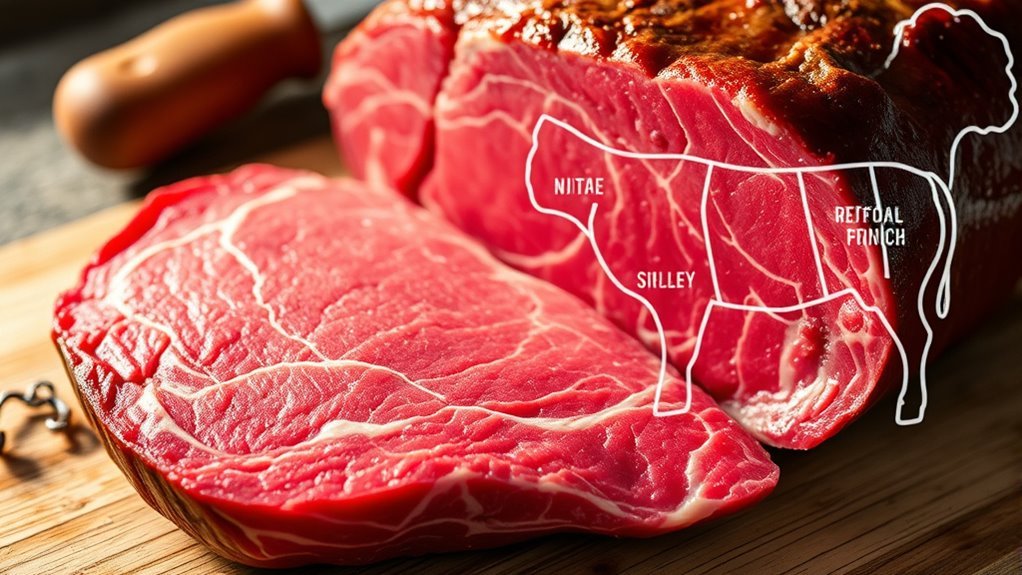
Although many cuts of beef can be roasted, you’ll want to focus on those that balance tenderness, flavor, and fat content. When choosing your cut, look for marbling—the small streaks of fat within the meat—as it enhances juiciness and taste.
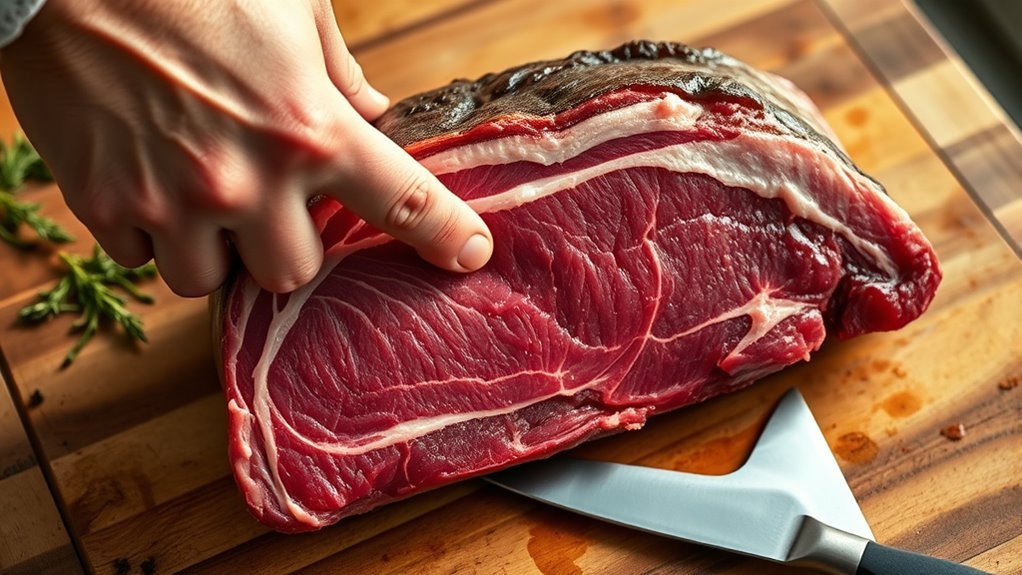
Also, consider the size and shape; uniform cuts cook more evenly, making your roast easier to manage. Check the color: a bright, cherry-red hue indicates freshness. Avoid cuts with excessive connective tissue, as they can become tough.
Finally, think about the cooking method you’ll use, since some cuts perform better with slow roasting, while others suit quicker methods.
Why Some Roast Beef Cuts Are More Tender Than Others
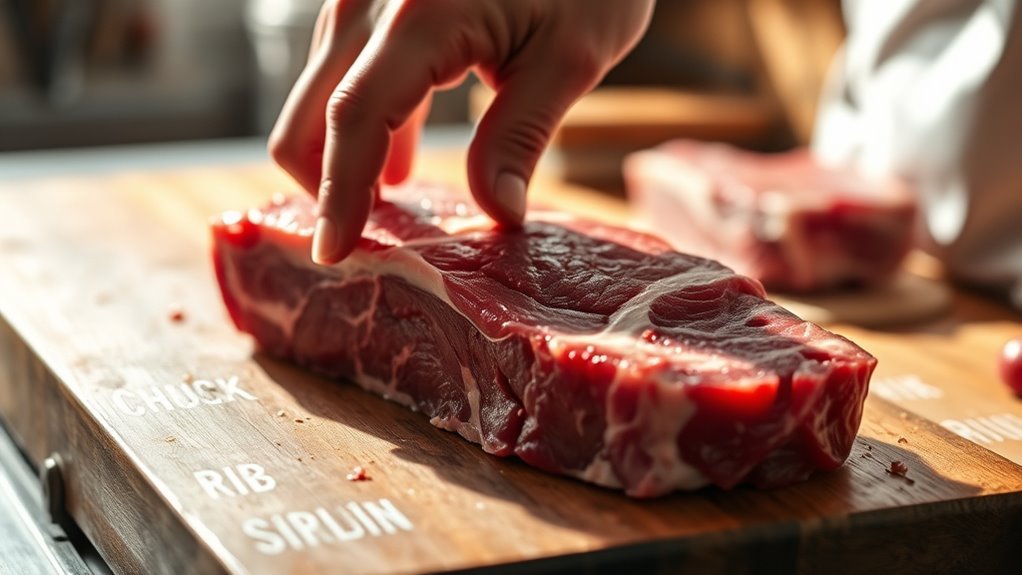
You’ll notice some roast beef cuts feel more tender because the muscles in those areas get less exercise.
Cuts with more marbling, or fat running through the meat, also tend to be juicier and softer.
Understanding these factors helps you pick the best cut for your roast.
Muscle Usage Impact
Because muscles that work harder develop tougher fibers, the location of a cut on the cow considerably affects its tenderness. When you choose roast beef, cuts from muscles that perform less work—like the rib or loin—tend to be more tender.
Conversely, cuts from heavily used muscles, such as the shoulder or round, are firmer and require longer cooking to break down the connective tissue. This means you’ll want to select cuts based on how you plan to cook your roast.
If you’re aiming for a tender, quick-cooking roast, pick cuts from muscles that don’t get much exercise. But if you prefer slow roasting or braising, tougher cuts from more active muscles can yield flavorful results with the right technique.
Understanding muscle usage helps you make smarter choices when selecting roast beef.
Marbling and Fat Content
When you’re selecting roast beef, understanding marbling—the thin streaks of fat within the muscle—can make all the difference in tenderness and flavor. Cuts with more marbling tend to be juicier and softer because fat melts during cooking, enhancing taste and texture.
Conversely, leaner cuts might be tougher but offer a different flavor profile. Knowing the fat content helps you pick the right roast for your meal.
| Cut | Marbling Level | Fat Content (%) |
|---|---|---|
| Ribeye | High | 15-20 |
| Sirloin | Moderate | 8-12 |
| Round | Low | 4-8 |
| Chuck | High | 18-22 |
| Tenderloin | Very Low | 2-5 |
Choose based on your desired tenderness and richness.
Identifying the Prime Rib: The Classic Roast Beef Cut
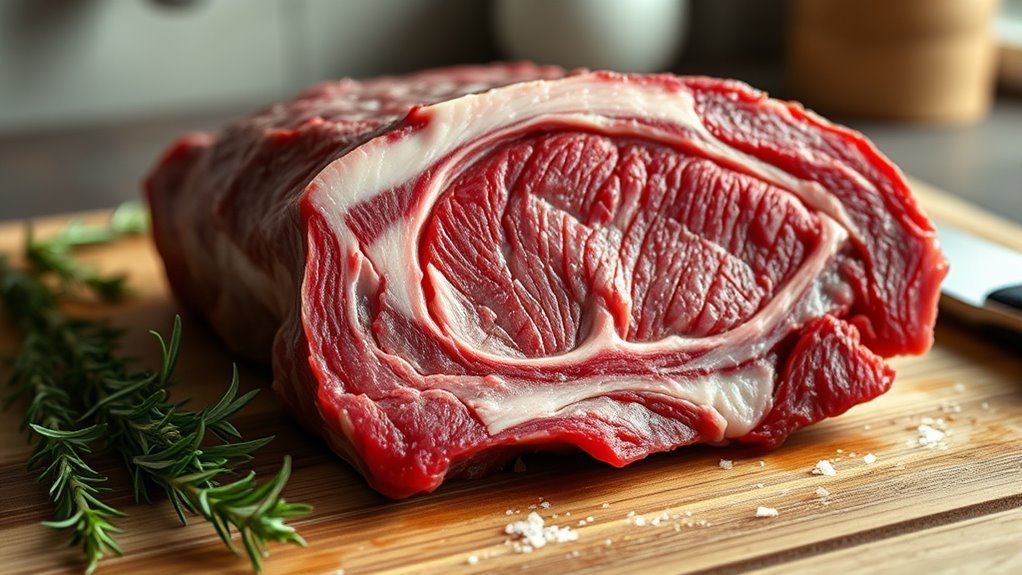
Although prime rib might seem intimidating at first, recognizing this classic roast beef cut becomes straightforward once you know what to look for.
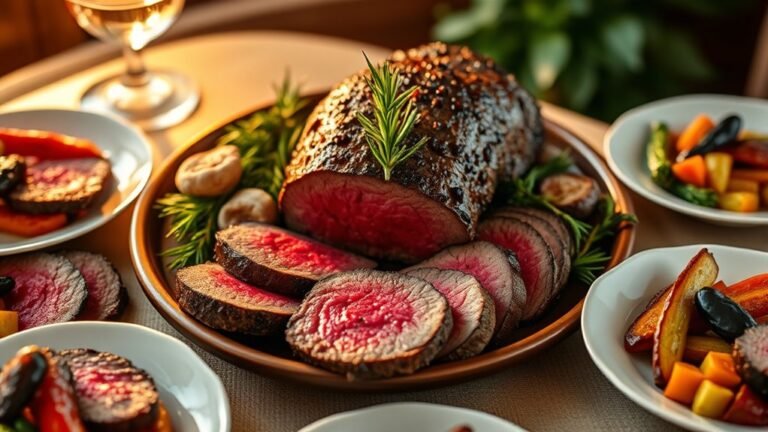
Prime rib comes from the rib section of the cow, specifically ribs six through twelve. You’ll notice it has excellent marbling, which adds rich flavor and tenderness.
The cut typically includes a thick layer of fat on the outside, helping keep the meat juicy during roasting. When you see a large, bone-in roast with visible fat and well-distributed marbling, you’re likely looking at prime rib.
Remember, prime rib is prized for its balance of flavor, tenderness, and juiciness, making it a favorite choice for special occasions.
Identifying it correctly guarantees you pick the perfect cut for your roast beef.
Understanding Sirloin and Its Roasting Qualities
If you want a roast beef cut that’s lean yet flavorful, sirloin is an excellent choice. This section of the cow sits near the rear, offering a balance between tenderness and a robust beef flavor.
When roasting sirloin, you’ll appreciate its moderate fat content, which helps keep the meat juicy without being overly rich.
Its firm texture means it holds up well to dry heat, so roasting at moderate temperatures brings out the best in this cut.
To maximize tenderness, consider marinating or using a meat thermometer to avoid overcooking.
Sirloin roasts cook faster than larger cuts like prime rib, making them ideal if you want a delicious, efficient roast that delivers both taste and a satisfying bite.
When to Pick Chuck Roast for Flavorful Roast Beef
While sirloin offers a lean and tender option for roast beef, chuck roast brings a different kind of appeal with its rich marbling and deep flavor.
Sirloin is lean and tender, but chuck roast captivates with rich marbling and bold, deep flavor.
You should pick chuck roast when you want a cut that stands up well to slow cooking, allowing the fat and connective tissues to break down and infuse the meat with juiciness and taste.
If you’re aiming for a roast that’s flavorful and hearty, chuck is your go-to. It’s ideal for braising or slow roasting at lower temperatures.
However, avoid chuck if you want a quick roast since it requires longer cooking times to become tender.
Choosing chuck roast means committing to a slower approach, but the rich, beefy flavor you’ll get is well worth it.
Brisket and Round Cuts for Roast Beef Variations
You’ll find brisket offers rich flavor thanks to its fat content, while round cuts are leaner with a milder taste.
Knowing these differences helps you choose the right cut for your preferred roast beef style.
Let’s compare how each cut responds to various cooking methods to get the best results.
Brisket Characteristics Explained
Because the brisket comes from the lower chest of the cow, it has a unique texture and flavor that sets it apart from other roast beef cuts. You’ll notice it’s tougher due to the muscle use, requiring slow cooking to tenderize. Its rich, beefy taste holds up well to smoking and braising, making it perfect for hearty meals.
| Characteristic | Description | Cooking Tip |
|---|---|---|
| Location | Lower chest | Requires slow cooking |
| Texture | Tough, fibrous | Use braising or smoking |
| Flavor | Rich, beefy | Enhances with spices |
| Fat Content | Moderate, with a fat cap | Retains moisture |
| Best Uses | BBQ, pot roast, corned beef | Cook low and slow |
Knowing brisket’s traits helps you pick the right method for great roast beef.
Round Cut Flavor Profiles
Brisket offers a distinct taste and texture, but the round cuts bring their own unique qualities to roast beef. When you choose round cuts like the top round, bottom round, or eye of round, expect a leaner profile with a mild, slightly beefy flavor.
These cuts have less marbling than brisket, so their texture is firmer and denser.
You’ll notice that round cuts are versatile; they absorb marinades well, enhancing subtle flavors without overpowering the natural beef taste.
If you prefer roast beef with a cleaner, more straightforward beef flavor and less fat, round cuts are a great pick.
Just remember, their lower fat content means they benefit from careful preparation to avoid toughness and bring out their best flavor.
Cooking Methods Comparison
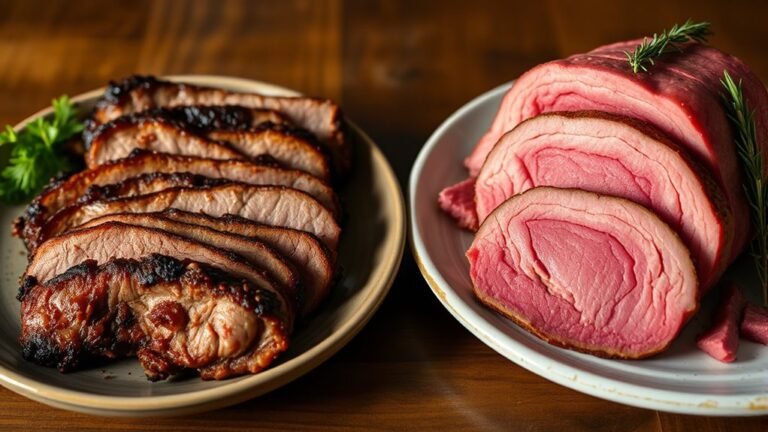
When choosing how to cook your roast beef, understanding the differences between brisket and round cuts can make all the difference. Brisket, rich in connective tissue, shines with slow, moist cooking methods, while round cuts are leaner and suit quicker, dry heat techniques.
Here’s a quick comparison to help you decide:
| Aspect | Brisket | Round Cuts |
|---|---|---|
| Texture | Tough, needs breaking down | Lean, firm |
| Best Method | Slow roasting, braising | Roasting, grilling |
| Cooking Time | Long (3-6 hours) | Shorter (1-2 hours) |
| Flavor | Deep, beefy | Mild, slightly sweet |
| Ideal for | Pot roast, smoked roast | Classic roast beef slices |
Choose your cut and method based on texture and flavor preferences for perfect roast beef every time.
How to Spot Fresh, High-Quality Roast Beef Cuts
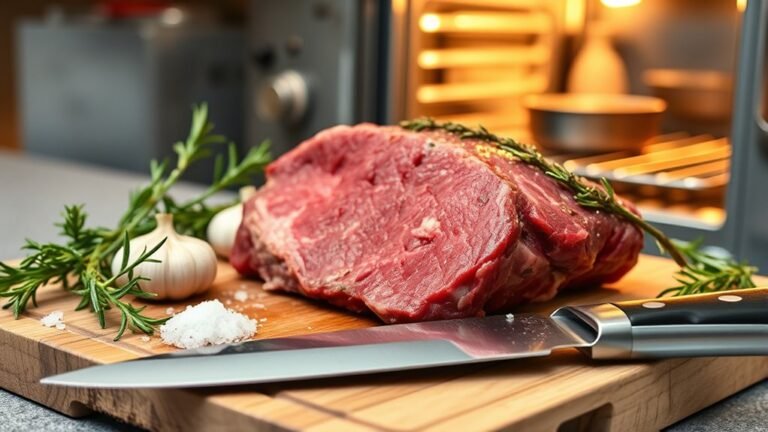
Although selecting roast beef cuts might seem straightforward, spotting fresh, high-quality meat requires a keen eye. To guarantee you pick the best roast beef, focus on these key factors:
- Color: Look for a bright, cherry-red hue, which indicates freshness. Avoid dull or brownish meat.
- Marbling: Check for fine, white fat streaks evenly distributed throughout the cut. Marbling enhances flavor and tenderness.
- Texture: The meat should feel firm but slightly springy, not slimy or sticky, which signals spoilage.
- Smell: Fresh roast beef has a mild, clean scent. Any sour or off odors mean the meat isn’t fresh.
How to Match Roast Beef Cuts to Cooking Methods
Since different roast beef cuts vary in tenderness and fat content, choosing the right cooking method will make all the difference in your final dish.
Selecting the appropriate cooking method for each roast beef cut transforms your meal’s texture and flavor.
For tender cuts like ribeye or tenderloin, quick roasting or grilling at high temperatures works best to preserve juiciness and flavor.
Tougher cuts, such as chuck or brisket, benefit from slow roasting or braising, which breaks down connective tissue and makes the meat tender.
If you have a sirloin roast, a moderate roasting temperature will balance tenderness and flavor.
Don’t forget to adapt cooking times based on the cut’s size and thickness.
Matching the cut to the proper method ensures you get the most out of your roast beef, delivering a delicious, perfectly cooked meal every time.
Frequently Asked Questions
How Long Should Roast Beef Rest Before Carving?
You should let roast beef rest for about 15 to 20 minutes before carving. This helps the juices redistribute, making the meat juicier and easier to slice without losing flavor or moisture.
What Are the Best Side Dishes for Roast Beef?
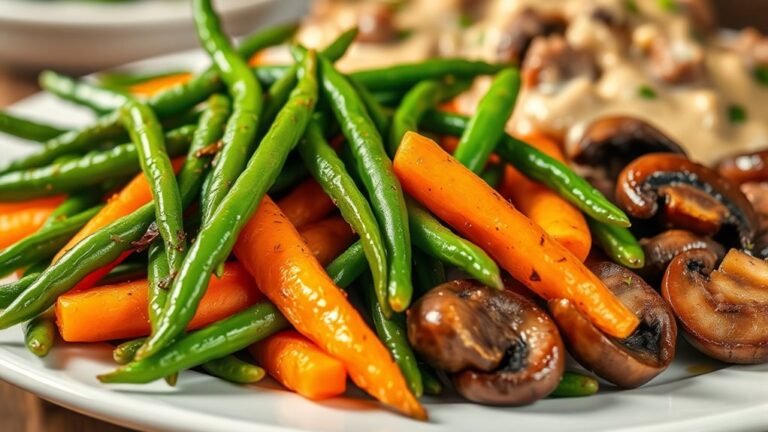
Don’t beat around the bush—roast beef pairs perfectly with garlic mashed potatoes, roasted vegetables, Yorkshire pudding, and a fresh green salad.
These sides’ll complement your beef and make your meal truly unforgettable.
Can Roast Beef Be Cooked in a Slow Cooker?
Yes, you can cook roast beef in a slow cooker. It’ll become tender and flavorful as it simmers low and slow.
Just add your seasonings, some broth, and let it do its magic for hours.
How Do You Store Leftover Roast Beef Properly?
You should let leftover roast beef cool, then wrap it tightly in foil or plastic wrap.
Store it in an airtight container in the fridge, and eat within 3-4 days for the best taste and safety.
What Seasoning Blends Enhance Roast Beef Flavor?
You’ll love seasoning roast beef with garlic, rosemary, thyme, and black pepper.
Don’t forget a touch of salt and maybe some smoked paprika or mustard powder to boost flavor.
You can’t go wrong with these blends!
Conclusion
Now that you know how to identify the best roast beef cuts, you might wonder if the most tender part always makes the tastiest roast. While prime rib is prized for tenderness, cuts like chuck can offer richer flavor despite being less tender. So, don’t just chase softness—consider flavor and cooking methods too.
Experiment with different cuts to find your perfect roast beef, and you’ll discover that the best choice depends on your taste and how you cook it. Understanding how to identify the part of the cow for roast beef helps you select the ideal cut for your recipe. This knowledge ensures a delicious and satisfying roast every time.