Is a Rooster Needed for Hens to Lay Eggs?
Imagine expecting a key player to show up for every performance, only to find the show goes on flawlessly without them. You might assume hens need roosters to lay eggs, but that’s not the case.
While roosters do play a role in fertilizing eggs, hens will lay eggs on their own schedule regardless. What exactly happens inside the hen that makes this possible?
How Hens Produce Eggs
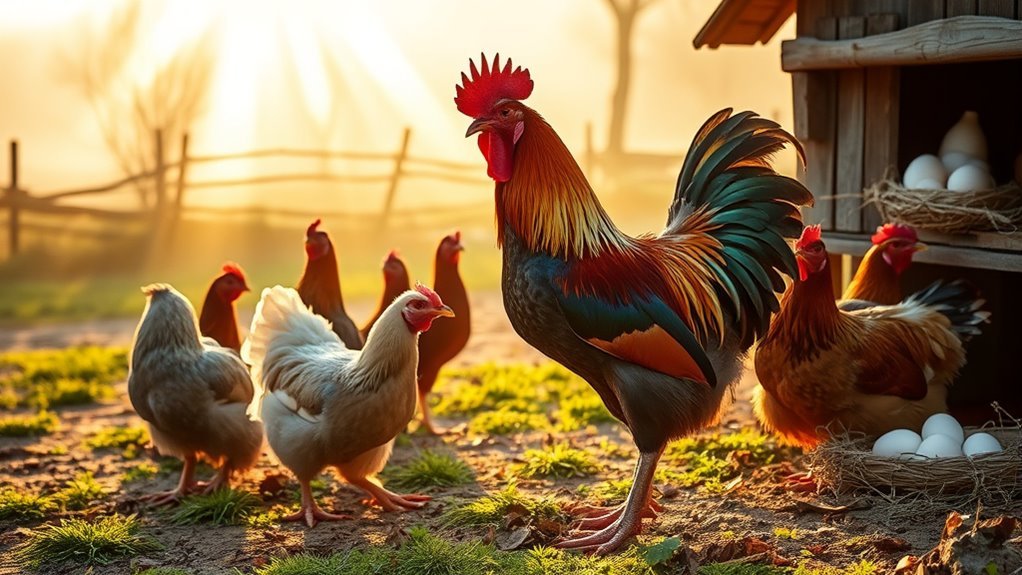
Although roosters are often associated with chickens, hens can produce eggs without them. When you watch a hen, her body is already prepared to lay eggs through a natural cycle.
Inside her, an ovary releases an ovum, or yolk, which then travels through the oviduct. As it moves along, layers of egg white, membranes, and finally the shell form around the yolk.
This entire process usually takes about 24 to 26 hours.
You’ll notice hens lay eggs regularly, even without a rooster present because fertilization isn’t necessary for egg formation. So, if you’re raising hens for eggs, you don’t need to worry about keeping a rooster just to get eggs.
The hen’s body does all the work needed to produce them.
The Role of Roosters in Egg Fertilization
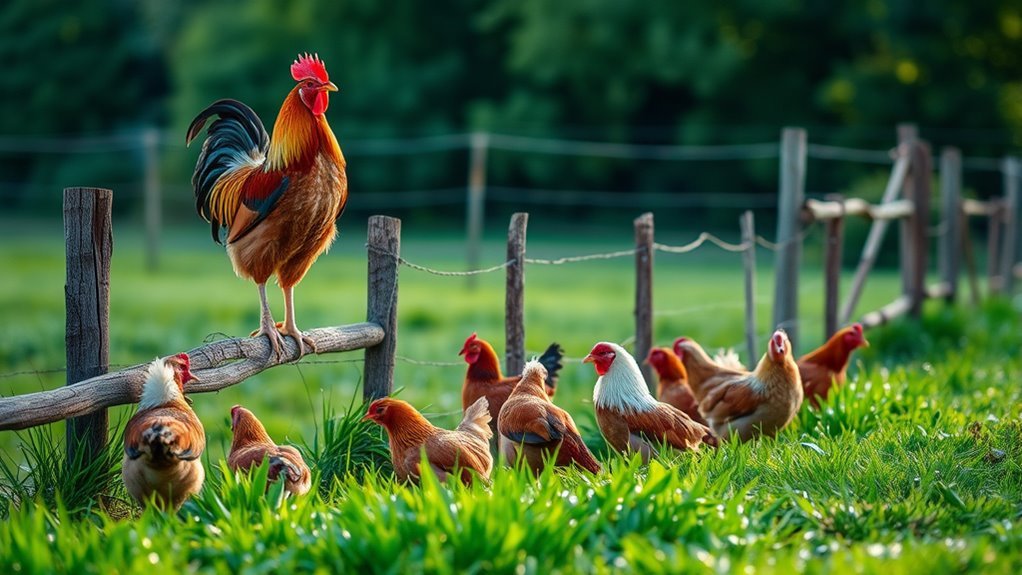
While hens can lay eggs without a rooster, you need a rooster if you want those eggs to be fertilized. A rooster’s primary role is to mate with hens, transferring sperm that fertilizes the eggs inside the hen’s reproductive tract.
Hens lay eggs without roosters, but a rooster is needed to fertilize eggs for chick development.
Once fertilized, the egg will develop into an embryo if incubated properly. Without a rooster, hens still produce eggs, but these eggs lack fertilization and won’t develop into chicks.
If you’re raising chickens and want to hatch chicks naturally, having a rooster around is essential. However, if your goal is simply to collect eggs for consumption, a rooster isn’t necessary.
Understanding this helps you manage your flock based on whether you want new chicks or just eggs.
Differences Between Fertilized and Unfertilized Eggs
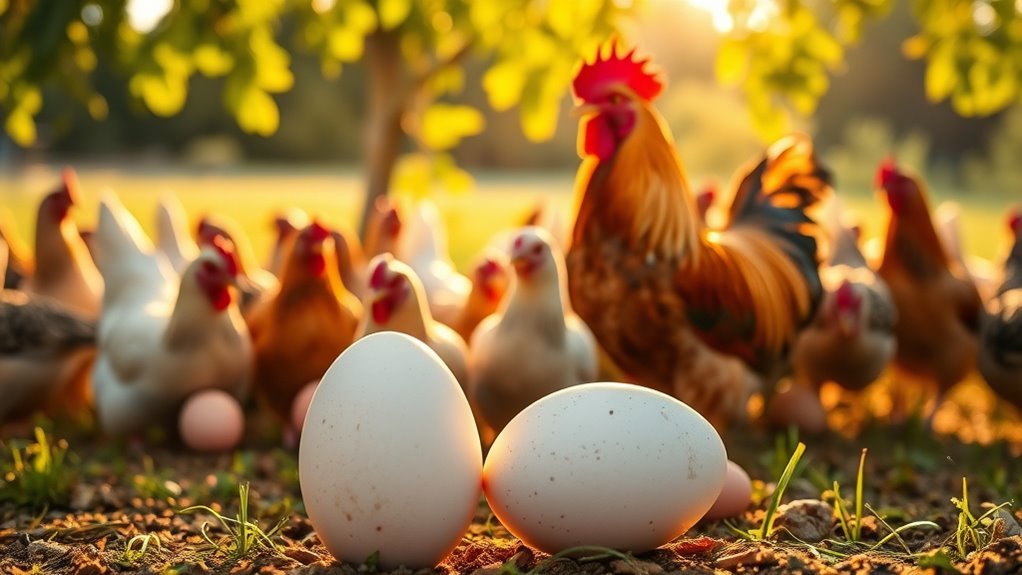
How can you tell the difference between fertilized and unfertilized eggs? At first glance, they look identical. Fertilized eggs result from a hen mating with a rooster, containing a developing embryo if incubated.
Unfertilized eggs come from hens without any rooster involvement and won’t develop into chicks. When you crack open either type for cooking, you usually won’t see visible differences.
However, if you carefully examine a fertilized egg early under bright light or a process called candling, you might spot a small white spot called the blastoderm, which looks like a bullseye.
Unfertilized eggs show a plain white spot called the blastodisc instead.
For everyday use, though, both eggs are safe and nutritious to eat, and you won’t notice much difference.
Why Hens Lay Eggs Without Roosters
You might wonder why hens lay eggs even when there’s no rooster around. The truth is, hens don’t need a rooster to produce eggs because egg-laying is part of their natural reproductive cycle.
Their bodies are programmed to develop and release eggs regularly, regardless of whether a rooster is present.
The eggs you see in the carton are unfertilized, meaning no chick will develop inside. Hens lay these eggs as their bodies prepare for potential fertilization, but without a rooster, fertilization doesn’t occur.
Benefits of Keeping a Rooster in Your Flock
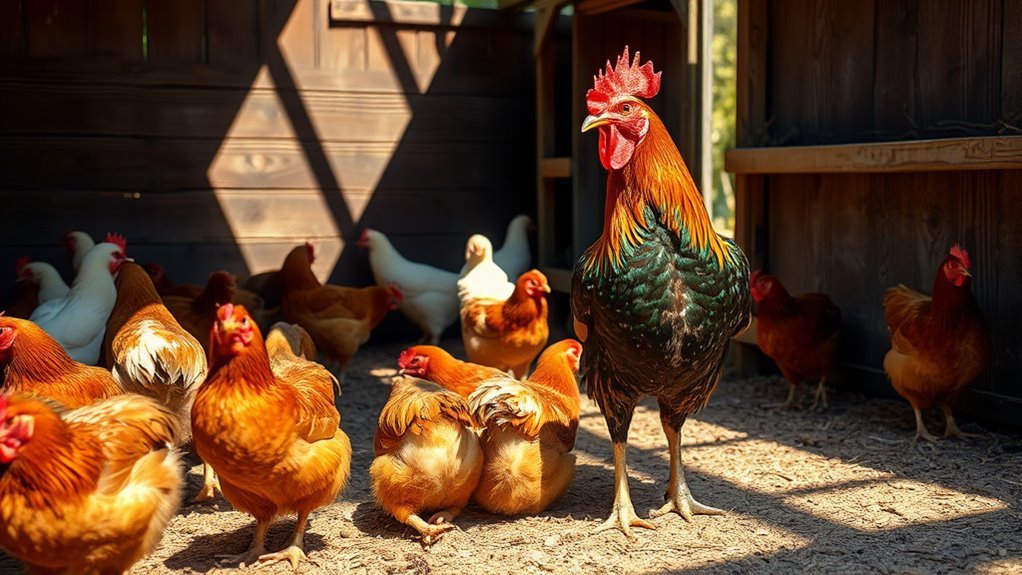
Even though hens don’t need roosters to lay eggs, keeping a rooster in your flock offers several important benefits. Roosters act as natural protectors, alerting you to predators and helping safeguard your hens.
Their presence often promotes a more orderly flock dynamic, reducing stress and aggression among hens. Additionally, roosters encourage hens to stay active and explore, which can improve their overall health.
If you plan to hatch chicks, a rooster is essential for fertilizing eggs.
Beyond practical reasons, many find roosters add character to their flock with their crowing and vibrant plumage.
What Happens to Eggs Without a Rooster
Although hens lay eggs without a rooster, those eggs won’t be fertilized and consequently can’t develop into chicks. When you collect eggs from a flock without a rooster, here’s what happens:
Hens lay eggs without a rooster, but these eggs are unfertilized and won’t develop into chicks.
- The eggs are simply infertile, meaning they won’t hatch no matter how long they’re incubated.
- You can eat these eggs without worry; they’re just like the ones you buy in stores.
- The eggs still contain all the usual nutrients and flavor, making them perfect for cooking or baking.
- Without fertilization, the eggs won’t develop any embryo, so you won’t see any embryos or blood spots forming inside.
In short, eggs from hens without a rooster serve as a reliable food source but won’t produce baby chicks.
Tips for Collecting and Storing Eggs From Hen-Only Flocks
Since eggs from hen-only flocks are intended for consumption rather than hatching, handling them properly guarantees they stay fresh and safe to eat. Collect eggs daily to prevent dirt buildup and discourage hens from broodiness. Use a clean basket or container with a soft lining to avoid cracking.
Avoid washing eggs immediately; instead, brush off debris gently. If you must wash them, do so with warm water just before use to preserve the natural protective coating. Store eggs in a cool, dry place, ideally in the refrigerator, with the pointed end down to keep the yolk centered.
Label containers with the collection date to monitor freshness. Following these tips will help you enjoy fresh, safe eggs from your hen-only flock every time.
Frequently Asked Questions
How Often Do Hens Typically Lay Eggs Without a Rooster?
You’ll find hens typically lay about one egg every 24 to 26 hours without a rooster. They don’t need a rooster to lay eggs; however, those eggs won’t be fertilized for hatching chicks.
Can Hens Lay Eggs During Winter Without a Rooster?
Yes, hens can lay eggs during winter without a rooster, though they’ll lay fewer eggs due to shorter daylight and colder temperatures. You can help by providing extra light and warmth to encourage consistent laying throughout winter.
What Is the Average Lifespan of a Laying Hen?
You might think hens live just a year or two, but they typically lay eggs for 2 to 3 years and can live 5 to 8 years, depending on care. So, expect several productive years with your hen.
Do Hens Need Special Nutrition to Lay Eggs Regularly?
Yes, you’ll need to provide hens with balanced nutrition rich in protein, calcium, and vitamins to guarantee regular egg-laying. Quality feed, fresh water, and occasional supplements keep them healthy and productive.
How Can You Tell if a Hen Is Healthy and Productive?
Like a shining star in your coop, a healthy hen has bright eyes, smooth feathers, and a lively attitude. You’ll see her laying regularly, eating well, and moving energetically around her space every day.
Conclusion
You don’t need a rooster to enjoy fresh eggs from your hens—they’ll happily keep laying without one. While a rooster adds a little extra sparkle by creating future chicks, your breakfast won’t miss a beat without him.
So, whether you’re after daily egg delights or dreaming of a growing flock, your hens have you covered. Just gather those treasures regularly, and you’ll always have nature’s little gifts ready to enjoy.
In conclusion, a rooster is not required for hens to lay eggs. If you want fertilized eggs for chicks, then a rooster is useful, but for fresh eggs, hens alone are sufficient.