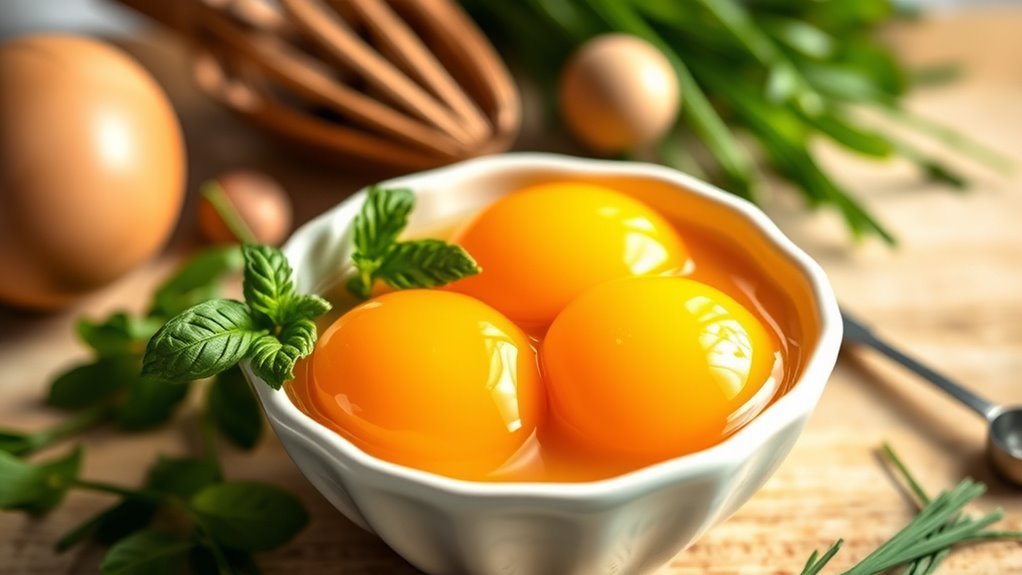
How Can You Use Egg Yolks in the Kitchen?
When you work with egg yolks, you tap into a powerful ingredient that brings richness and texture to many dishes. Egg yolks are essential in the kitchen for adding creaminess, thickening sauces, and enhancing flavor. They’re not just for baking; yolks can thicken sauces, bind ingredients, and add a silky finish to your creations.
Whether you’re crafting a creamy custard or a glossy pastry glaze, understanding how to use egg yolks can elevate your cooking in surprising ways. Let’s explore some practical uses you might not have considered.
Enhancing Sauces and Dressings
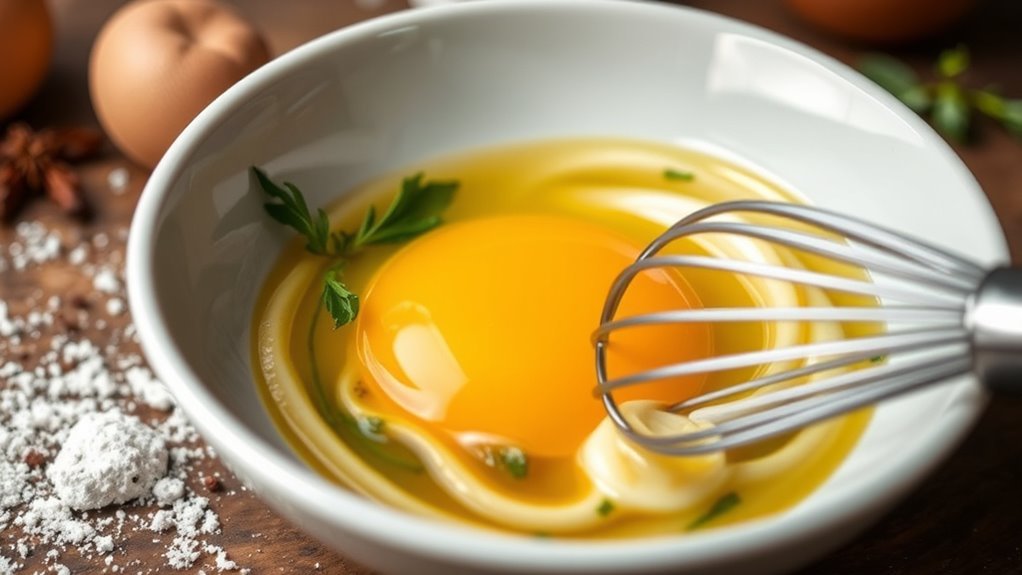
When you add egg yolks to sauces and dressings, you instantly boost their richness and texture. Egg yolks act as natural emulsifiers, helping oil and water-based ingredients blend smoothly.
For example, when making mayonnaise or hollandaise, whisking in egg yolks creates a creamy consistency that won’t separate. You can gently cook yolks to thicken sauces without curdling, giving you control over the final texture.
Just be sure to temper the yolks by slowly adding hot liquid while whisking to avoid scrambling.
Plus, egg yolks add a subtle depth of flavor that enhances savory dressings and sauces.
Making Rich Custards and Puddings
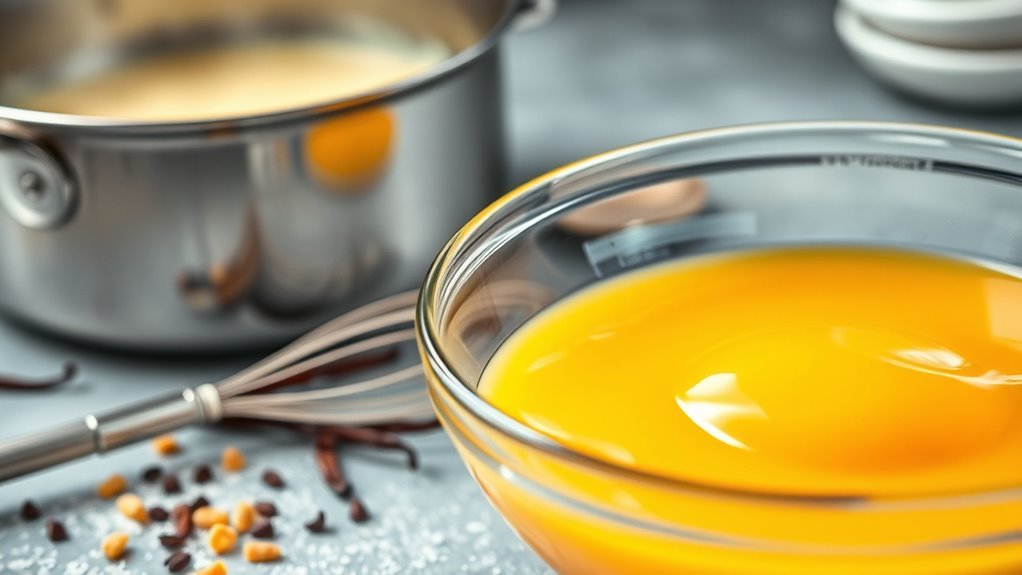
How do egg yolks transform simple ingredients into silky custards and creamy puddings? When you whisk egg yolks with sugar and gently heat the mixture, the proteins coagulate, thickening the liquid into a smooth, velvety texture.
Their natural fat content adds richness, giving custards and puddings a luscious mouthfeel you won’t get otherwise. You’ll want to temper the yolks by slowly adding warm milk or cream to prevent curdling.
Then, cook the mixture over low heat, stirring constantly until it coats the back of a spoon. This process creates a stable, creamy base perfect for desserts like crème brûlée or chocolate pudding.
Using egg yolks not only enhances texture and flavor but also guarantees your custards set beautifully without becoming grainy or watery.
Creating Creamy Ice Cream Bases
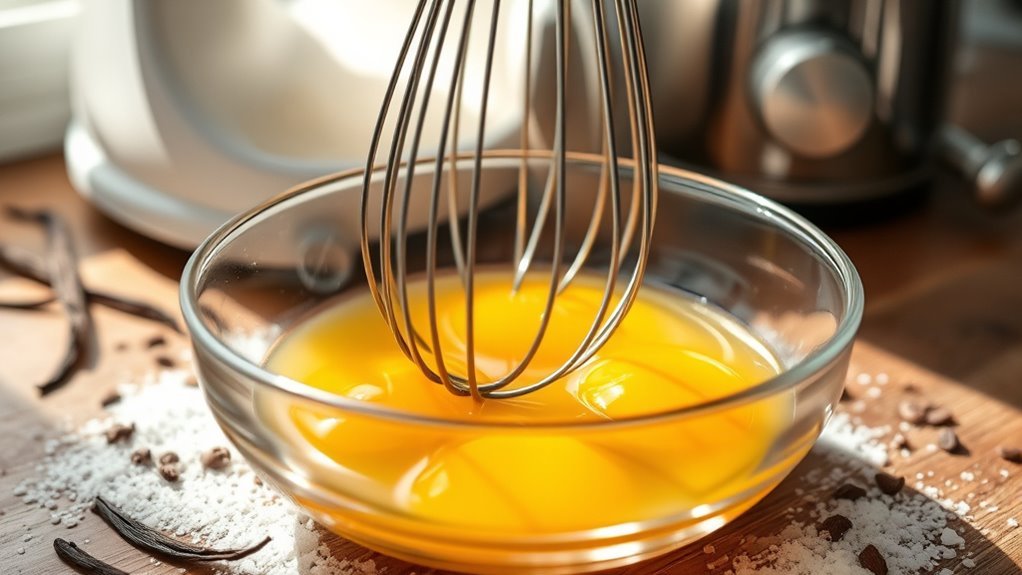
Because egg yolks contain natural emulsifiers, you can create ice cream bases that are incredibly smooth and creamy. When making your base, start by gently heating cream and milk, then slowly whisk in beaten yolks to prevent curdling.
This process thickens the mixture while adding richness.
Here’s how to get the perfect texture:
- Temper the yolks by gradually adding warm milk to avoid scrambling.
- Cook the mixture over low heat until it coats the back of a spoon, creating a luscious custard.
- Chill thoroughly before churning to ensure smoothness and prevent ice crystals.
Using egg yolks not only enhances creaminess but also stabilizes the ice cream, giving you that melt-in-your-mouth experience every time.
Preparing Homemade Mayonnaise
Egg yolks do more than enrich desserts; they also serve as the foundation for creamy, homemade mayonnaise. When you whisk egg yolks vigorously, their natural emulsifying agents help blend oil and vinegar or lemon juice into a smooth, stable sauce.
To make mayonnaise, start by beating the yolks with a pinch of salt and a bit of mustard for flavor and added emulsification. Slowly drizzle in oil while continuously whisking to prevent separation.
As the mixture thickens, adjust acidity with more vinegar or lemon juice and season to taste. Using fresh, high-quality egg yolks ensures a rich texture and vibrant color.
Homemade mayonnaise offers a superior taste and texture compared to store-bought versions, and you can customize it with herbs or spices to suit your dishes perfectly.
Binding Ingredients in Meatballs and Patties
When you’re making meatballs or patties, yolks play a crucial role by binding the ingredients together. They act as a natural glue, ensuring your mixture holds its shape and cooks evenly without falling apart.
Here’s why you should rely on egg yolks:
- Moisture retention: Yolks add just the right amount of moisture, preventing dry, crumbly meatballs.
- Texture improvement: They create a tender, cohesive texture that makes each bite satisfying.
- Flavor enhancement: The rich, creamy nature of yolks subtly elevates the overall taste of your dish.
Enriching Baked Goods and Pastries
Beyond binding meatballs and patties, yolks bring a rich, velvety quality to baked goods and pastries. When you add yolks to doughs or batters, they enhance texture and moisture, resulting in tender cakes, flaky pie crusts, and soft cookies.
Yolks also contribute to a golden color and subtle flavor depth you can’t achieve with whites alone. If you’re making custards, tarts, or brioche, incorporating yolks gives that signature creaminess and structure.
Plus, brushing a yolk wash on pastries before baking creates a shiny, appetizing finish. So, don’t toss leftover yolks. Use them to elevate your baking. They’re a simple secret to making your treats richer, more luscious, and visually stunning every time.
Crafting Classic Hollandaise Sauce
Although it might seem intimidating at first, crafting classic hollandaise sauce is simpler than you think and a great way to showcase the rich flavor and creamy texture of egg yolks.
Start by whisking egg yolks with lemon juice over gentle heat to create a warm, silky base.
Slowly drizzle in melted butter while continuously whisking to emulsify the sauce, ensuring it thickens without curdling.
Finally, season with salt and a pinch of cayenne pepper for a subtle kick.
Here’s how to visualize the process:
- A smooth, pale yellow mixture thickening over a double boiler.
- A steady stream of golden butter blending into the yolks.
- A velvety, glossy sauce coating the back of a spoon.
Mastering this elevates dishes like eggs Benedict and steamed asparagus.
Thickening Soups and Stews
Using egg yolks to create rich sauces like hollandaise shows just how versatile they can be in the kitchen. You can also use them to thicken soups and stews, adding a silky texture and depth of flavor.
To do this, temper the egg yolks by slowly whisking in a bit of hot soup to warm them up without scrambling. Then, gradually stir the tempered yolks back into the pot off the heat or on very low heat.
This technique gently thickens the liquid without curdling. Be sure to stir constantly and avoid boiling after adding the yolks.
The result is a creamy, luscious consistency that elevates your dish, making it both comforting and elegant with minimal effort.
Glazing Breads and Pastries
When you want to give your breads and pastries a shiny, golden finish, egg yolks are your secret weapon. Before baking, brush a thin layer of beaten egg yolk over the surface. This simple step transforms ordinary dough into an eye-catching masterpiece.
Here’s how to nail the perfect glaze:
- Use a fresh egg yolk mixed with a teaspoon of water or milk for smooth application.
- Apply evenly with a pastry brush, covering every inch without drips.
- Bake immediately after glazing to lock in the luster and color.
This technique works wonders on croissants, brioche, and pie crusts, enhancing both appearance and texture.
Next time you bake, don’t skip this quick, impactful step—your creations will look bakery-perfect every time.
Adding Moisture and Flavor to Pasta Dough
Brushing egg yolks onto pastries gives them a beautiful finish, but egg yolks do much more in the kitchen. They can also improve your pasta dough. When you add egg yolks, you boost moisture and enrich the flavor, creating a tender, silky texture that’s hard to beat.
Yolks also add a vibrant color, making your pasta visually appealing. Here’s a quick look at how egg yolks impact pasta dough:
| Benefit | Effect on Pasta Dough |
|---|---|
| Moisture | Creates a soft, pliable dough |
| Flavor | Adds richness and depth |
| Color | Gives a golden hue |
| Texture | Makes dough silkier and smoother |
Next time you make pasta, try adding extra yolks to elevate your dish.
Frequently Asked Questions
Can Egg Yolks Be Used to Clarify Broths?
Yes, you can use egg yolks to clarify broths. You’ll whisk them with cold broth, then gently heat the mixture. The yolks trap impurities, creating a clear, flavorful broth you’ll love in soups and sauces.
How Do You Store Leftover Egg Yolks Properly?
You should store leftover egg yolks in an airtight container, cover them with a little water to prevent drying, and keep them in the fridge. Use them within two days for the best freshness and safety.
Are Egg Yolks Safe to Consume Raw?
Eating raw egg yolks is risky because they can contain Salmonella. Think of it like walking a tightrope—some do it safely, but most avoid the fall. Always use pasteurized yolks to stay safe.
Can Egg Yolks Be Used in Homemade Face Masks?
Yes, you can use egg yolks in homemade face masks. They nourish and moisturize your skin, thanks to their vitamins and fats. Just mix with honey or yogurt, apply, leave for 10-15 minutes, then rinse gently.
How Long Do Egg Yolks Last in the Refrigerator?
Just like a telegram from the past, egg yolks last about 2 days in your refrigerator. Be sure you store them in an airtight container, and don’t let them linger too long to keep them fresh and safe.
Conclusion
You might be surprised to learn that nearly 70% of professional chefs rely on egg yolks to perfect their sauces and desserts. By mastering their use, you’ll unleash endless possibilities in your kitchen—from creamy custards to rich hollandaise and shiny pastry glazes.
Don’t overlook the power of egg yolks; they’re your secret weapon for adding flavor, texture, and elegance to everyday dishes. Give them a try, and watch your cooking transform! Using egg yolks in the kitchen not only enhances taste but also elevates the overall appeal of your meals.