How Do You Incubate Chicken Eggs at the Ideal Temperature
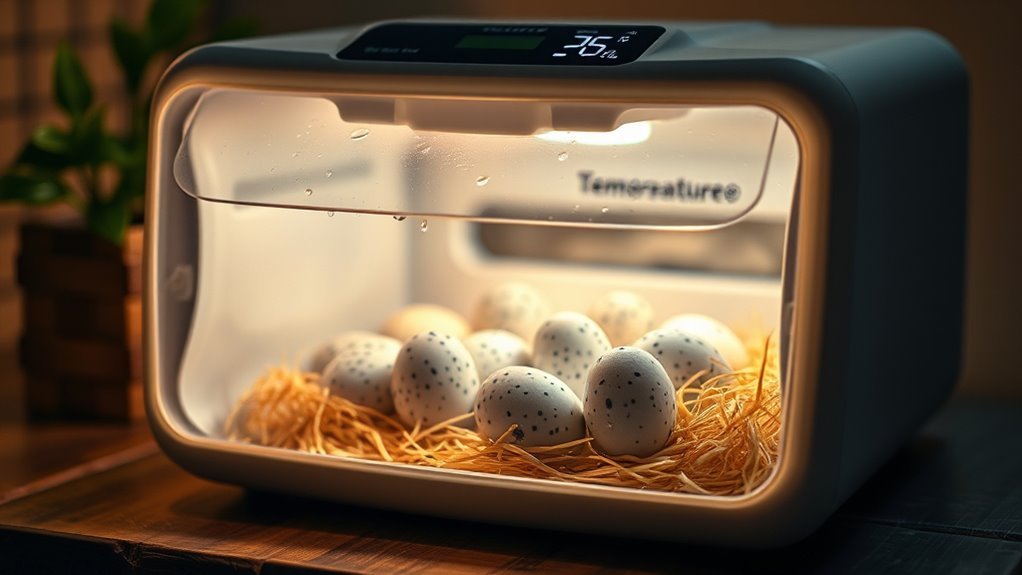
If you want to successfully incubate chicken eggs, maintaining the ideal temperature is key. Proper temperature control is essential for healthy embryo development and successful hatching. Balancing warmth without overheating can be tricky but is critical during incubation.
Setting up your incubator correctly ensures consistent heat distribution. It’s important to keep a close eye on temperature fluctuations throughout the process. Small changes in temperature can significantly affect your eggs.
Before you start incubating, consider how slight variations influence embryo growth. Using reliable tools like thermometers and hygrometers can help you maintain the perfect environment. Consistent monitoring and adjustments will increase your chances of a successful hatch.
Understanding the Ideal Temperature Range for Incubation
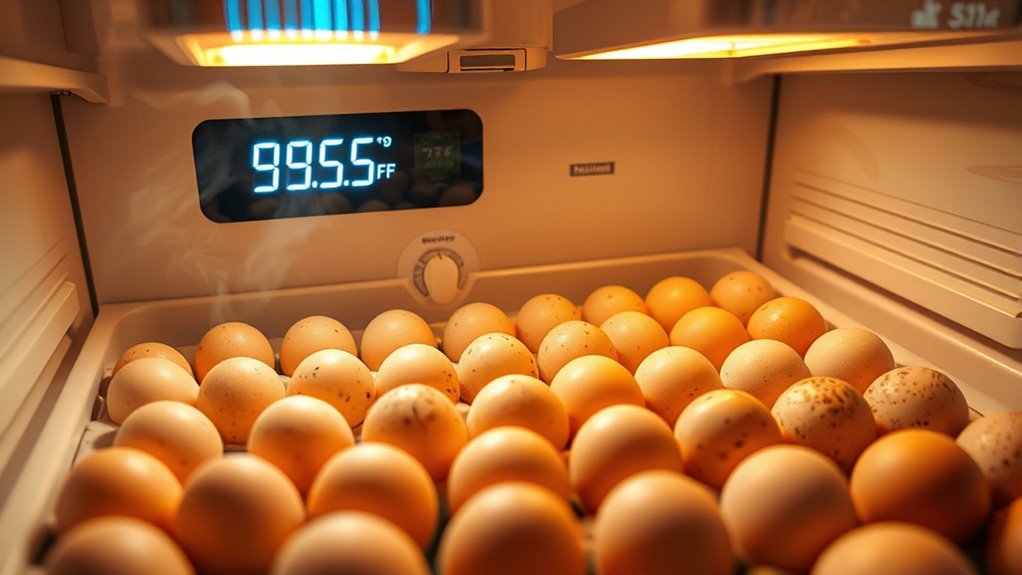
Although maintaining the right temperature might seem simple, it’s crucial for successful chicken egg incubation. You need to keep the temperature steady between 99.5°F and 100°F (37.5°C to 37.8°C).
Temperatures outside this range can harm embryo development. Too low, and growth slows; too high, and embryos may die. It’s important to avoid fluctuations. Even brief temperature drops or spikes can reduce hatch rates or cause deformities.
You should aim for consistent warmth throughout the entire incubation period, usually 21 days. Using a reliable thermometer helps you monitor the temperature accurately.
Setting Up Your Incubator for Optimal Temperature Control
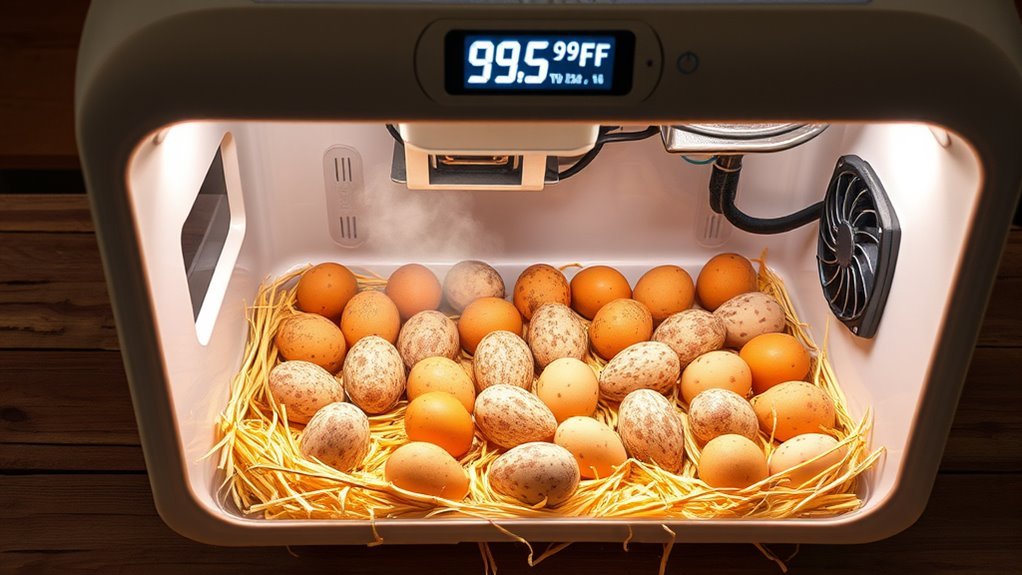
Maintaining a steady temperature between 99.5°F and 100°F is the foundation for healthy embryo development, but achieving this requires properly setting up your incubator. Start by placing your incubator in a draft-free, room-temperature environment away from direct sunlight.
Next, install a reliable thermostat and thermometer to monitor and adjust the heat precisely. Ensure the heating element distributes warmth evenly throughout the chamber.
Finally, preheat the incubator for several hours before adding eggs to stabilize the temperature.
| Step | Action | Purpose |
|---|---|---|
| Location | Draft-free, stable environment | Prevents temperature fluctuations |
| Equipment Setup | Install thermostat & thermometer | Enables precise temperature control |
| Preheating | Run incubator for hours | Ensures stable, even heat |
Monitoring Temperature Throughout the Incubation Period
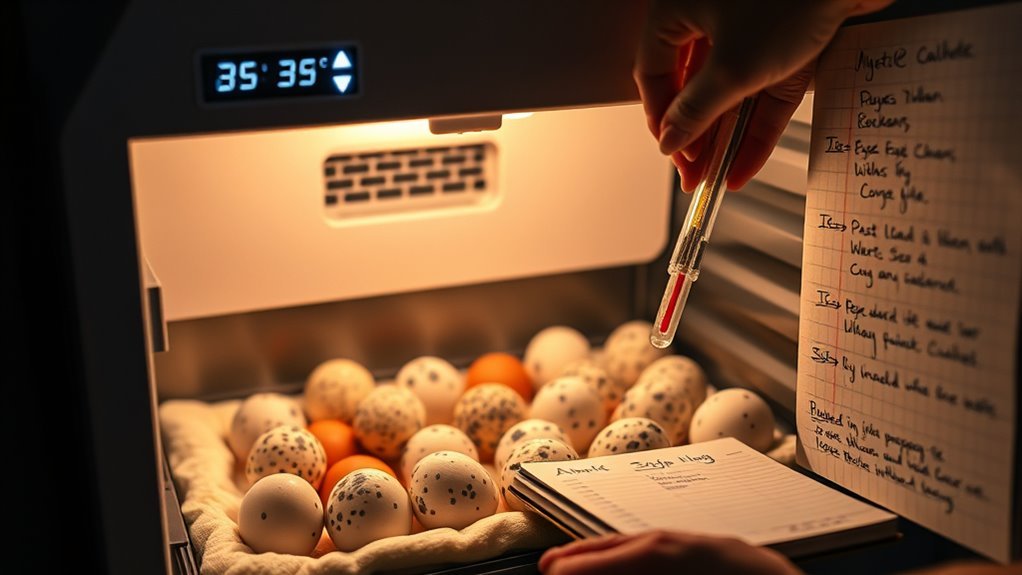
Since temperature directly affects embryo development, you’ll need to observe it closely throughout the incubation period. Regular checks help guarantee the environment stays stable, preventing harmful fluctuations. Use a reliable thermometer placed near the eggs, and consider a digital model for accuracy. Record readings multiple times daily to spot trends early.
To effectively monitor temperature:
- Check and log temperature at least three times a day.
- Use multiple thermometers if your incubator is large or uneven in heat distribution.
- Adjust your incubator settings promptly if temperatures drift outside the ideal range (99.5°F to 100.5°F).
Consistent monitoring lets you catch problems early, giving your eggs the best chance to develop healthily and hatch successfully.
Common Temperature-Related Issues and How to Fix Them
When your incubator’s temperature veers outside the ideal range, your eggs can quickly suffer from developmental problems. If it’s too hot, embryos may develop too fast, leading to weak chicks or even death.
Too cold, and development slows or stops, causing poor hatch rates.
If temperatures dip too low, embryo development can stall, leading to reduced hatch success.
To fix overheating, improve ventilation or adjust the thermostat immediately. For low temperatures, add a heat source or insulate the incubator better.
Frequent temperature swings can also harm embryos, so keep your incubator in a stable environment away from drafts and direct sunlight.
Regularly check and calibrate your thermometer to guarantee accurate readings.
Additional Tips for Successful Egg Incubation
Keeping the right temperature is just one part of successful incubation. You also need to focus on humidity, ventilation, and turning the eggs regularly. These factors work together to create the perfect environment for your eggs to develop.
Here are some additional tips to help you succeed:
Maintain humidity between 40-50% during incubation, increasing it to 65-70% during hatching.
Turn the eggs at least three times daily to prevent the embryo from sticking to the shell.
Ensure good airflow without exposing eggs to direct drafts or sudden temperature changes.
Frequently Asked Questions
How Long Does It Take for Chicken Eggs to Hatch?
It takes about 21 days for chicken eggs to hatch. You’ll need to keep them warm, turn them regularly, and maintain proper humidity. Stay patient and attentive, and you’ll see chicks hatching soon!
Can You Incubate Eggs Without an Incubator?
You can, but it’s like guarding a fragile flame—your body warmth or a warm spot mimics an incubator’s heat. Just keep temperature steady and eggs turning; nature demands patience, care, and constant attention to hatch life.
What Is the Best Humidity Level for Egg Incubation?
You should maintain humidity around 50-55% for the first 18 days, then raise it to 65-70% during the last 3 days. This helps prevent drying out and ensures healthy chick development.
How Do You Turn Eggs During Incubation?
Think of eggs as sleepy dancers—you gently turn them three to five times daily to keep them balanced and warm. Don’t worry, just tilt about 45 degrees each time to mimic nature’s gentle rocking motion.
Are There Differences in Incubation for Different Chicken Breeds?
Yes, you’ll find slight differences in incubation times and temperature preferences among breeds. Most need around 99.5°F, but bantams might hatch quicker. Adjust humidity and turning frequency based on breed-specific needs for best results.
Conclusion
To incubate chicken eggs at the ideal temperature, you need to preheat your incubator and maintain consistent warmth between 99.5°F and 100°F. Monitoring the temperature regularly is essential to ensure the environment stays stable.
Avoid drafts and ensure proper ventilation inside the incubator. Additionally, turning the eggs frequently helps promote even development.
You’ll succeed by staying attentive, adjusting promptly, and creating a stable environment. Remember, consistent care, constant monitoring, and careful adjustments are key to hatching healthy, strong chicks every time. Maintaining the ideal temperature is crucial for successful incubation and healthy chick development.