Is Ground Chuck the Same as Ground Beef?
You might think all ground beef is created equal, much like assuming every coffee tastes the same before you try a fresh brew. But when you pick up ground chuck versus ground beef, there’s more beneath the surface than meets the eye.
The differences in cut, fat content, and flavor can change your dish in subtle but important ways. Ground chuck typically comes from the shoulder area of the cow, offering a richer taste and a higher fat content compared to other ground beef varieties.
Before you decide which to buy, let’s explore what sets them apart. Understanding these distinctions helps you choose the right ground beef for your recipe and desired flavor profile.
Understanding Different Cuts of Beef
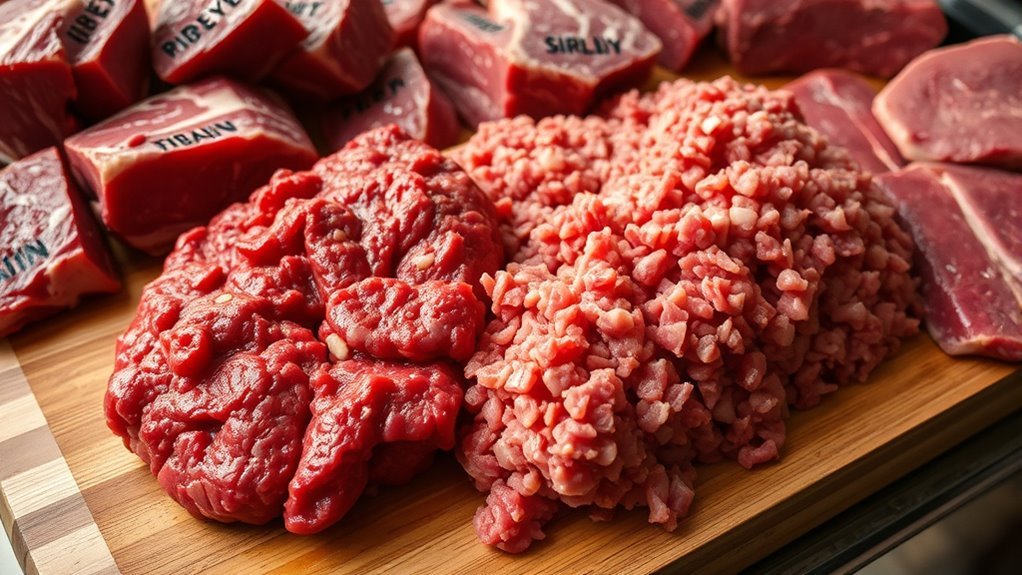
How do you know which cut of beef is best for your recipe? It depends on what you’re cooking and the texture or flavor you want. Different cuts come from various parts of the cow, each with unique qualities.
For example, the chuck cut comes from the shoulder and offers rich flavor with moderate fat, making it great for slow-cooked dishes or ground meat. The sirloin is leaner and tender, ideal for steaks or quick cooking. Brisket, taken from the chest, requires low and slow cooking for tenderness.
Knowing these differences helps you pick the right cut, ensuring your meal turns out just how you want. Understanding cuts sets the foundation before choosing between ground chuck or other ground beef options.
What Is Ground Chuck?
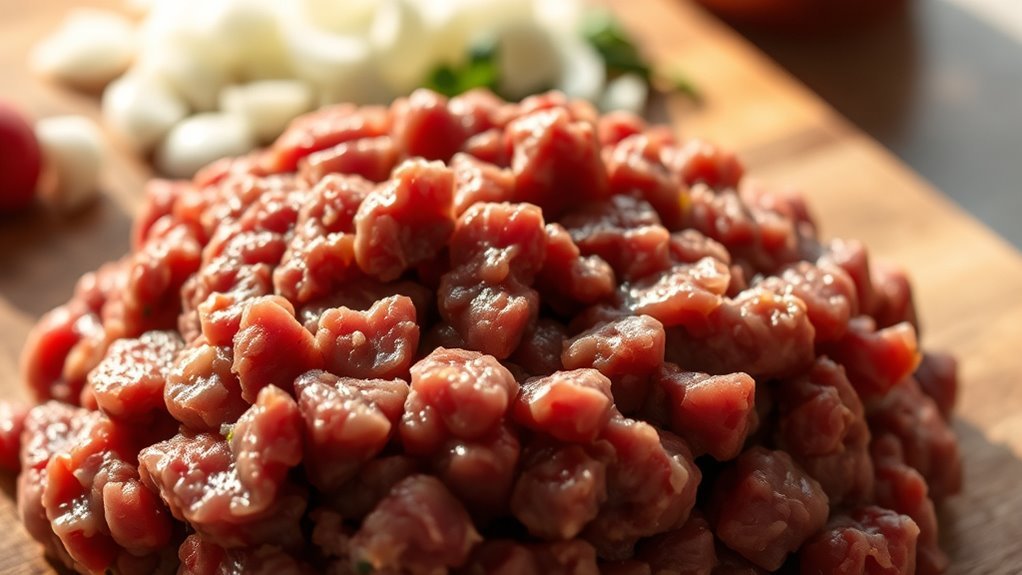
Although ground chuck comes from the shoulder area of the cow, it packs a flavorful punch thanks to its balanced fat content.
When you choose ground chuck, you’re getting meat that’s typically about 80% lean and 20% fat, which makes it juicy and perfect for grilling or frying.
This fat ratio helps keep your burgers tender and flavorful without drying out.
Ground chuck’s rich taste comes from the specific muscle cuts in the shoulder, giving it a deeper beefy flavor compared to other ground meats.
If you want a versatile option for meatballs, meatloaf, or burgers that hold together well and deliver great taste, ground chuck is a solid choice you won’t regret.
What Is Ground Beef?
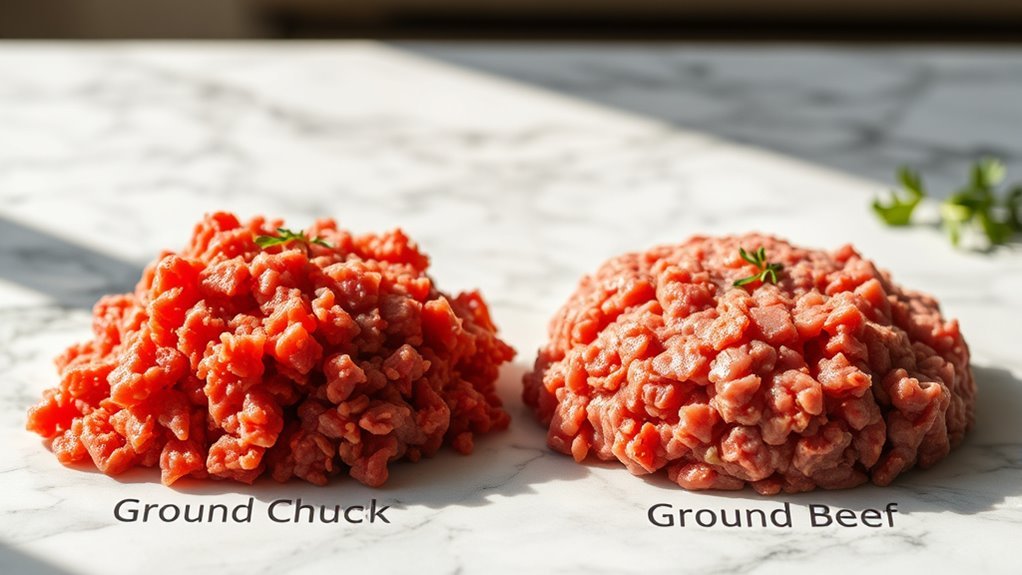
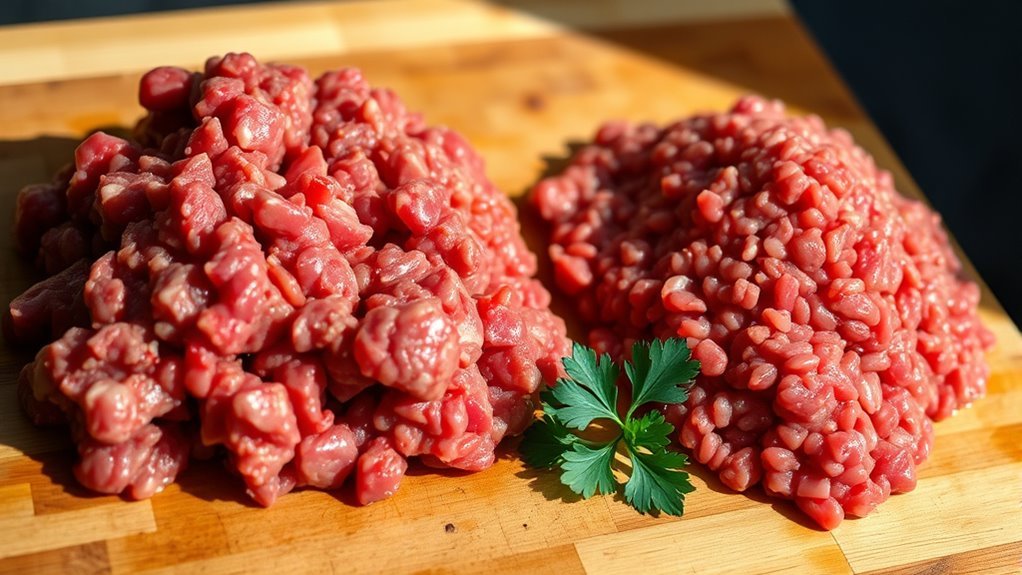
Wondering what sets ground beef apart from other types of ground meat? Ground beef is simply beef that’s been finely chopped or ground, usually from various cuts of the cow. It doesn’t specify which parts of the cow it comes from, so it can include meat from the chuck, round, sirloin, or other sections.
Because of this, ground beef offers a broader range of flavors and textures depending on the mix. When you buy ground beef, you’re getting a versatile ingredient used in countless recipes—from burgers to meat sauces.
It’s important to check the label for any added ingredients or specific lean-to-fat ratios, as these can affect taste and cooking results. Ground beef is your go-to choice when you want flexibility in your meal prep.
Fat Content Comparison Between Ground Chuck and Ground Beef
When you compare ground chuck to ground beef, one of the main differences you’ll notice is the fat content. Ground chuck typically contains about 15-20% fat, which gives it a richer texture and juicier results when cooked.
On the other hand, ground beef is a broader category that can vary widely in fat content, ranging anywhere from 5% up to 30%, depending on the cut used.
If you’re aiming for leaner meat, ground beef labeled “90% lean” or higher is a better choice.
However, if you want more flavor and moisture in your dish, ground chuck’s higher fat content might be preferable.
Understanding these differences helps you pick the right option based on your recipe and dietary needs.
Flavor Profiles of Ground Chuck vs. Ground Beef
Because ground chuck contains more fat, it delivers a richer, beefier flavor that many people prefer for burgers and meatloaf. When you cook with ground chuck, the higher fat content melts into the meat, enhancing juiciness and intensifying savory notes.
In contrast, ground beef with leaner ratios offers a milder, less fatty taste. If you want a cleaner, less greasy flavor, ground beef might suit your palate better.
However, less fat can mean less moisture, so the flavor won’t be as robust or satisfying.
Ultimately, your choice depends on how bold or subtle you want your beef’s taste to be. Understanding these flavor differences helps you pick the right ground meat for your recipe’s desired taste profile.
Cooking Uses for Ground Chuck
Although ground chuck shines in dishes requiring rich flavor and moisture, it also excels in a variety of cooking applications. When you want juicy burgers, hearty meatloaf, or flavorful meatballs, ground chuck is your go-to choice. Its fat content keeps these dishes tender and delicious.
You can also use it in stuffed peppers or casseroles where moisture and taste matter the most.
| Dish Type | Why Choose Ground Chuck |
|---|---|
| Burgers | Juicy, rich flavor, holds shape |
| Meatloaf/Meatballs | Moist texture, enhanced taste |
| Stuffed Vegetables | Keeps filling tender and flavorful |
Using ground chuck ensures your meals stay juicy and full-bodied every time.
Cooking Uses for Ground Beef
Ground chuck offers rich flavor and moisture, but ground beef brings versatility to the table with its leaner profile. You can use ground beef in a wide range of dishes where you want less fat but still crave hearty texture.
It’s perfect for leaner meat sauces, tacos, and chili, letting spices shine without greasy buildup. When you make burgers or meatloaf, ground beef helps keep the dish lighter while still holding together well if you don’t overwork it.
You can also toss it into casseroles or stir-fries for a protein boost without overwhelming richness. Overall, ground beef adapts easily to many recipes, making it a reliable choice when you want a balanced flavor and healthier meal options.
Cost Differences Between Ground Chuck and Ground Beef
When you compare prices, chuck usually costs a bit more than regular beef due to its higher fat content and richer flavor.
If you’re on a budget, you might find ground beef blends that mix chuck with leaner cuts to lower the cost. These blends offer a compromise between price and taste.
Keep in mind that prices vary depending on your location, the store, and whether the beef is organic or grass-fed.
Buying in bulk or choosing sales can also help you save.
If you want a flavorful burger or meatloaf, spending a little extra on ground chuck might be worth it.
But if you’re making a dish where the beef’s flavor isn’t the star, ground beef can be a more economical choice.
Nutritional Information Comparison
Beyond cost, understanding the nutritional differences between chuck and regular beef can help you choose the best option for your diet.
Ground chuck typically contains about 15-20% fat, which means it has more calories and fat compared to leaner ground beef varieties.
If you’re watching your fat intake, ground beef labeled as “lean” or “extra lean” might be a better fit since it usually contains 10% fat or less.
Both types provide similar amounts of protein, iron, and essential vitamins like B12, so you won’t lose out on nutrition by choosing one over the other.
Just keep in mind that ground chuck’s higher fat content can add flavor and juiciness but also increases saturated fat, which you may want to limit depending on your health goals.
Tips for Choosing the Right Ground Meat for Your Recipe
Although both ground chuck and ground beef can work well in many dishes, your choice should depend on the recipe’s requirements and your desired texture and flavor. If you want a juicy, flavorful burger, ground chuck with its higher fat content is your best bet.
For leaner meals like chili or spaghetti sauce, opt for ground beef with lower fat to keep calories in check. Consider cooking time too—ground chuck’s fat helps prevent drying out during quick cooking, while leaner ground beef suits slow-simmered dishes.
Always check the fat percentage on the label and match it to your recipe’s needs. Ultimately, trust your taste preference; experimenting with both types helps you find what you enjoy most in each dish.
Frequently Asked Questions
Can Ground Chuck Be Frozen and Thawed Safely?
Yes, you can freeze ground chuck safely. Just wrap it tightly to prevent freezer burn, and thaw it in the fridge overnight. Don’t refreeze once thawed to keep it safe and tasty for cooking later.
Is Ground Chuck Suitable for Making Meatballs?
Yes, ground chuck’s perfect for meatballs because it has enough fat to keep them juicy and flavorful. You’ll get tender, tasty meatballs that hold together well when cooked, making your dish delicious every time.
How Long Does Ground Beef Stay Fresh in the Fridge?
Think of ground beef like a ticking clock—it’s best fresh within 1 to 2 days in your fridge. Beyond that, it loses quality and safety, so cook or freeze it before time runs out.
Are There Any Allergens in Ground Chuck or Ground Beef?
You won’t find common allergens naturally in ground chuck or ground beef, but watch out for cross-contamination during processing. If you’re sensitive, check labels carefully or ask your butcher about potential allergen exposure.
Can Ground Chuck Be Used in Vegetarian Recipes as a Substitute?
You can’t use ground chuck directly in vegetarian recipes; it’s meat. Instead, choose plant-based substitutes like textured vegetable protein, lentils, or mushrooms to replicate texture and flavor while keeping your dish vegetarian and delicious.
Conclusion
So, is ground chuck the same as ground beef? Not quite, but close enough to confuse your taste buds and your wallet.
If you want juicy, flavorful bites that practically sing, grab ground chuck. If you’re feeling adventurous or just want to save a buck, ground beef’s your versatile buddy.
Either way, you’ll end up with meat on your plate—just don’t ask it to tell you where it came from. When choosing between ground chuck vs ground beef, consider flavor, fat content, and your recipe needs. Bon appétit!