Does Beef Jerky Need to Be Refrigerated for Storage?
You might think of beef jerky as the rugged camper’s trusty snack, built to last without a fridge. But does beef jerky need to be refrigerated for storage? The truth depends on factors like moisture content and packaging, which play vital roles in how long jerky stays safe and tasty.
Understanding these details will help you store your jerky properly and avoid unpleasant surprises down the road.
Understanding How Beef Jerky Is Made
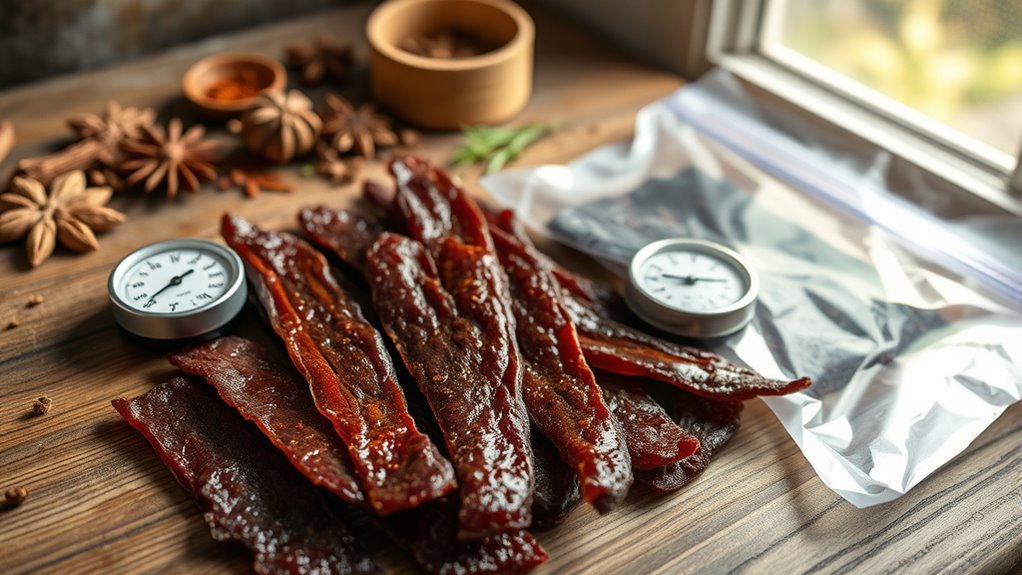
Before you store beef jerky, it’s important to understand how it’s made. Jerky begins as lean cuts of beef, trimmed of fat to prevent spoilage. You slice the meat thinly, then marinate it in a mixture of salt, spices, and sometimes sugar.
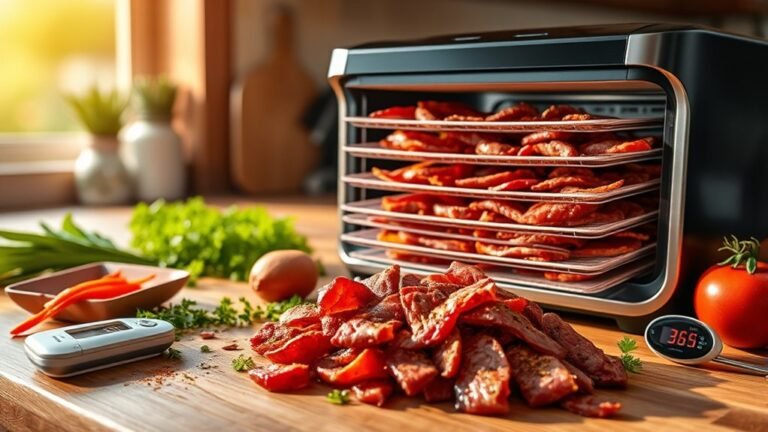
This seasoning not only adds flavor but also helps inhibit bacterial growth. After marinating, you dry the meat at low temperatures, either by dehydrating or smoking, removing most of its moisture. This drying process is essential because it preserves the jerky and extends its shelf life.
Knowing this helps you appreciate why jerky is less perishable than fresh meat. Since it’s already dried and salted, it resists spoilage better, but proper storage is still key to maintaining its quality and safety.
The Role of Moisture Content in Jerky Preservation
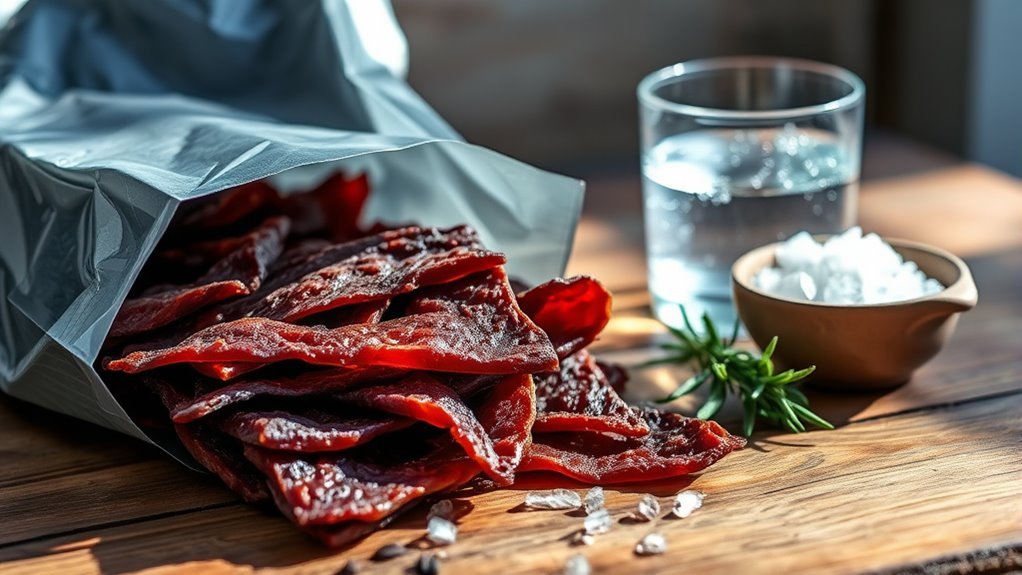
Because moisture plays a crucial role in spoilage, controlling the water content in beef jerky is key to its preservation. When you reduce moisture, you limit the growth of bacteria, mold, and yeast that cause spoilage.
Moisture control is essential in beef jerky to prevent spoilage by inhibiting bacteria, mold, and yeast growth.
Properly dried jerky usually contains about 15-20% moisture, which keeps it chewy yet safe. If your jerky holds too much moisture, it becomes a breeding ground for microbes, leading to faster spoilage and potential foodborne illnesses.
Conversely, overly dry jerky can become tough and lose flavor. So, maintaining the right moisture balance helps you enjoy jerky longer without refrigeration.
When you make or buy jerky, check its texture and packaging date to ensure the moisture levels support extended shelf life safely.
Impact of Packaging on Beef Jerky Shelf Life
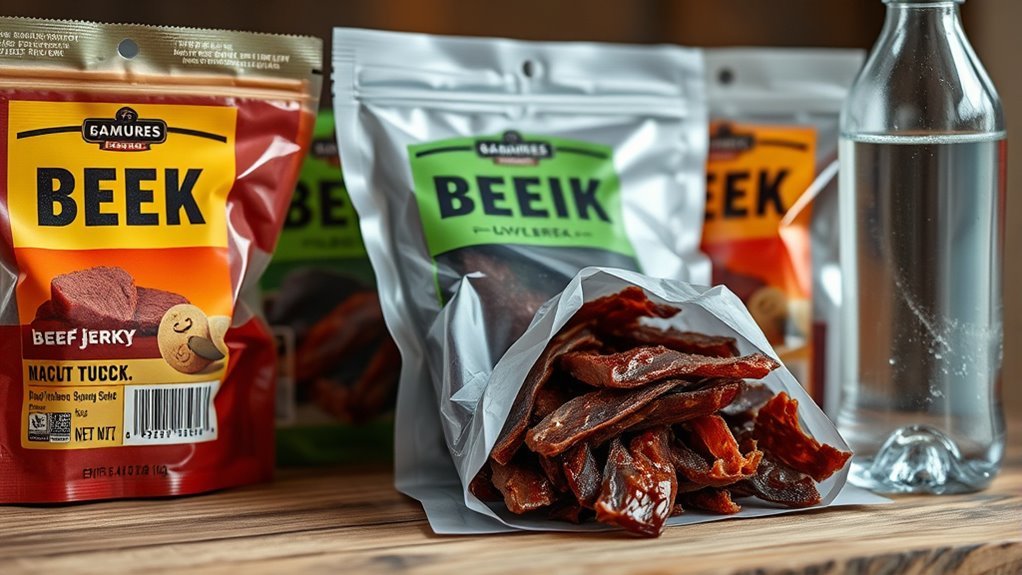
Controlling moisture in beef jerky sets the stage for how well it stores, but packaging plays a big role in keeping that moisture level steady over time. When you choose airtight packaging, you prevent moisture from sneaking in or escaping.
Vacuum-sealed bags are especially effective since they remove air, slowing oxidation and bacterial growth. If you use resealable bags, make sure to press out as much air as possible before sealing.
Additionally, packaging materials with low permeability to oxygen and moisture help extend shelf life by maintaining jerky’s texture and flavor. You should also avoid puncturing or damaging the packaging, as even small holes can compromise the jerky’s quality.
In short, smart packaging choices help you keep your beef jerky fresh longer without refrigeration.
Room Temperature Storage: What You Need to Know
Although storing beef jerky at room temperature is convenient, you need to keep a few key factors in mind to maintain its quality and safety. Proper room temperature storage can preserve your jerky, but neglecting conditions may lead to spoilage or loss of flavor.
Storing beef jerky at room temperature is convenient but requires care to preserve quality and prevent spoilage.
To store beef jerky safely at room temperature, remember:
- Keep it in a cool, dry place away from direct sunlight.
- Use airtight containers or resealable bags to prevent moisture and air exposure.
- Avoid temperatures above 70°F (21°C), which can accelerate spoilage.
- Consume opened packages within a week to maintain freshness.
When Refrigeration Becomes Necessary
If your beef jerky shows signs of moisture or you’ve opened a large package, refrigeration becomes necessary to keep it safe and tasty. Moisture encourages mold and bacteria growth, which spoil jerky quickly.
Also, if the jerky lacks preservatives or is homemade, refrigerating it helps extend freshness. When you open a big bag, exposure to air and humidity increases the risk of spoilage, so popping it into the fridge slows down deterioration.
Additionally, if you live in a hot, humid climate, refrigeration is a smart choice regardless of packaging. Always check the packaging for storage instructions; some brands recommend refrigeration after opening.
Tips for Storing Opened Beef Jerky
Once you open your beef jerky, keeping it fresh requires some simple but effective steps. Proper storage preserves flavor and texture, preventing it from drying out or spoiling. Here’s what you should do:
Keep your opened beef jerky fresh with simple storage tips to preserve its flavor and texture.
1. Seal it tightly
Use an airtight container or resealable plastic bag to limit air exposure.
2. Store in a cool, dry place
Keep jerky away from heat and humidity to avoid mold growth.
3. Consider refrigeration
If you won’t finish it soon, refrigerate to extend shelf life.
4. Avoid frequent temperature changes
Constantly moving jerky between hot and cold environments can cause condensation and spoilage.
Signs Your Beef Jerky Has Gone Bad
When you notice changes in your beef jerky’s smell, texture, or appearance, it’s a clear sign it may have gone bad. If your jerky has a sour or off odor, don’t eat it.
Also, watch for any mold growth. White or green spots mean it’s time to toss it.
If the jerky feels unusually sticky or slimy, that’s another red flag indicating spoilage.
Changes in color, like darkening or dullness, can also signal degradation.
When your jerky crumbles excessively or becomes too hard, it’s past its prime.
Trust your senses; if something feels off, it’s safer to discard the jerky rather than risk foodborne illness.
Recognizing these signs helps you avoid consuming spoiled jerky and ensures your snacks stay enjoyable.
Best Practices for Long-Term Jerky Storage
Although beef jerky naturally resists spoilage, you’ll want to store it properly to maintain its flavor and texture over time. To keep your jerky fresh longer, follow these best practices:
Proper storage preserves beef jerky’s flavor and texture, keeping it fresh and delicious for longer.
1. Use airtight containers
Seal jerky in vacuum bags or airtight jars to prevent moisture and air exposure.
2. Store in a cool, dark place
Heat and light degrade jerky faster, so pick a pantry or cupboard away from sunlight.
3. Consider refrigeration or freezing
For longer storage beyond a few weeks, keeping jerky in the fridge or freezer extends shelf life without sacrificing taste.
4. Avoid moisture contact
Always use dry hands or utensils when handling jerky to prevent mold growth.
Frequently Asked Questions
Can Beef Jerky Be Frozen for Extended Storage?
Yes, you can freeze beef jerky for extended storage. Just make sure it’s sealed tightly in an airtight container or vacuum bag to prevent freezer burn and preserve its flavor and texture. It’ll last much longer.
Is Homemade Beef Jerky Safe Without Preservatives?
Homemade beef jerky can be safe without preservatives if you dry it properly to remove moisture and store it in a cool, dry place. Otherwise, it could spoil faster, so take care with hygiene and storage.
How Does Jerky Flavor Change When Refrigerated?
When you refrigerate jerky, its flavor tends to mellow and stay fresher longer. The cold slows down oxidation, preventing rancidity, so you’ll notice a more consistent taste compared to storing it at room temperature.
Are There Differences in Storage for Different Jerky Flavors?
Think of jerky flavors like delicate dancers; spicy ones may last longer unrefrigerated, while sweet or moist flavors need a cool stage to stay fresh. So, you’ll store them differently to keep their moves sharp.
Can Beef Jerky Cause Allergies or Food Sensitivities?
Yes, beef jerky can cause allergies or sensitivities, especially if you’re allergic to beef or ingredients like soy or spices. Always check labels carefully and avoid jerky with allergens that might trigger your reactions.
Conclusion
Think of unopened beef jerky like a sealed treasure chest—it stays fresh and safe without refrigeration if kept cool and dry.
But once you open it or spot moisture, it’s best to refrigerate to avoid spoilage.
By storing your jerky properly, you’ll keep that savory flavor intact and prevent waste.
So, treat your jerky right, and it’ll stay delicious, ready whenever you want a tasty, protein-packed snack.
Proper beef jerky storage, including refrigeration when needed, is key to maintaining its quality and extending shelf life.