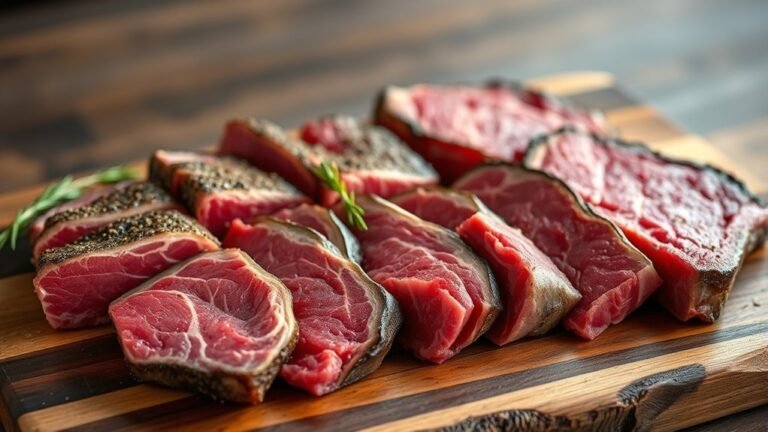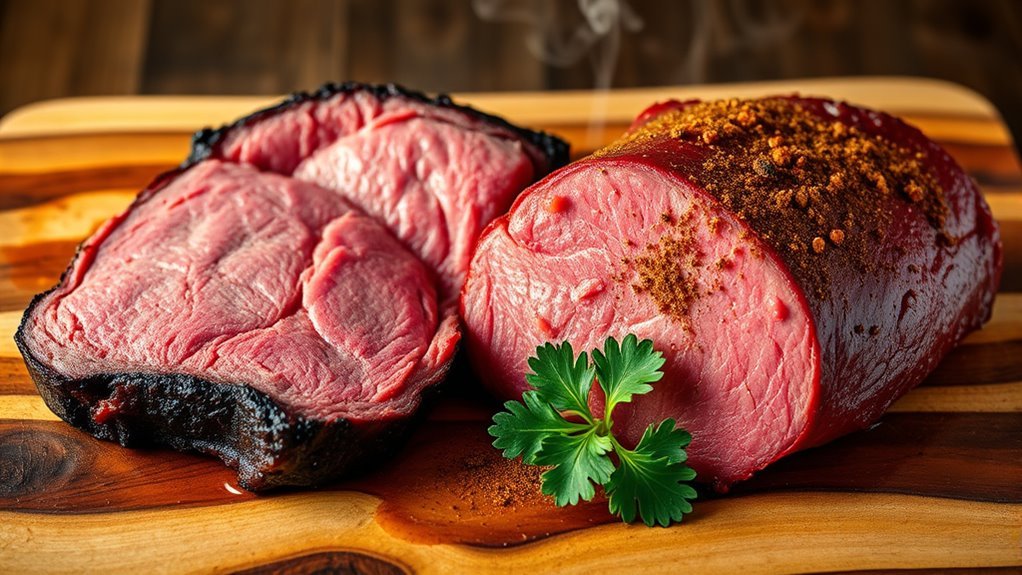
Are Beef Brisket and Corned Beef Brisket the Same?
You might think beef brisket and corned beef brisket are interchangeable since they come from the same cut of meat. However, the way each is prepared changes everything—from flavor to texture.
If you’re wondering how curing transforms brisket or why recipes call for one over the other, there’s more to explore. Understanding these differences can affect how you cook and enjoy this classic cut.
Knowing the distinction between beef brisket and corned beef brisket helps you choose the right ingredient for your dish and ensures the best results.
Origin and Cut of Beef Brisket
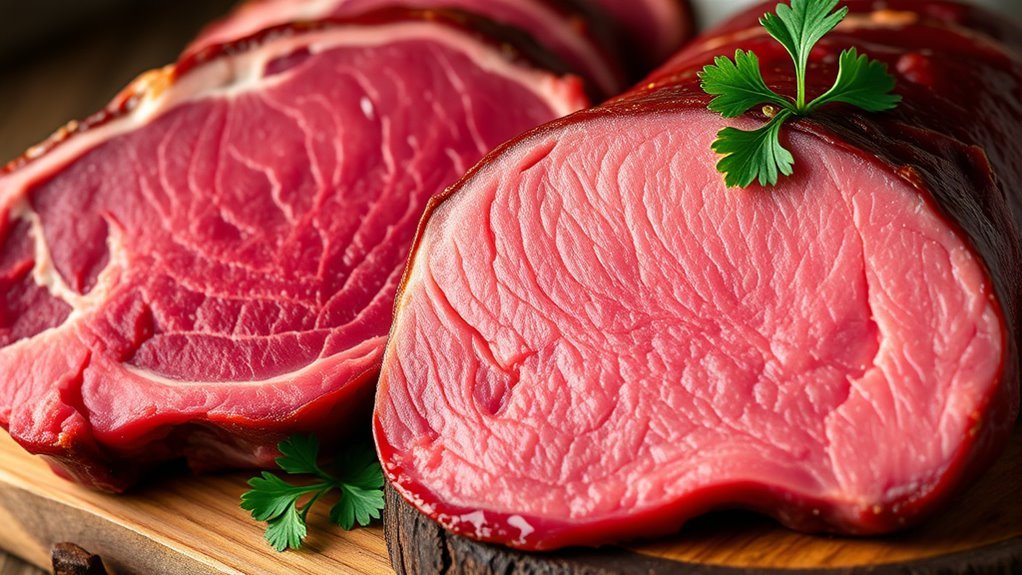
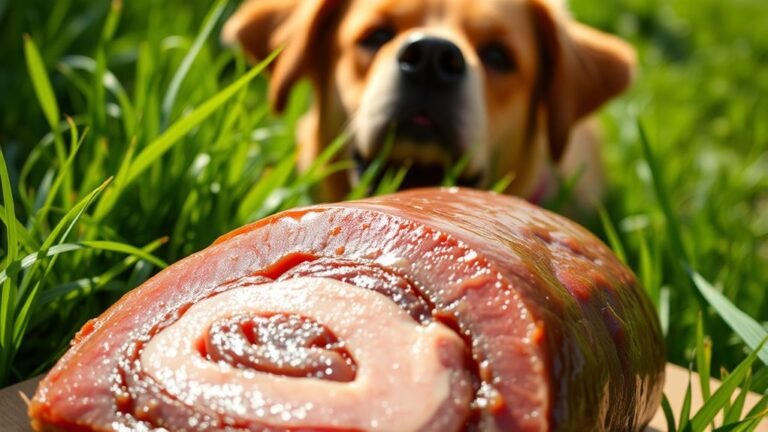
The beef brisket comes from the lower chest or breast of the cow, a muscle that supports much of the animal’s weight. Because it’s a hardworking muscle, the brisket is tough and filled with connective tissue.
When you look at the cut, you’ll notice it has two main parts: the flat and the point. The flat is leaner and thinner, while the point is thicker with more fat marbling. Knowing this helps you choose the brisket that suits your cooking style.
Whether you’re aiming for tender slices or juicy, flavorful bites, understanding the brisket’s origin and its distinct sections sets the foundation for great results.
This cut’s toughness means it benefits from slow cooking methods to break down the fibers.
Preparation and Curing Process
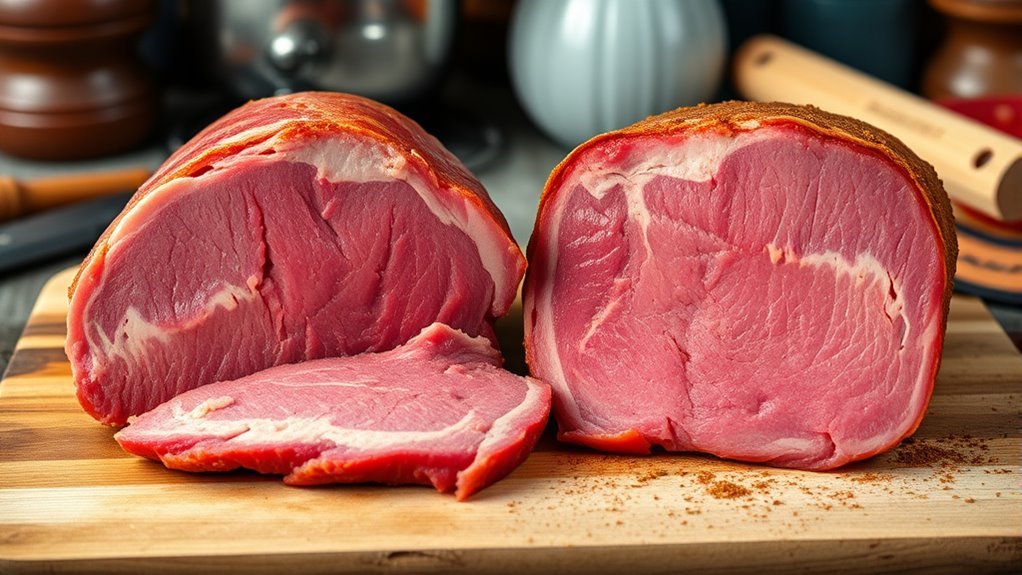
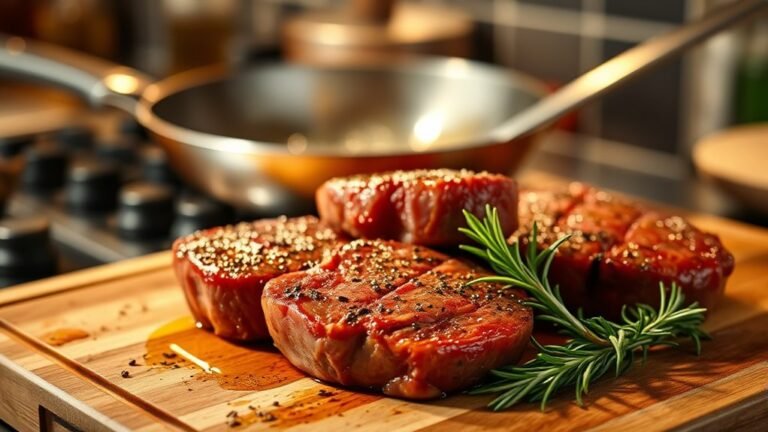
Although brisket is flavorful on its own, proper preparation and curing reveal its full potential. When you prepare a traditional beef brisket, you usually trim excess fat and season it before slow cooking. This method highlights the meat’s natural richness without altering its fundamental character.
Corned beef brisket, on the other hand, undergoes a curing process where the brisket soaks in a brine solution containing salt, sugar, and spices for several days. This curing not only preserves the meat but also infuses it with distinctive flavors.
After curing, you rinse the brisket to remove excess salt before cooking.
Flavor Profiles and Texture Differences
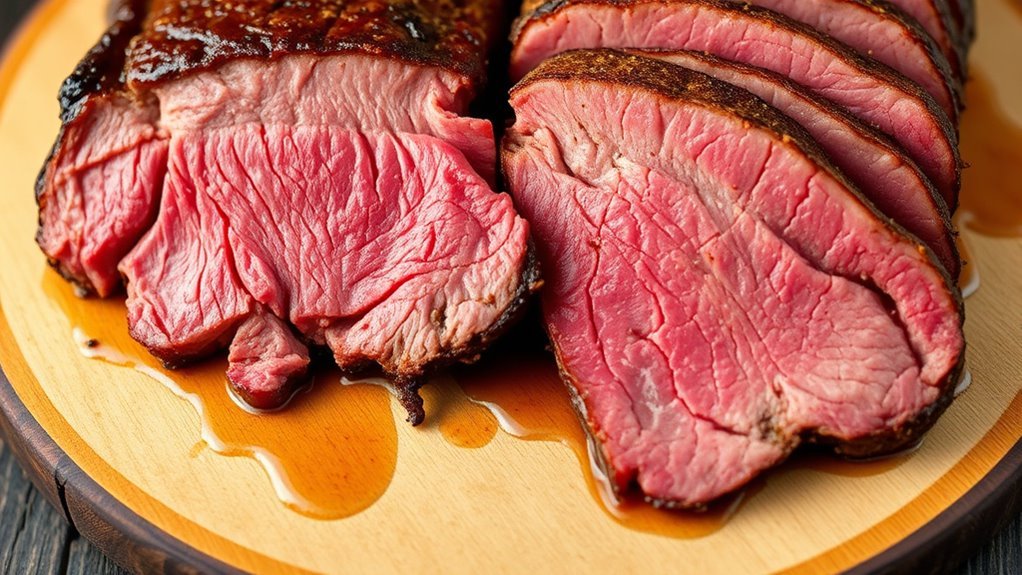
Once you’ve prepared and cured the brisket, you’ll notice how these steps shape its flavor and texture. Regular beef brisket boasts a rich, beefy taste with a firm yet tender bite.
Corned beef brisket, on the other hand, carries a salty, slightly tangy flavor from the curing spices, offering a softer, more crumbly texture.
| Aspect | Beef Brisket | Corned Beef Brisket |
|---|---|---|
| Flavor | Deep, beefy, natural | Salty, tangy, spiced |
| Texture | Firm, fibrous, tender | Soft, crumbly, moist |
| Aftertaste | Mild, savory | Slightly sharp, seasoned |
Understanding these differences helps you choose the right brisket for your meal’s flavor and mouthfeel.
Common Cooking Methods
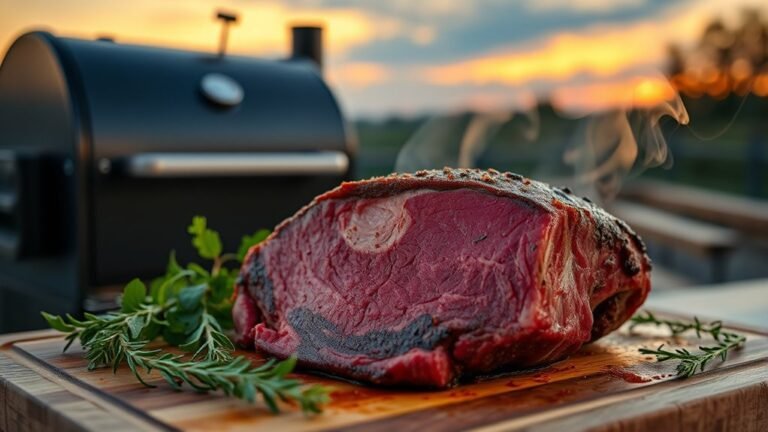
When you cook beef brisket or corned beef brisket, choosing the right method makes all the difference in flavor and texture. For beef brisket, slow smoking or braising are popular options. Smoking imparts a rich, smoky taste and tenderizes the meat over several hours. Braising in liquid keeps it moist and soft.
Corned beef brisket, already cured, often benefits from boiling or simmering. This method softens the meat and reduces saltiness. You can also bake corned beef, but wrapping it tightly helps retain moisture. Both types respond well to low and slow cooking, breaking down tough fibers.
Avoid high heat or quick cooking, which will make the meat tough. By selecting the right technique, you’ll liberate the best qualities of each brisket type.
Best Uses and Serving Suggestions
Since beef brisket and corned beef brisket offer distinct flavors and textures, you can tailor their uses to suit different meals.
Use beef brisket for classic barbecue dishes, slow-cooked roasts, or smoked sandwiches. Its rich, beefy flavor shines when paired with bold spices and smoky notes.
Corned beef brisket works great in traditional Irish dishes like corned beef and cabbage or Reuben sandwiches, where its salty, tangy profile complements sauerkraut, mustard, and rye bread. You can also dice corned beef into hash or incorporate it into savory pies.
When serving, slice beef brisket against the grain for tenderness, while corned beef brisket benefits from thin slices to balance its firmness.
Knowing these uses helps you highlight each brisket’s strengths in your cooking.
Frequently Asked Questions
Can Corned Beef Brisket Be Used Interchangeably With Regular Brisket in Recipes?
You can’t always use corned beef brisket interchangeably with regular brisket because corned beef is cured and salty. It changes the flavor and texture, so adjust seasoning and cooking methods if you decide to swap them.
How Long Can Cooked Corned Beef Brisket Be Safely Stored in the Refrigerator?
You can safely store cooked corned beef brisket in the refrigerator for up to 3 to 4 days. Make sure to keep it in an airtight container to maintain freshness and prevent contamination.
Are There Any Health Benefits Specific to Eating Corned Beef Brisket?
You know what they say, “You are what you eat.” Corned beef brisket gives you protein and iron, helping your muscles and blood. Just don’t eat too much, as it’s high in sodium and fat.
What Are Common Side Dishes Served With Corned Beef Brisket?
You’ll often find corned beef brisket served with cabbage, boiled potatoes, and carrots. Rye bread and mustard are classic sides too. These complement the salty, savory flavors perfectly, making your meal hearty and satisfying.
Can Brisket Be Cooked in a Slow Cooker or Pressure Cooker Effectively?
You can definitely cook brisket in both a slow cooker and pressure cooker. Slow cooking tenderizes it gently over hours, while pressure cooking speeds up the process, delivering tender, flavorful results much faster.
Conclusion
Now that you know beef brisket and corned beef brisket come from the same cut but take different roads in flavor and prep, you can choose the right one for your meal. Regular brisket brings that rich, smoky depth, while corned beef offers a tangy, tender twist.
So, whether you’re craving comfort or a zesty punch, you’re holding the key to a delicious journey—just pick your flavor adventure and enjoy every bite! Understanding the differences between beef brisket and corned beef brisket ensures you get the perfect taste and texture for your dish.