How Do You Know Beef Jerky Is Done Step by Step
When you’re making beef jerky, knowing exactly when beef jerky is done can be tricky. You want it to be dry enough to last but still tender enough to enjoy. It’s not just about time—you’ll need to check color, texture, and flexibility carefully.
Getting this balance right guarantees your jerky is safe and tasty. But how can you tell for sure when it’s ready to come out? Paying attention to these details will help you achieve perfect beef jerky every time.
Preparing the Beef for Jerky
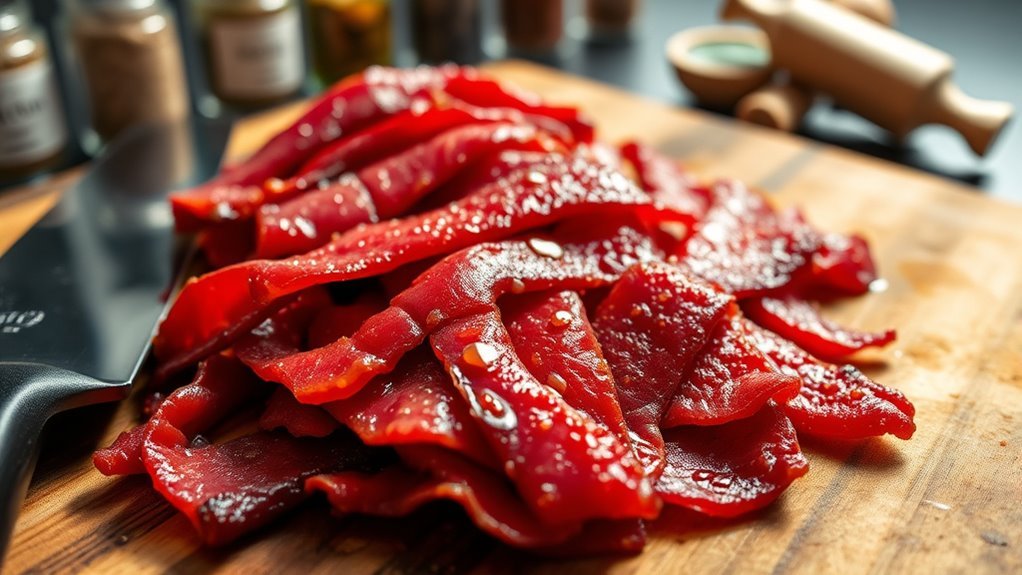
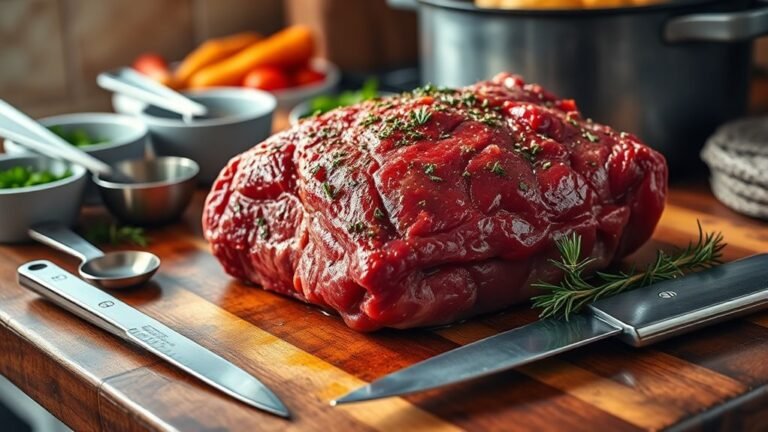
Before you start drying, you need to prepare the beef properly to guarantee tasty and safe jerky. Begin by selecting lean cuts like eye of round or top round to reduce fat, which can spoil quickly. Trim off any visible fat with a sharp knife.
Next, partially freeze the beef for about 1-2 hours; this makes slicing easier and more uniform. Use a sharp knife to cut the beef into strips, keeping them consistent but not too thick.
After slicing, marinate the strips in your preferred seasoning or curing solution for at least 4-6 hours to enhance flavor and tenderize the meat. Proper preparation assures your jerky dries evenly and stays safe to eat, setting the stage for perfect results.
Choosing the Right Thickness for Slices
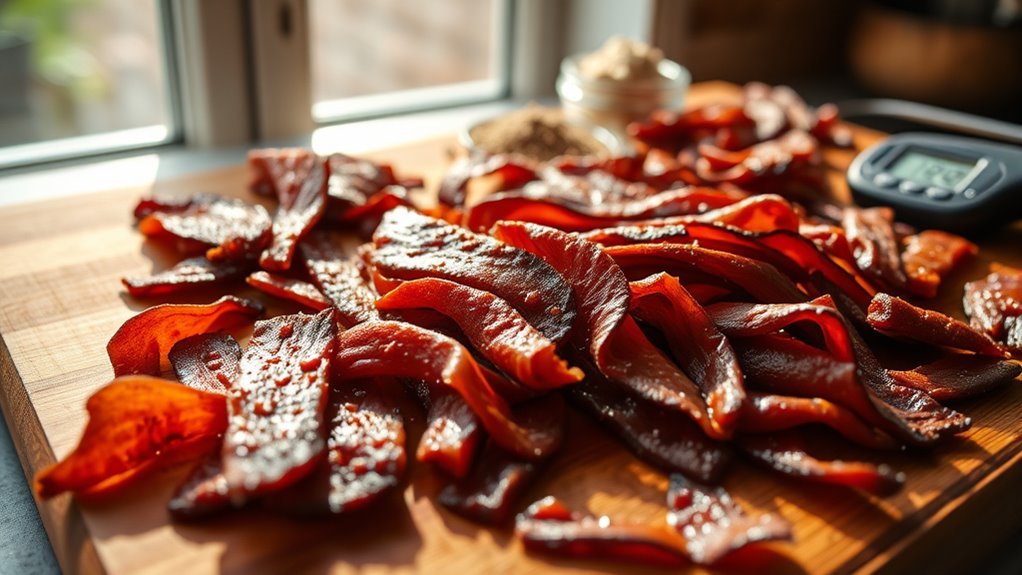
Although the ideal thickness depends on your drying method, slicing beef between 1/8 to 1/4 inch thick usually works best for jerky. Thinner slices dry faster but can become brittle, while thicker slices take longer and may stay chewy inside.
Choose thickness based on your preference and drying time.
| Thickness (inch) | Drying Time | Texture Outcome |
|---|---|---|
| 1/8 | 4-5 hours | Crispy, brittle |
| 3/16 | 5-6 hours | Balanced, chewy |
| 1/4 | 6-8 hours | Tender, slightly moist |
Keep your slices uniform to ensure even drying and avoid underdone jerky. Use a sharp knife or slicer for consistent thickness.
Marinating and Seasoning the Meat
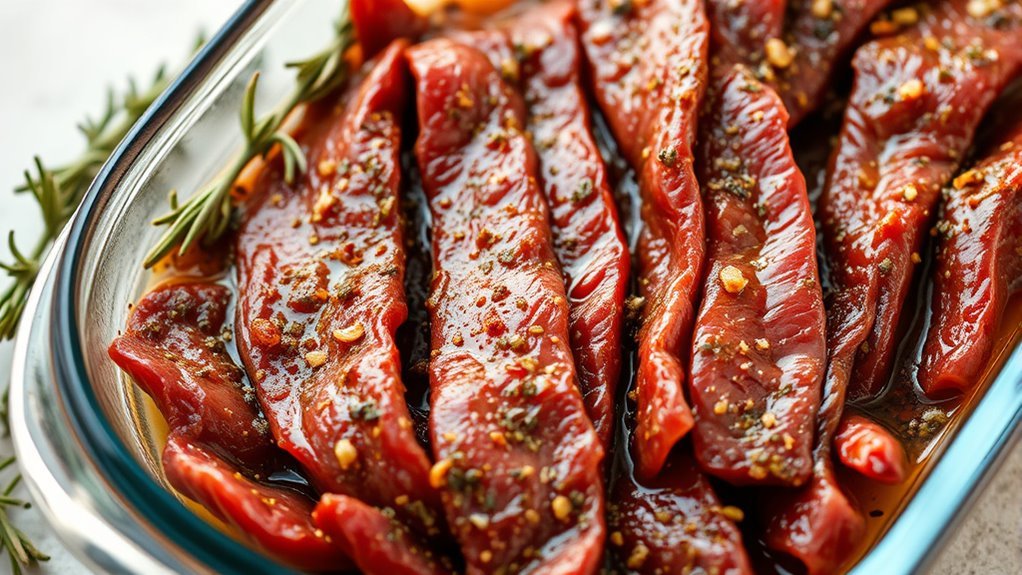
When you marinate and season your beef, you infuse it with flavor and help tenderize the meat, making your jerky more delicious. Start by choosing a marinade that suits your taste. Soy sauce, Worcestershire sauce, garlic, and black pepper are popular options.
Combine your marinade ingredients in a bowl, then submerge the beef slices completely. Let the meat soak for at least 4 to 6 hours, or overnight for deeper flavor penetration. Don’t forget to turn the slices occasionally to ensure even seasoning.
After marinating, drain the beef well and pat it dry with paper towels to remove excess moisture. Proper marinating and seasoning set the foundation for tasty jerky, so take your time to get this step right before moving on.
Setting the Dehydrator or Oven Temperature
Since proper temperature control is essential, you’ll want to set your dehydrator or oven to the right heat to guarantee even drying without cooking the beef.
Follow these steps:
- Set your dehydrator or oven to between 160°F and 175°F (71°C to 79°C), which is ideal for safe drying.
- Preheat the appliance fully before placing the meat inside to maintain consistent temperature.
- Arrange the beef strips in a single layer, ensuring air circulates freely around each piece.
- Avoid temperatures above 175°F, as higher heat can cook the meat instead of drying it, affecting texture and flavor.
Checking the Jerky Color and Texture
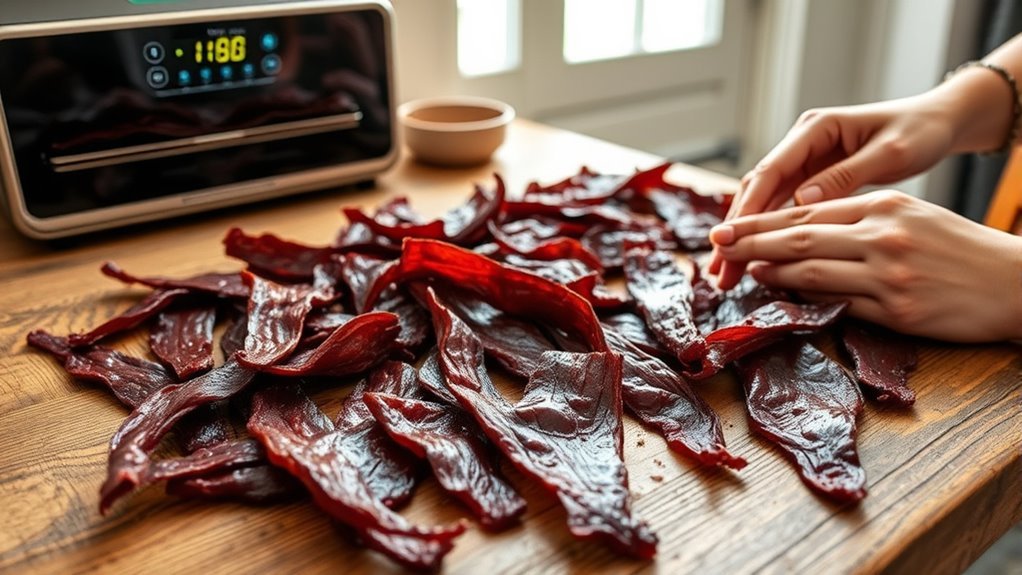
You’ll know your beef jerky is ready by carefully examining its color and texture. The jerky should have a deep, rich brown color without any raw or pink spots remaining. This indicates the meat has been properly dried and cooked through.
Next, check the texture: it should feel firm but still slightly flexible when you touch it. The surface might look a bit dry, but the jerky shouldn’t be brittle or crumble easily. If it snaps apart too quickly, it’s overdone.
On the other hand, if it feels too soft or moist, it needs more drying time.
Performing the Bend Test on Jerky Strips
A simple bend test can help you determine if your beef jerky has reached the ideal level of dryness. Here’s how to perform it effectively:
- Pick up a strip of jerky and hold it at both ends.
- Gently bend the strip until it flexes but doesn’t break immediately.
- Look for a slight bend with some resistance. This means it’s dried properly.
- If the jerky cracks or snaps right away, it’s too dry; if it bends too easily or feels soft, it needs more drying time.
This test ensures your jerky is firm yet still pliable, indicating it’s done without becoming brittle. Use the bend test alongside other checks for best results.
Assessing Moisture Content in the Jerky
When checking if your beef jerky is done, evaluating its moisture content is essential to guarantee safety and quality. Properly dried jerky should feel dry but still slightly pliable, not brittle or overly tough.
To assess moisture, gently squeeze a strip. If it bends without cracking but doesn’t feel wet or sticky, you’re on the right track. You can also tear a piece; it should be fibrous but not damp inside.
If the jerky feels soft or has any wet spots, it needs more drying time to prevent spoilage. Keep in mind that under-dried jerky can harbor bacteria, so err on the side of drying longer rather than less.
With practice, you’ll quickly learn to judge moisture by touch and appearance.
Cooling and Storing the Jerky Properly
Although drying is essential, properly cooling your beef jerky before storing it guarantees it stays safe and maintains its texture. Hot jerky traps moisture, which can lead to spoilage or mold.
Follow these steps to cool and store your jerky correctly:
- Spread the jerky strips on a clean rack in a single layer to air cool at room temperature for about 30-60 minutes.
- Avoid stacking or bagging the jerky while it’s still warm to prevent condensation.
- Once cooled, place the jerky in airtight containers or resealable bags to keep out moisture and air.
- Store the jerky in a cool, dark place or refrigerate for longer shelf life.
Signs of Overdrying and How to Avoid It
Properly cooling and storing your beef jerky helps maintain its quality, but drying it too long can cause problems of its own. Overdrying makes jerky brittle and overly hard, losing that chewy texture you want. If your jerky snaps easily or crumbles in your hands, it’s likely overdried.
Also, excessively dry jerky can taste dull and lose some of its flavor. To avoid this, check your jerky regularly during drying. Use a meat thermometer to ensure it reaches the safe internal temperature without going too far.
Remove the jerky once it bends and cracks slightly but doesn’t break. Cooling it on a rack helps moisture escape evenly.
Finally, store your jerky in airtight containers to keep it from drying out further.
Frequently Asked Questions
Can Beef Jerky Be Made Without a Dehydrator or Oven?
Yes, you can make beef jerky without a dehydrator or oven by using a smoker or air-drying it in a well-ventilated, low-humidity area. Just make certain the meat is sliced thin and properly seasoned for safety.
What Types of Beef Cuts Are Best for Jerky?
You might think any beef works, but lean cuts like top round, eye of round, or sirloin are best for jerky. They dry evenly, reduce fat spoilage, and give you that perfect chewy texture you want.
How Long Can Homemade Beef Jerky Be Safely Stored?
You can safely store homemade beef jerky for 1 to 2 months at room temperature in an airtight container. For longer freshness, keep it refrigerated up to 3 months or freeze it for 6 months.
Is It Necessary to Use Curing Salt in Beef Jerky?
No, you don’t need curing salt, but it boosts beef’s brightness, banishes bacteria, and brings better shelf life. Without it, your jerky might spoil sooner, so choose carefully for safety and savoring success.
Can You Freeze Beef Jerky for Longer Storage?
Yes, you can freeze beef jerky to extend its shelf life. Just wrap it tightly in airtight packaging to prevent moisture and freezer burn. When you want, thaw it slowly in the fridge for best texture.
Conclusion
Think of making beef jerky like crafting a fine piece of leather—each strip should tell a story of patience and care. When your jerky bends like a well-worn belt, firm yet flexible, you know it’s ready.
Just as a painter steps back to admire a finished canvas, you’ll recognize the deep, even brown and dry surface as your masterpiece. Trust these signs, and you’ll savor jerky that’s perfectly done every time.
By following these clear indicators, you can confidently tell how do you know beef jerky is done. This step-by-step awareness ensures your beef jerky is safe to eat, flavorful, and has the ideal texture.