How to Know If Beef Has Gone Bad
It’s funny how you might open your fridge just as you start wondering if that steak you bought last week is still good. When it comes to how to know if beef has gone bad, you can’t rely solely on the sell-by date. Beef can spoil earlier or last a bit longer depending on how it’s stored.
Knowing the signs of whether your beef has gone bad can save you from a bad meal or worse. Let’s explore what clues you should watch for to keep your food safe.
Visual Signs of Spoiled Beef
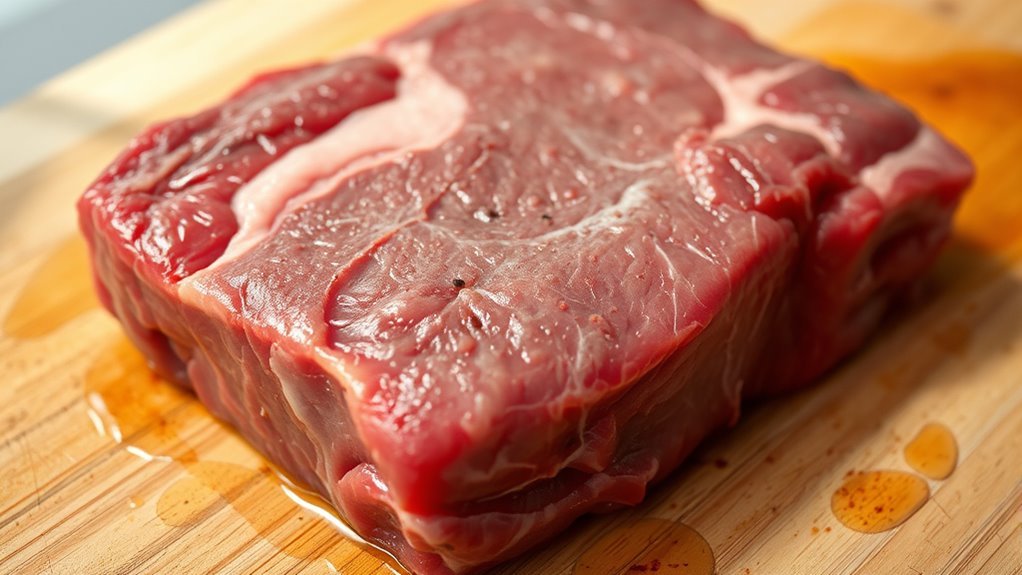
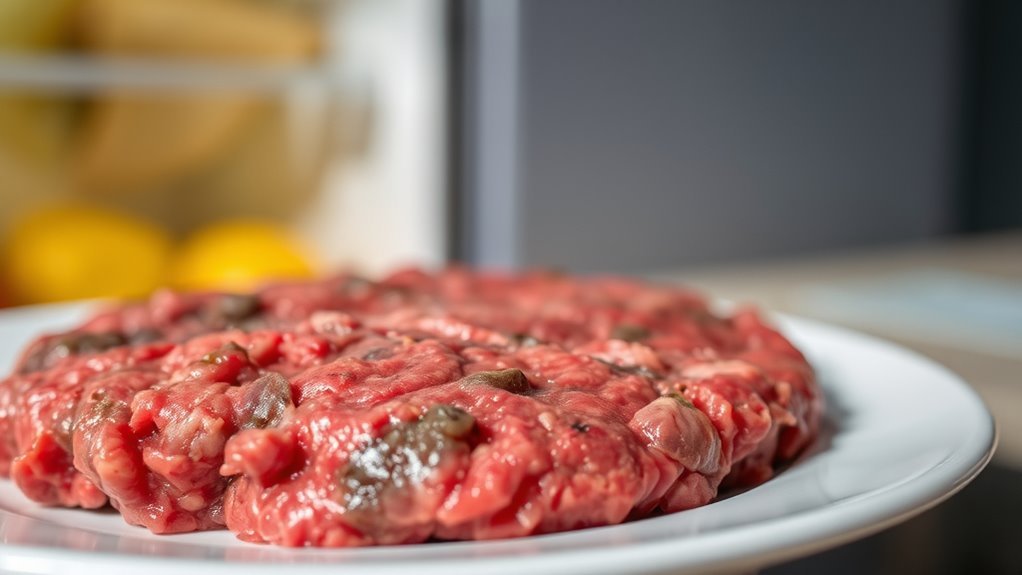
Although fresh beef typically has a bright red color, you’ll know it’s spoiled if the meat turns a dull brown or gray. When you see these color changes, it’s a clear sign that the beef is no longer fresh.
You might also notice a slimy or sticky texture on the surface of the meat, which indicates bacterial growth.
A slimy or sticky surface on beef signals bacterial growth and spoilage.
Pay attention to any unusual spots, like green or iridescent hues, as these are definite signs of spoilage.
Additionally, if the beef appears dry or has excessive liquid pooling around it, that’s a warning too.
By checking for these visual signs, you’ll avoid using unsafe beef and keep your meals fresh and healthy.
Trust your eyes before anything else.
Detecting Off Smells in Beef
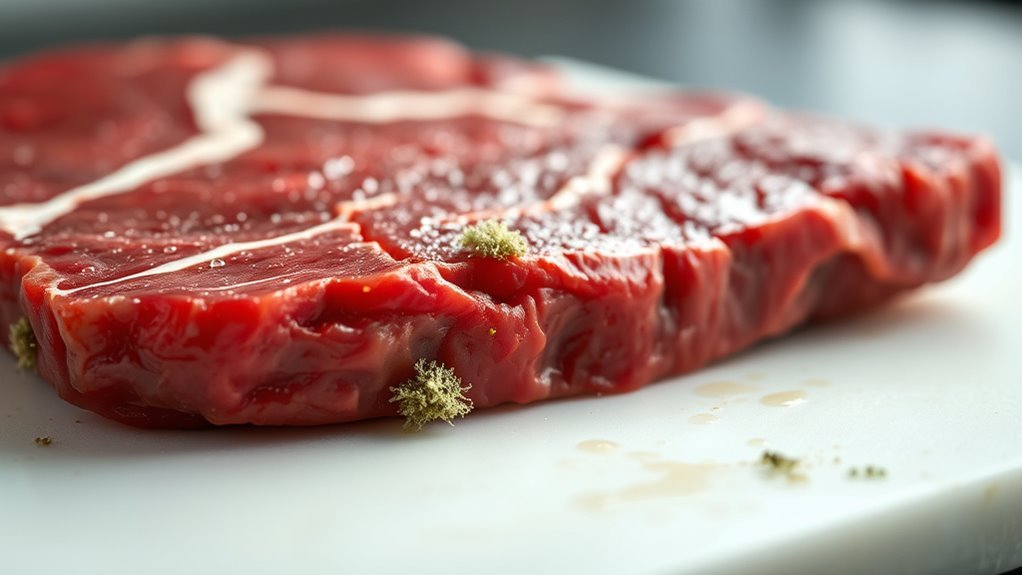
Visual cues give you an early warning, but your nose often provides the most reliable sign that beef has gone bad. When you sniff the meat, fresh beef has a mild, slightly metallic scent.
If you detect a sour, ammonia-like, or rancid odor, it’s a clear indicator the beef is spoiled. These off smells result from bacterial growth and chemical changes as the meat deteriorates.
Don’t ignore any strange or pungent smells, even if the beef looks normal. Sometimes spoilage starts before visible signs appear.
If you’re unsure, trust your sense of smell and avoid tasting the meat to test freshness. Discard any beef with unpleasant odors to prevent foodborne illness and keep your meals safe.
Changes in Beef Texture to Watch For
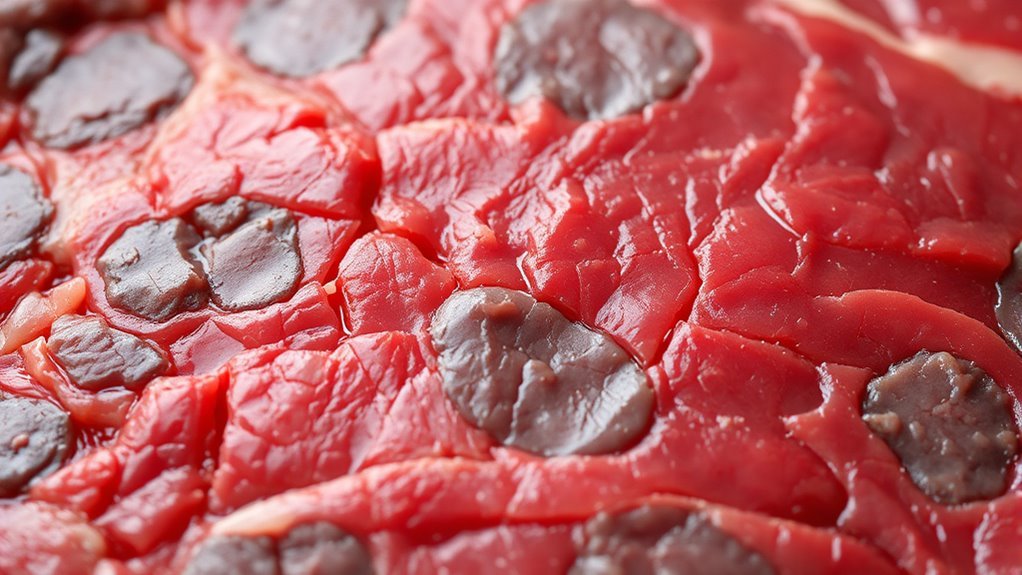
While smell is a key indicator, changes in beef texture can also signal spoilage. When you touch the beef, fresh meat should feel firm and slightly moist.
If it feels slimy or sticky, that’s a red flag. Sliminess happens because bacteria produce a film on the surface, which means the beef has started to go bad.
Also, if the beef feels unusually mushy or soft instead of firm, it’s best to discard it.
These texture changes often occur before you notice a strong off smell, so paying attention to how the beef feels can help you catch spoilage early.
Always trust your sense of touch alongside your nose to guarantee your beef is safe to eat.
Understanding Beef Expiration Dates
If you want to guarantee your beef stays safe to eat, understanding expiration dates is essential. These dates guide you on when the beef is at its freshest and when it might start to spoil.
You’ll typically see terms like “Sell By,” “Use By,” and “Best Before,” each with a specific meaning.
| Date Type | Meaning | Action Required |
|---|---|---|
| Sell By | Store should sell by this date | Buy before this date |
| Use By | Last safe day to consume | Eat or freeze by this date |
| Best Before | Quality peak period | Safe after but quality may drop |
Always check these dates before cooking to avoid spoiled beef.
Safe Storage Practices to Extend Beef Freshness
Knowing the expiration dates helps, but how you store your beef plays a big role in keeping it fresh longer. Always keep your beef refrigerated at or below 40°F (4°C). If you’re not planning to use it within a few days, freeze it to preserve quality and safety.
Wrap beef tightly in plastic wrap, aluminum foil, or freezer paper to prevent exposure to air, which causes freezer burn.
Store ground beef separately from whole cuts to avoid cross-contamination.
When thawing frozen beef, do it in the refrigerator, not on the counter, to prevent bacterial growth.
Keep your fridge clean and organized, placing beef on the lowest shelf to avoid drips onto other foods.
These simple storage steps help maintain freshness and reduce spoilage risk.
Frequently Asked Questions
Can Cooking Spoiled Beef Make It Safe to Eat?
No, cooking spoiled beef won’t make it safe to eat because harmful bacteria and toxins can survive. You should always discard beef that smells bad or looks off to avoid food poisoning risks.
Is It Safe to Eat Beef Past the Expiration Date if Frozen?
Better safe than sorry! If you froze beef before the expiration date, it’s generally safe beyond that date. Just make sure it’s properly stored and smells fresh when thawed before you cook and eat it.
How Long Can Cooked Beef Be Stored in the Refrigerator?
You can store cooked beef in the refrigerator for 3 to 4 days. Make sure to keep it in an airtight container to maintain freshness and prevent bacteria growth. Don’t forget to reheat it properly before eating!
Does Marinating Beef Affect Its Spoilage Rate?
Imagine a tangy marinade bathing your beef—yes, it can slightly slow spoilage by adding acidity, which inhibits bacteria. But don’t rely on it alone; always refrigerate promptly and use proper storage to keep your beef fresh.
Can Ground Beef Spoil Faster Than Whole Cuts?
Yes, ground beef spoils faster than whole cuts because it has more surface area exposed to bacteria. You should store it properly and use it quickly to avoid spoilage and foodborne illness risks.
Conclusion
Now that you know the key signs—color shifts, strange smells, and odd textures—you might wonder if your beef is still safe. Don’t ignore that slimy feel or sour scent; they could be warning you something’s wrong.
Remember, even if it looks okay, expiration dates and proper storage matter more than you think.
So, the next time you reach for beef, trust your senses—they might just save you from a nasty surprise. Knowing how to tell if beef has gone bad is essential for your health and safety.