Is Beef Brisket the Same as Corned Beef?
Think of beef brisket as a blank canvas, while corned beef is that same canvas painted with bold, salty strokes. If you’ve ever wondered whether beef brisket and corned beef are truly interchangeable or just closely related, you’re not alone.
The differences go beyond just taste and texture, influencing how each should be cooked and enjoyed. Before you decide which one to pick for your next meal, it’s worth understanding what sets them apart.
What Is Beef Brisket?
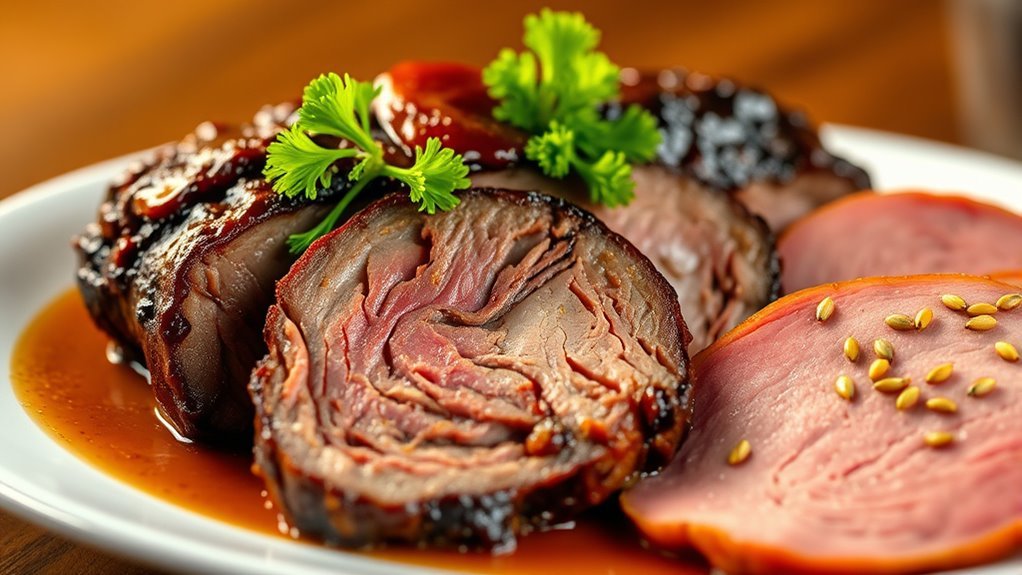
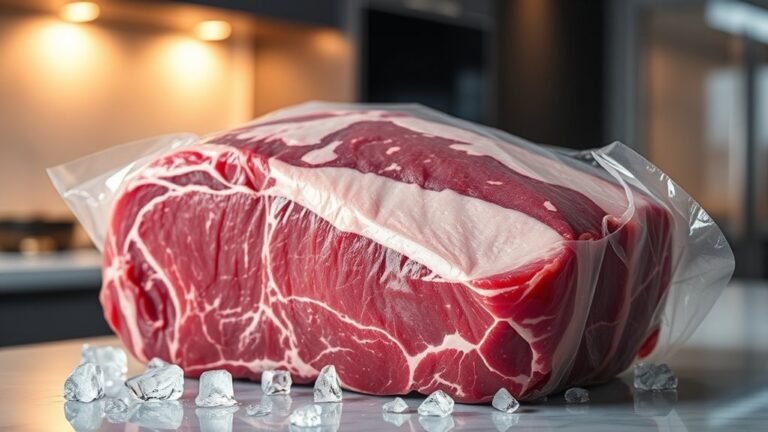
What exactly is beef brisket? It’s a cut of meat taken from the lower chest or breast of a cow. When you look for brisket, you’re choosing a tough, fatty piece that benefits from slow cooking methods like smoking, braising, or roasting.
This cut has two main muscles, separated by a layer of fat, which gives it a unique texture and rich flavor once cooked properly. You won’t find brisket tender if you try to cook it quickly; patience is key.
Whether you’re making barbecue, pot roast, or a slow-cooked stew, brisket rewards you with juicy, flavorful meat. It’s quite versatile, but it always requires time and low heat to break down the connective tissue and become tender.
Understanding Corned Beef
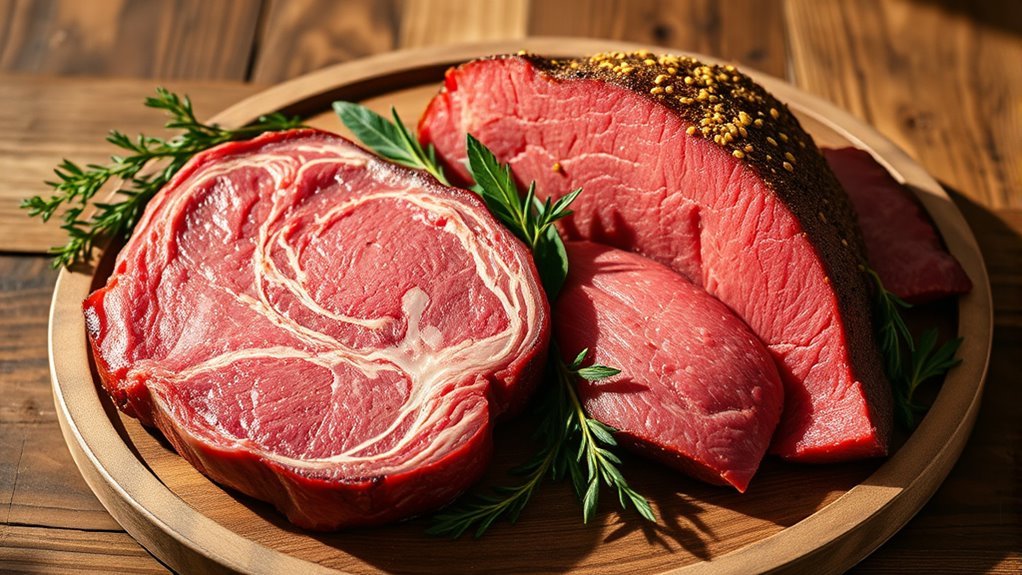
Corned beef comes from brisket, but it’s been cured in a special brine solution with salt and spices to preserve and flavor the meat. This curing process changes both the texture and taste, giving corned beef its distinctive savory profile.
Corned beef starts as brisket, cured in a spiced brine that transforms its flavor and texture.
When you understand corned beef, keep in mind:
- The brining mix often includes pickling spices like peppercorns, mustard seeds, and bay leaves.
- The term “corned” refers to the coarse grains of salt, or “corns,” used in curing.
- The curing also tenderizes the meat by breaking down proteins over time.
- Corned beef can be made from other cuts, but brisket is the most common due to its fat content and texture.
Knowing these details helps you appreciate how corned beef differs from plain brisket.
Differences in Preparation and Cooking
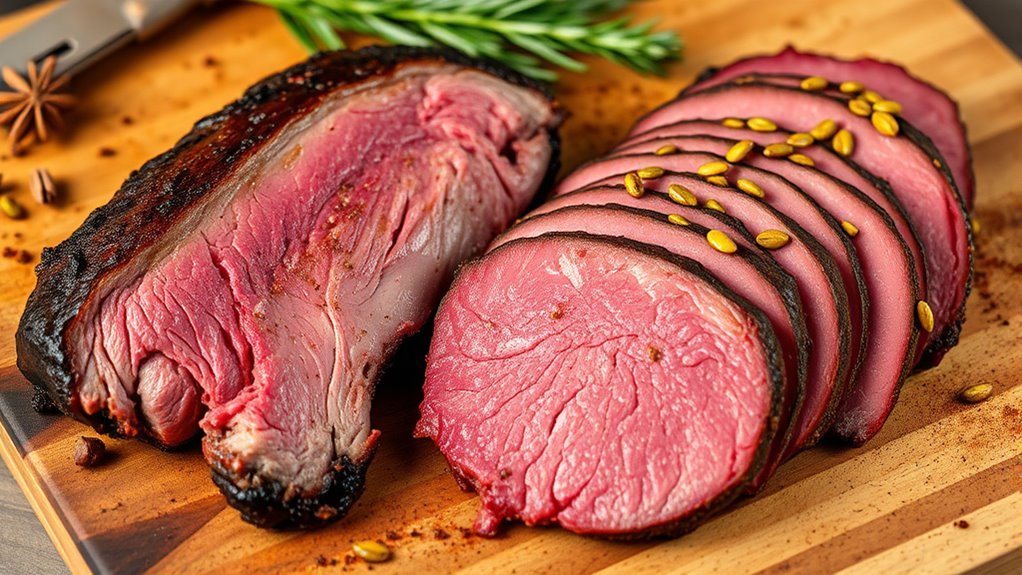
Since corned beef undergoes a curing process, its preparation and cooking differ markedly from plain brisket.
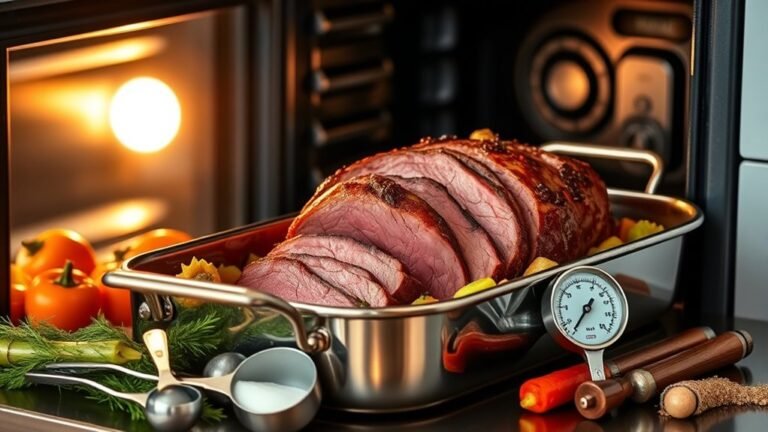
When you cook corned beef, you typically simmer it slowly in water or broth for several hours to tenderize the meat and mellow the curing flavors. This slow poaching method helps break down the tough connective tissue while retaining moisture.
On the other hand, when you prepare a fresh brisket, you usually roast, smoke, or braise it without any prior curing. This requires careful temperature control to render fat and soften the meat properly.
Unlike corned beef, brisket benefits from dry rubs or marinades before cooking.
Flavor Profiles and Texture Comparison
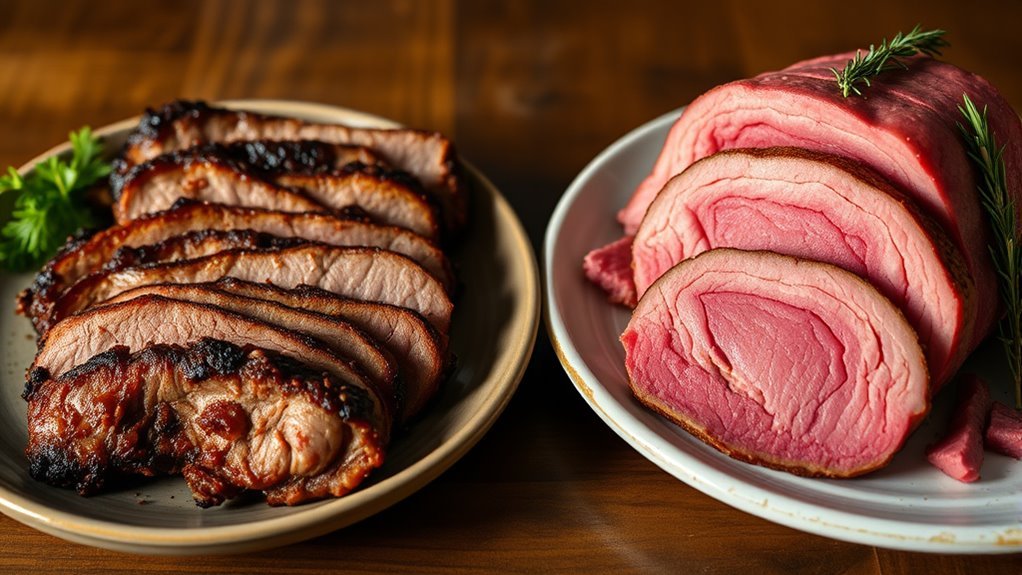
Although both come from the same cut of meat, you’ll notice distinct differences in flavor and texture between brisket and corned beef. Brisket offers a rich, beefy taste with a tender, fibrous texture when slow-cooked properly.
Corned beef, however, presents a saltier, spiced flavor due to the curing process, accompanied by a slightly firmer yet still tender bite.
- Brisket’s natural flavors shine through without added saltiness.
- Corned beef has a distinctive tang from pickling spices and curing.
- The texture of brisket is moist and stringy, ideal for shredding.
- Corned beef’s texture is denser and more compact, reflecting its preservation method.
Understanding these differences helps you appreciate each for their unique culinary qualities.
Common Culinary Uses for Brisket and Corned Beef
How do you decide whether to use brisket or corned beef in your cooking?
If you want a versatile cut perfect for slow roasting, smoking, or braising, brisket is your go-to. It’s fantastic for BBQ, pot roast, or even shredded beef dishes.
Corned beef, on the other hand, shines when you’re aiming for a tangy, salty flavor. It’s ideal for classic dishes like corned beef and cabbage, Reuben sandwiches, or hash.
While brisket lets you experiment with dry rubs and sauces, corned beef brings a distinctive briny punch due to its curing process.
Knowing these common culinary uses helps you choose the right ingredient to match the dish’s flavor profile and cooking method you want to achieve.
Can You Substitute One for the Other in Recipes?
Understanding the distinct flavors and cooking methods of brisket and corned beef sets the stage for deciding whether you can swap one for the other in your recipes. You can substitute brisket for corned beef, but be ready for differences in taste and texture.
Knowing the flavor and cooking differences helps determine if brisket can replace corned beef in recipes.
Corned beef is salt-cured and spiced, so it has a distinct tangy, savory flavor, while brisket is more neutral and needs seasoning.
Consider these factors when substituting:
- Cooking time varies: brisket often takes longer to tenderize.
- Seasoning adjustments are necessary to mimic corned beef’s flavor.
- Texture differences may affect the dish’s mouthfeel.
- Dish type matters: substitutions work better in stews than in traditional corned beef sandwiches.
With these in mind, you can adapt recipes successfully.
Frequently Asked Questions
What Is the Nutritional Difference Between Brisket and Corned Beef?
You’ll find brisket has less sodium and fewer preservatives, while corned beef contains higher salt due to curing. Both offer similar protein, but corned beef’s curing process adds extra sodium and sometimes sugar, affecting nutrition.
How Long Does Corned Beef Last in the Refrigerator?
Imagine you bought corned beef for St. Patrick’s Day; you’ll want to eat it within 5 to 7 days refrigerated. Don’t forget to keep it sealed tightly to maintain freshness and avoid spoilage.
Can Brisket Be Cooked in a Slow Cooker?
Yes, you can cook brisket in a slow cooker. It’ll become tender and flavorful with low, slow heat. Just season it well, add some liquid, and let it cook for 8-10 hours on low.
What Are Traditional Side Dishes for Corned Beef?
Think of traditional sides for corned beef as trusty companions on a flavorful journey. You’ll want creamy mashed potatoes, tangy sauerkraut, buttery cabbage, and maybe some hearty rye bread to complete the experience perfectly.
Is Brisket Gluten-Free?
Yes, brisket itself is naturally gluten-free. But watch out for marinades or sauces that might contain gluten. Always check ingredient labels or prepare it yourself to make sure it stays safe for your gluten-free diet.
Conclusion
You can think of beef brisket as a blank canvas—raw, rich, and full of potential—while corned beef is that same canvas transformed by a splash of bold, salty color. Though they share the same roots, their journeys paint different stories on your plate.
So, whether you choose the fresh, tender brushstrokes of brisket or the spiced, textured hues of corned beef, you’re crafting a distinct flavor masterpiece every time. Understanding the difference between beef brisket and corned beef helps you appreciate each dish’s unique qualities before you cook or serve them.