How to Tell If Farm Eggs Are Still Good Quickly
You want to make sure your farm eggs are safe and fresh before using them, but you don’t have time for complicated tests. Luckily, there are simple steps you can take right now to check their condition quickly.
From examining the shell to a quick water test, these methods give you fast clues about an egg’s freshness. But which signs should you trust most when seconds matter?
Inspecting the Eggshell for Freshness Indicators
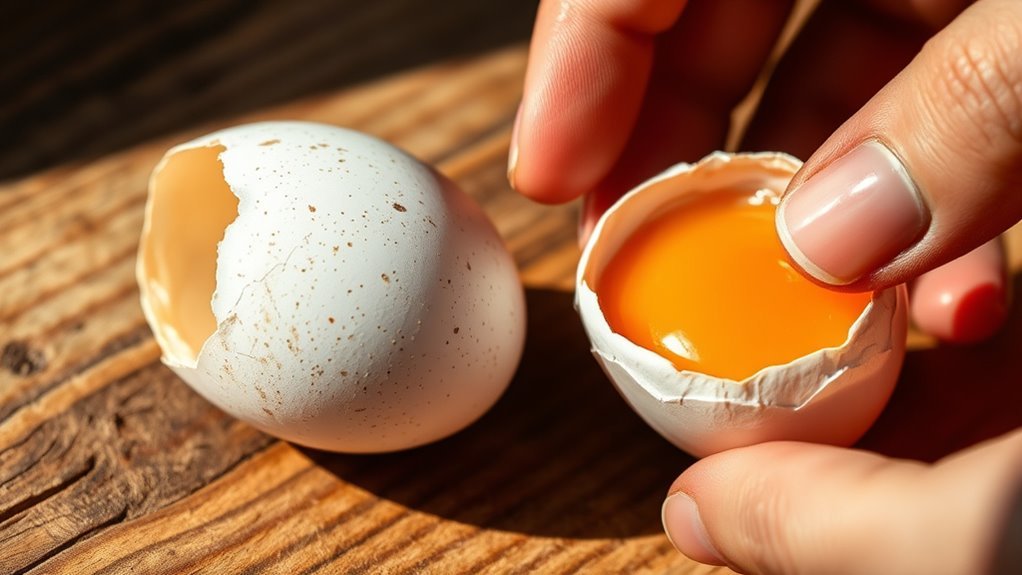
Although it might seem simple, inspecting the eggshell can tell you a lot about its freshness. First, look for cracks or sliminess; cracked shells let bacteria in, and sliminess might mean spoilage.
Inspect eggshells carefully—cracks allow bacteria in, and sliminess often signals spoilage.
Next, check the shell’s texture. Fresh eggs usually have a slightly rough, powdery surface, while older eggs feel smooth or shiny.
Pay attention to color, too—discoloration or spots can signal contamination or age.
Additionally, a fresh egg’s shell should feel firm and sturdy when you gently squeeze it. If it feels weak or brittle, it might be old or compromised.
Performing the Water Float Test
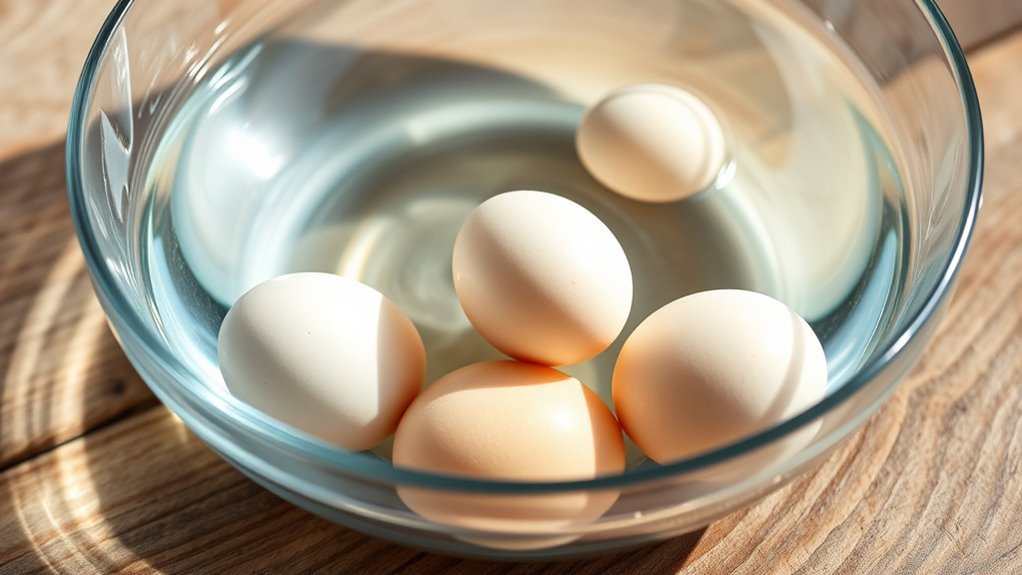
When you want a quick and reliable way to check an egg’s freshness, performing the water float test is a simple method you can use at home. Fill a bowl or glass with cold water, then gently place the egg in it.
If the egg sinks and lays flat on its side, it’s very fresh. If it sinks but stands upright on the bottom, it’s still good to eat but should be used soon.
However, if the egg floats to the top, it’s no longer fresh and should be discarded. This happens because older eggs develop larger air cells inside, increasing buoyancy.
The water float test helps you avoid cracked shells or bad odors by giving you a quick visual clue about the egg’s condition.
Checking the Egg’s Weight and Size
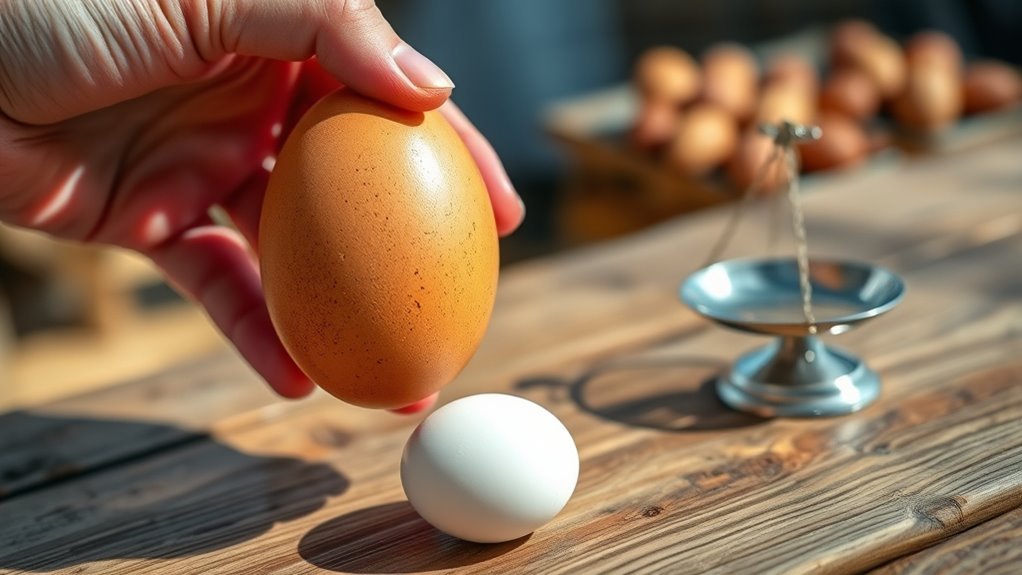
Since fresh eggs tend to weigh more and feel denser, checking an egg’s weight and size can give you another quick indication of its freshness. Pick up the egg and compare it to others you know are fresh.
Fresh eggs usually weigh more and feel denser—compare them by hand to gauge freshness quickly.
If it feels lighter or smaller than usual, it might’ve lost moisture or air has entered, signaling it’s older. Fresh eggs usually have a firm shell and a solid feel.
Keep in mind that farm eggs vary in size naturally, so use this method alongside others like the float test.
Don’t rely solely on weight and size, but trust your hands. If an egg feels unusually light or small, it’s a good idea to test it further or avoid using it raw.
Shaking the Egg to Detect Internal Movement
If you gently shake the egg and feel movement inside, it often means the egg is older and the contents have started to break down. This happens because the egg white and yolk lose their firmness over time, allowing them to shift more freely.
Here’s how to use this method effectively:
- Hold the egg close to your ear in a quiet room.
- Gently shake it back and forth or side to side.
- Pay attention to any sloshing or unusual movement inside.
- If you detect significant movement, consider the egg less fresh and use it soon or discard it.
This quick test helps you gauge freshness without cracking, but it’s best combined with other checks for accuracy.
Assessing the Egg’s Smell After Cracking
Although you can often judge an egg’s freshness from its appearance, the smell after cracking it open gives you the most reliable indication of whether it’s still good. When you crack the egg, take a moment to sniff it closely.
A fresh egg has a neutral or mild scent, while a bad egg emits a strong, unpleasant odor, often sulfurous or rotten.
| Smell Detected | What It Means |
|---|---|
| No odor or mild scent | Egg is fresh |
| Sulfur or rotten smell | Egg is spoiled |
| Sour or funky smell | Egg should be discarded |
| Unusual chemical smell | Avoid using the egg |
Trust your nose. If it smells off, don’t risk it.
Observing the Egg White and Yolk Appearance
When you examine the egg white and yolk after cracking, you get important clues about its freshness. Fresh eggs have firm, thick whites that stay close to the yolk, and the yolk itself looks round and plump. Here’s what to look for:
Examining the thick white and plump yolk after cracking reveals an egg’s freshness and quality.
- Clear, thick egg white indicates freshness; runny or watery whites suggest the egg is older.
- A yolk that holds its shape and stands tall means the egg is fresh.
- If the yolk appears flat or breaks easily, the egg may be past its prime.
- Discoloration or cloudy whites can signal spoilage or bacterial growth.
Using Date and Storage Conditions to Estimate Freshness
Since eggs don’t come with a definitive expiration date, you can rely on the packing date and how you’ve stored them to judge their freshness. Most farm eggs have a packing date stamped on the carton, usually a three-digit number representing the day of the year. If you know that date, you can track how long the eggs have been kept.
Proper storage is key: keep eggs refrigerated at or below 40°F (4°C) to slow bacterial growth and maintain quality. If stored correctly, farm eggs can stay fresh for about 3 to 5 weeks past the packing date.
Frequently Asked Questions
Can Farm Eggs Carry Salmonella More Often Than Store-Bought Eggs?
Yes, farm eggs can carry salmonella more often than store-bought ones since they’re less likely to be washed or refrigerated. Still, you can reduce risks by handling and cooking them properly to keep yourself safe.
How Should Farm Eggs Be Stored to Maximize Their Shelf Life?
Did you know farm eggs can last up to five weeks refrigerated? You should store them in the coldest part of your fridge, not the door, to keep them fresh longer and maintain their quality.
Is It Safe to Eat Farm Eggs Past Their Expiration Date if Cooked Well?
Yes, you can eat farm eggs past their expiration date if you cook them thoroughly. Just make sure they don’t smell off or have strange colors. When in doubt, trust your senses for safety.
What Are the Nutritional Differences Between Farm Eggs and Commercial Eggs?
You’ll find farm eggs usually have more omega-3s, vitamins A and E, and less cholesterol than commercial eggs. Their richer nutrient profile comes from hens’ varied diets and outdoor foraging compared to factory farming.
Can Freezing Farm Eggs Affect Their Quality or Safety?
Yes, freezing farm eggs can affect their texture and quality, especially if frozen whole. You should crack and beat them before freezing to maintain safety and texture. Always use frozen eggs within a year for best results.
Conclusion
Just like a seasoned detective trusts clues, you can rely on these simple tests to quickly judge your farm eggs’ freshness. By inspecting the shell, performing the float test, feeling the weight, and checking the smell and appearance, you’ll avoid surprises at breakfast.
Remember, a fresh egg is like a hidden gem—valuable and worth the effort to find. So trust your senses and enjoy your farm-fresh eggs with confidence every time.
Knowing how to tell if farm eggs are still good quickly ensures you always use the freshest eggs for your meals. Use these easy tips regularly to keep your kitchen safe and your breakfast delicious.