Is Beef Tenderloin the Same as Filet Mignon?
Imagine you’re at a steakhouse, trying to decide between ordering a beef tenderloin or a filet mignon. Both cuts are known for their tenderness and delicious flavor, but are they really the same? Understanding the difference between beef tenderloin and filet mignon can help you make a more informed choice.
While they come from the same general area of the cow, subtle differences in size, texture, and even price might influence your decision. Beef tenderloin is a larger cut that can be sliced into several steaks, including the filet mignon. On the other hand, filet mignon is a specific portion of the tenderloin, prized for its exceptional tenderness.
Knowing these nuances can help you pick the perfect steak next time you’re dining out or cooking at home. Whether you prefer a tenderloin roast or a filet mignon steak, understanding the distinction enhances your steak experience.
Understanding the Beef Tenderloin Cut
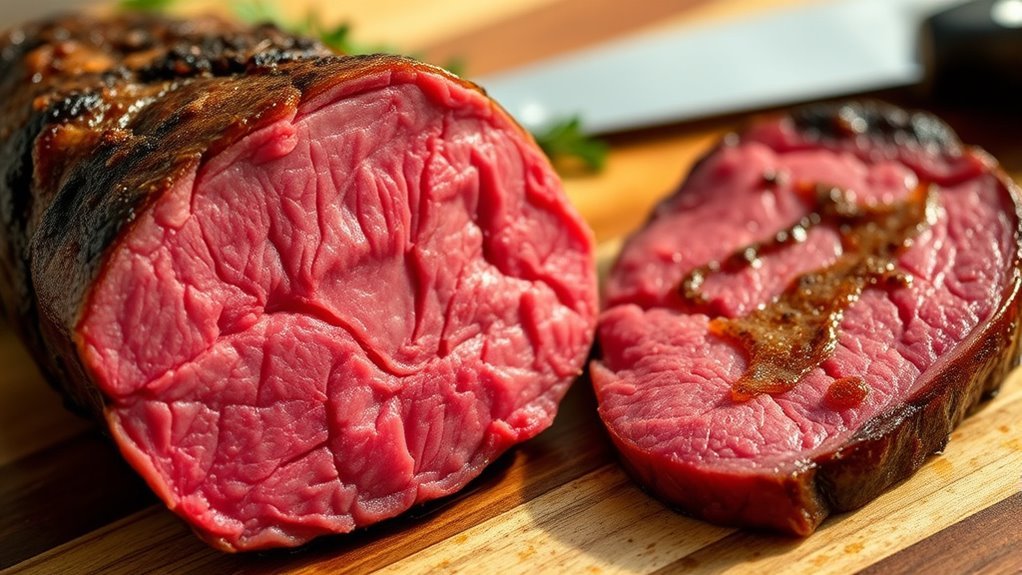
Although it might seem confusing at first, understanding the beef tenderloin cut is essential if you want to know how filet mignon fits into the picture. The beef tenderloin is a long, narrow, and tender muscle located along the spine of the cow. It’s prized for its tenderness because it doesn’t get much exercise.
Understanding the beef tenderloin reveals why filet mignon is so tender and special.
When you buy a whole beef tenderloin, you’re looking at the entire muscle, which can weigh anywhere from 4 to 6 pounds. This cut is typically trimmed and divided into smaller portions for cooking.
Knowing this helps you appreciate why the tenderloin is special and how different steaks, including the filet mignon, come from specific sections of this larger cut.
Understanding this foundation makes selecting and cooking your beef easier.
Defining Filet Mignon
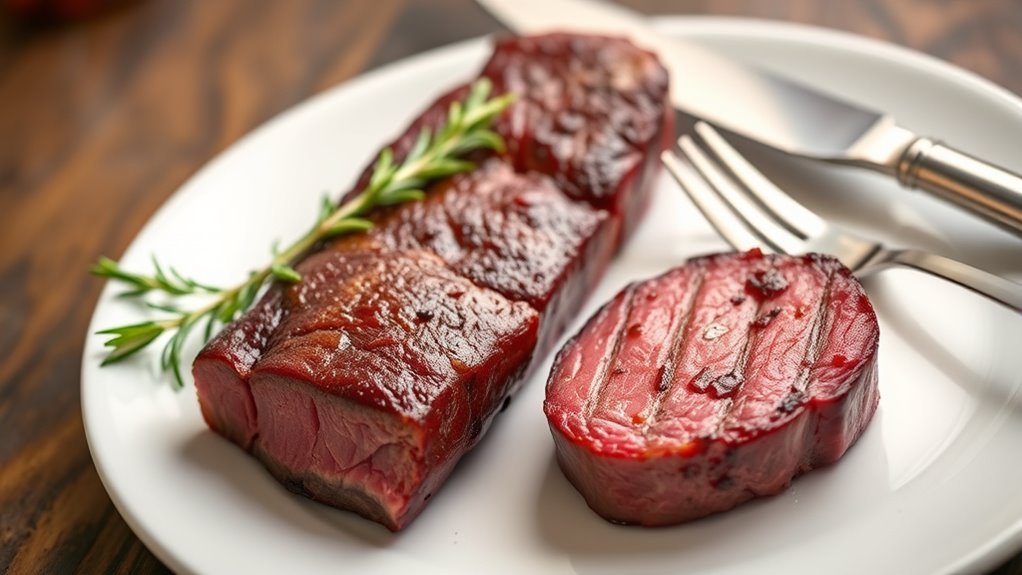
What exactly makes filet mignon stand out from other cuts? When you choose filet mignon, you’re picking the most tender part of the beef tenderloin. This small, round steak offers a buttery texture and mild flavor that many steak lovers crave.
It’s prized for its tenderness rather than intense beefiness. Here’s what you should know about filet mignon:
- It’s cut from the narrower end of the beef tenderloin.
- The steak is typically 1.5 to 2 inches thick and has a fine grain.
- It’s lean, with very little fat and connective tissue, making it exceptionally soft.
When you cook filet mignon, it’s best to focus on methods that preserve its delicate texture, like grilling or pan-searing quickly.
Location of Beef Tenderloin on the Cow
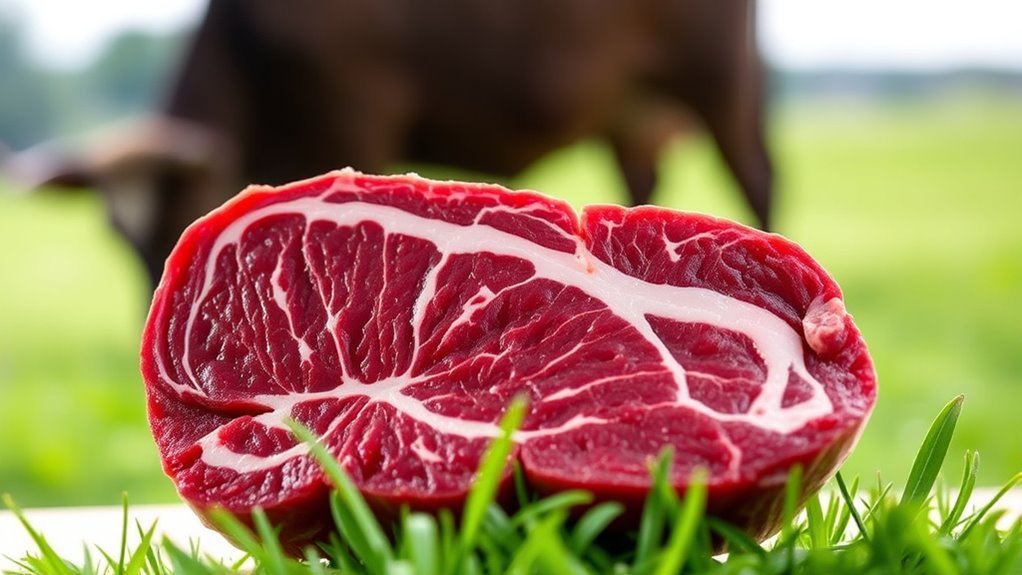
Because the beef tenderloin is where filet mignon comes from, understanding its location on the cow helps you appreciate its qualities. The tenderloin runs along the spine, nestled beneath the ribs and next to the sirloin.
This position means it gets minimal exercise, resulting in its famously tender texture. Knowing where it’s found also clarifies why it’s a smaller, more delicate cut compared to other muscles.
| Location on Cow | Description |
|---|---|
| Along the spine | Runs from the short loin to sirloin |
| Beneath the ribs | Protected position, less movement |
| Next to sirloin | Adjacent to flavorful cuts |
This prime spot explains the tenderloin’s unique tenderness and subtle flavor.
Where Filet Mignon Comes From on the Tenderloin
When you look at the beef tenderloin, you’ll find that filet mignon comes specifically from the smaller, tapered end of this muscle. This section is prized because it’s the most tender part, with fine-grained meat and minimal connective tissue.
Unlike other cuts, filet mignon offers a melt-in-your-mouth experience thanks to where it’s located on the tenderloin. Here’s what makes this spot special:
- It’s the narrowest part of the tenderloin, resulting in smaller, thicker steaks.
- Muscle activity here is low, making the meat exceptionally tender.
- The tapered end has less fat and marbling compared to other parts, emphasizing a lean texture.
Understanding this helps you appreciate why filet mignon is a unique and sought-after cut.
Differences in Size and Shape
Although both come from the same muscle, beef tenderloin and filet mignon differ noticeably in size and shape.
Beef tenderloin and filet mignon share a muscle but differ clearly in size and shape.
When you look at a whole beef tenderloin, you’ll see a long, tapered cut that can weigh between 4 to 6 pounds. It’s cylindrical but narrows markedly at one end.
On the other hand, filet mignon is a small, round steak cut from the thicker, center portion of the tenderloin. Each filet mignon typically weighs between 4 to 8 ounces and has a uniform, compact shape.
So, when you choose a beef tenderloin, you’re getting the entire muscle, but a filet mignon is just a precise, individual steak portion from that larger cut.
This size and shape difference impacts how you cook and serve each.
Flavor Profiles of Tenderloin and Filet Mignon
The size and shape differences between beef tenderloin and filet mignon also influence their flavor profiles. While both cuts come from the same muscle, they offer subtly distinct taste experiences.
When you savor a whole tenderloin, you’ll notice a milder, more delicate beef flavor due to its larger size and uniformity.
Filet mignon, being a smaller steak cut from the tenderloin’s narrow end, delivers a concentrated, buttery flavor that many find irresistible. Here’s what you should know:
- Tenderloin offers a gentle, clean beef taste that pairs well with sauces and seasonings.
- Filet mignon provides a richer, more intense flavor despite its mildness.
- Both cuts have low fat, so they rely on quality and preparation to maximize flavor.
Understanding these nuances helps you pick the right cut for your palate.
Texture Comparison Between the Two Cuts
Because both cuts come from the same muscle, you might expect their textures to be identical, but you’ll find subtle differences that affect your eating experience. Filet mignon is a specific portion taken from the smaller end of the tenderloin, making it exceptionally tender and fine-grained.
When you bite into filet mignon, you’ll notice a buttery softness with almost no connective tissue, which melts easily in your mouth.
On the other hand, the broader tenderloin includes slightly varying textures; the larger sections may feel a bit firmer and less uniformly tender.
Common Cooking Methods for Each Cut
When you cook filet mignon, you’ll want to focus on methods that highlight its tenderness, like grilling, pan-searing, or broiling. These techniques quickly develop a flavorful crust while keeping the inside juicy. Because filet mignon is lean and delicate, these quick, high-heat techniques prevent it from drying out.
Beef tenderloin, being a larger, thicker cut, offers more flexibility. You can roast it whole for an even cook or slice it into medallions for similar methods as filet mignon.
Try these approaches for each cut:
- Filet Mignon: Pan-sear then finish in the oven; grill over high heat; broil for a caramelized exterior.
- Beef Tenderloin: Roast whole for an elegant presentation; slice and grill or pan-sear; slow-roast for tenderness.
Each method plays to the unique qualities of the cut.
Price Differences and Market Availability
Although both cuts come from the same muscle, you’ll often find filet mignon priced considerably higher due to its smaller size and reputation as a premium steak. Because filet mignon is cut from the narrow end of the tenderloin, it’s less abundant, which drives up the price.
Beef tenderloin, on the other hand, is sold as a larger roast, making it more affordable per pound. Availability also varies: filet mignon is a staple in fine dining and specialty butchers, while beef tenderloin is more common in grocery stores and supermarkets.
| Cut | Price per Pound | Availability |
|---|---|---|
| Filet Mignon | High | Specialty butchers, fine dining |
| Beef Tenderloin | Moderate | Grocery stores, supermarkets |
| Filet Mignon | Premium | Limited quantity |
| Beef Tenderloin | More abundant | Widely available |
How to Choose Between Beef Tenderloin and Filet Mignon
Deciding between beef tenderloin and filet mignon depends largely on your cooking plans and budget.
If you want a whole roast or multiple steaks, beef tenderloin offers versatility and value.
For individual, premium steaks with a tender texture, filet mignon is ideal but pricier.
Consider these points when choosing:
- Meal size: Tenderloin suits larger gatherings; filet mignon fits intimate dinners.
- Cooking method: Tenderloin roasts or slices well; filet mignon shines with quick, high-heat cooking.
- Budget constraints: Tenderloin costs less per pound; filet mignon demands a premium price per steak.
Frequently Asked Questions
Can Beef Tenderloin and Filet Mignon Be Substituted for Each Other in Recipes?
Yes, you can substitute beef tenderloin and filet mignon in recipes since filet mignon is a cut from the tenderloin. Just remember filet mignon is smaller and more tender, so adjust cooking times accordingly.
How Long Should Beef Tenderloin Rest After Cooking?
You should let beef tenderloin rest for about 10 to 15 minutes after cooking. This allows the juices to redistribute, making the meat juicier and more flavorful when you slice and serve it.
Are There Specific Sauces That Pair Best With Filet Mignon?
You’ll love pairing filet mignon with classic sauces like béarnaise, red wine reduction, or mushroom sauce. These rich, flavorful options complement the tender, mild beef, enhancing every bite without overpowering its delicate texture.
What Is the Best Way to Store Leftover Beef Tenderloin?
You should wrap leftover beef tenderloin tightly in aluminum foil or plastic wrap, then store it in an airtight container in the fridge. Use it within 3-4 days for the best flavor and safety.
Is Filet Mignon Always Cut From Grass-Fed or Grain-Fed Cattle?
No, filet mignon isn’t always cut from grass-fed or grain-fed cattle. You’ll find it from both types, depending on the producer. So, it’s best to check the label or ask your butcher for details.
Conclusion
While beef tenderloin stretches along the cow’s spine like a long, elegant ribbon, filet mignon is the petite, jewel-like piece cut from its tip. You’ll notice tenderloin offers versatility in size and shape, but filet mignon dazzles with unmatched tenderness and a refined texture.
Choosing between them means weighing generous slices against a small, premium bite—both delicious, yet distinctly different in experience and price.
Your plate, your perfect cut. When deciding between beef tenderloin and filet mignon, consider what matters most: the larger, versatile tenderloin or the tender, luxurious filet mignon steak.