Are Brisket and Corned Beef the Same?
When you see brisket and corned beef side by side, you might think they’re identical since both come from the same cut of meat. However, brisket and corned beef are quite different in preparation and flavor. If you’ve ever tried cooking or tasting them, you know there’s more beneath the surface.
The way each is prepared and seasoned changes everything—from flavor to texture. Understanding these differences can completely shift how you use them in your kitchen. So, what really sets them apart?
Understanding the Brisket Cut
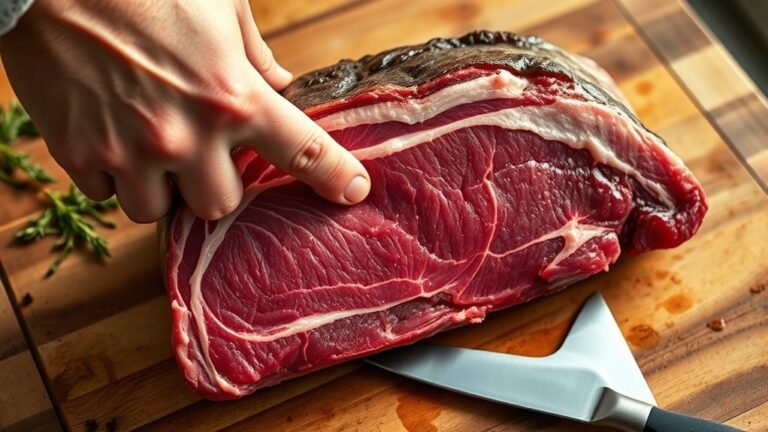
Although you mightn’t always notice it, brisket is a specific cut of beef that comes from the lower chest of the cow. When you look for brisket, you’re targeting a well-exercised muscle, which means it’s tougher and filled with connective tissue.
Because of this, you’ll want to cook it low and slow to break down those fibers and get tender, juicy meat.
Brisket typically comes in two parts: the flat cut, which is leaner, and the point cut, which has more fat and flavor.
Knowing this helps you pick the right piece for your meal. Whether you’re smoking, braising, or roasting, understanding brisket gives you a solid foundation to appreciate what makes this cut unique.
The Process of Making Corned Beef
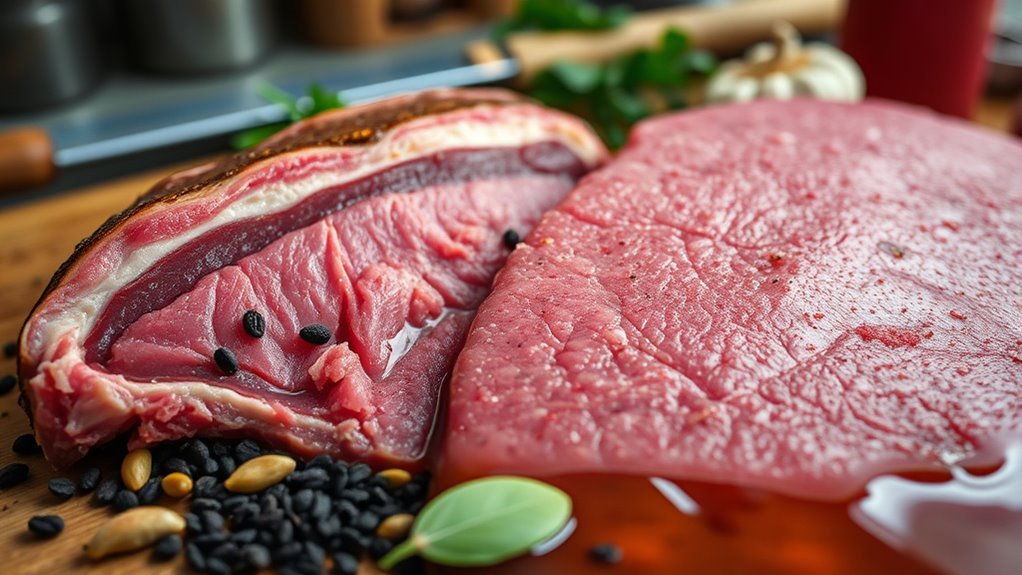
While brisket itself is a specific cut of beef, corned beef refers to brisket that’s been preserved in a seasoned brine. When you make corned beef, you start by soaking the brisket in a salt-heavy solution infused with spices.
Here’s how it typically goes:
- Submerge the brisket in a brine of water, salt, sugar, and pickling spices.
- Let it cure in the fridge for several days to absorb flavors and preserve the meat.
- Occasionally turn the brisket to ensure even curing.
- After curing, rinse off the brine before cooking.
This curing process changes the texture and taste of the brisket, giving you that distinct corned beef flavor you recognize.
Differences in Preparation Techniques
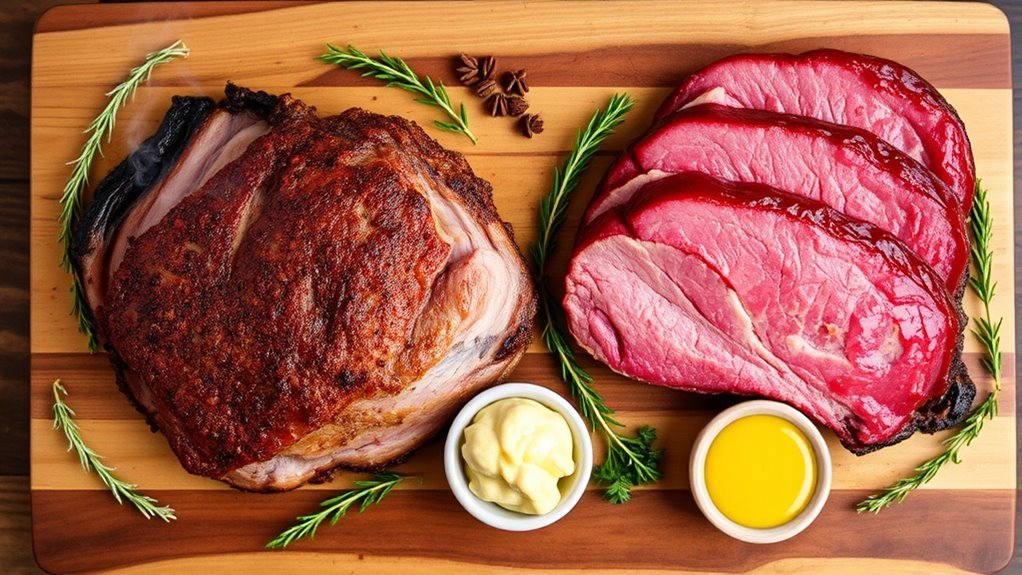
Because brisket and corned beef undergo different preparation methods, their cooking approaches also vary markedly. When you cook brisket, you usually slow-smoke or braise it to tenderize the tough meat. Corned beef, however, is pre-brined and often boiled or simmered to soften the cured meat.
Your choice of seasoning and cooking times also differ, influencing texture and moisture retention.
| Aspect | Brisket | Corned Beef |
|---|---|---|
| Preparation | Trimmed, seasoned dry | Brined in salt solution |
| Cooking Method | Slow-smoked or braised | Boiled or simmered |
| Cooking Time | 8-12 hours | 2-3 hours |
Understanding these techniques helps you master each dish’s unique qualities.
Flavor Profiles of Brisket vs. Corned Beef
When you taste brisket, you’ll notice its rich, smoky flavor that comes from slow cooking and dry seasoning, delivering a deep, savory experience.
Corned beef, on the other hand, boasts a salty, tangy profile thanks to its brining process with pickling spices.
You can easily distinguish them by their flavor characteristics:
- Brisket offers a robust, meaty taste with a hint of char from the bark.
- Corned beef provides a zesty, slightly sour note from the curing brine.
- Brisket’s seasoning is typically straightforward: salt, pepper, and smoke.
- Corned beef carries complex spice flavors like coriander, mustard seeds, and bay leaves.
Understanding these flavor profiles helps you appreciate the unique appeal of each cut and guides your choice for different dishes.
Cooking Methods for Brisket and Corned Beef
Although both brisket and corned beef come from the same cut, you’ll cook them quite differently to bring out their best flavors and textures.
Brisket and corned beef share a cut but require distinct cooking methods to highlight their unique flavors.
For brisket, slow cooking methods like smoking, braising, or roasting at low temperatures work best, allowing the tough connective tissue to break down and the meat to become tender and juicy. You’ll want to monitor it closely to avoid drying it out.
Corned beef, on the other hand, is typically simmered or boiled. Since it’s already cured with spices, gentle cooking in liquid helps soften the meat while preserving its salty, tangy flavor.
You’ll often cook corned beef with vegetables in the same pot, making a hearty meal. So, cooking methods depend largely on whether you’re working with fresh brisket or cured corned beef.
Texture and Appearance Comparison
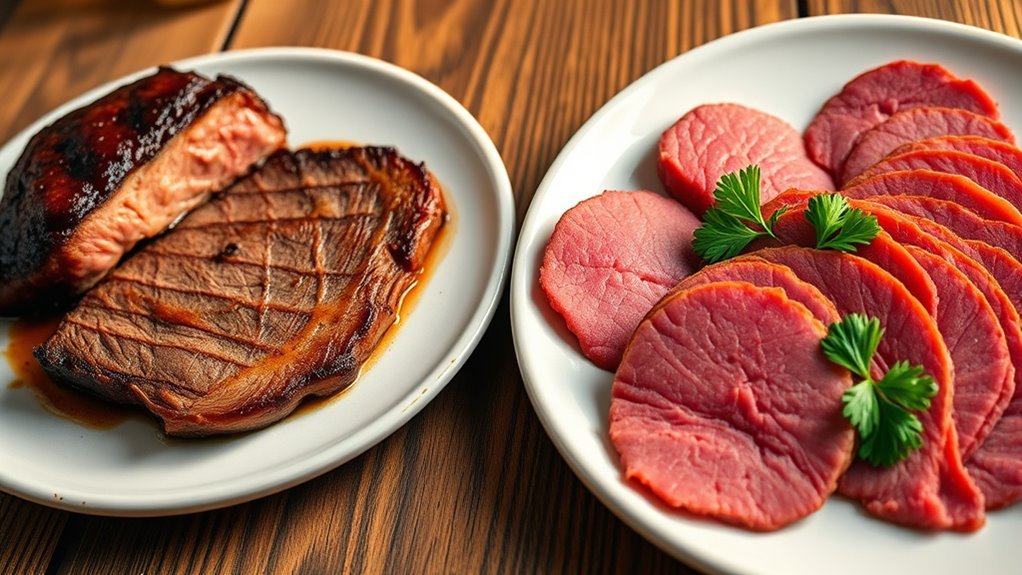
While both brisket and corned beef come from the same cut, you’ll notice their textures and appearances differ markedly due to their preparation methods. When you look at and touch these meats, here’s what stands out:
- Brisket has a darker, richly browned crust from slow smoking or roasting.
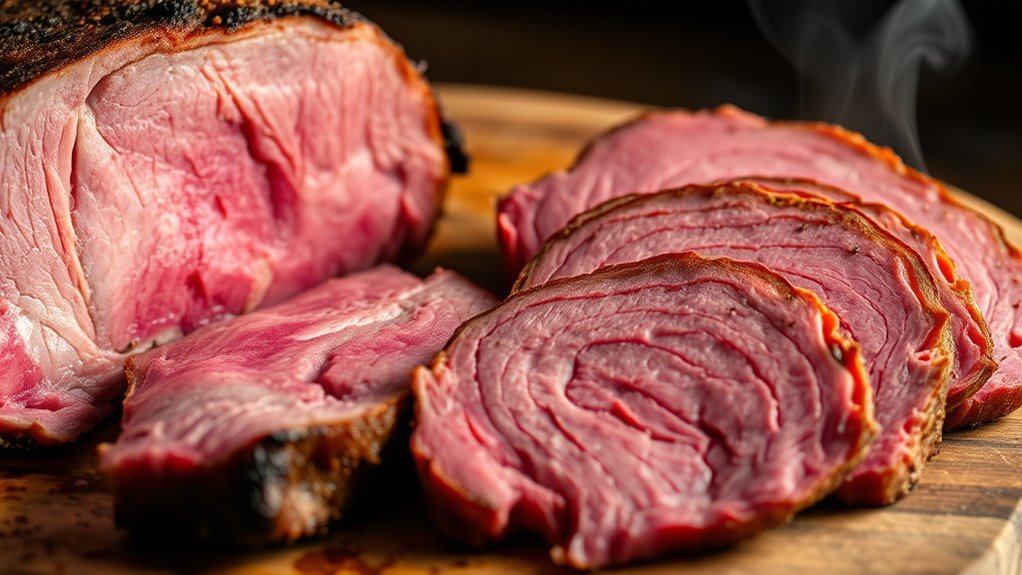
- Corned beef appears pinkish, thanks to the curing salts used during brining.
- The texture of brisket is tender yet fibrous, with visible muscle grain.
- Corned beef feels softer and more uniform, often flaking easily when pulled apart.
These differences reflect how smoking or curing influences the meat, so you can tell them apart just by sight and feel before tasting. Understanding these cues helps you appreciate each meat’s unique qualities.
Common Culinary Uses and Recipes
Because brisket and corned beef have distinct flavors and textures, they shine in different culinary roles. When you cook brisket, you’ll often slow-roast or smoke it to maximize its rich, beefy taste and tender texture. It’s perfect for barbecue, sandwiches, or as a hearty main dish.
Corned beef, on the other hand, is usually simmered or boiled, making it ideal for dishes like corned beef and cabbage or Reuben sandwiches. If you want a savory, spiced meat with a slightly salty bite, corned beef fits the bill.
When planning meals, consider brisket for smoky, robust flavors and corned beef for tangy, brined dishes. Using each meat where it excels will bring out their best culinary qualities.
Nutritional Differences Between the Two
When comparing brisket and corned beef, you’ll notice key nutritional differences that can influence your dietary choices. Both come from the same cut of beef, but corned beef is cured with salt and spices, which changes its nutritional profile. Here’s what you should consider:
- Sodium Content: Corned beef contains considerably more sodium due to the curing process, which can affect blood pressure if consumed frequently.
- Fat Levels: Brisket usually has higher fat content, especially if cooked with the fat cap intact.
- Protein: Both are rich in protein, but brisket offers slightly more per serving.
- Calories: Corned beef tends to have fewer calories than brisket because some fat is trimmed or rendered during curing.
Knowing these differences helps you pick the option that fits your nutrition goals best.
Frequently Asked Questions
Can Brisket Be Used to Make Corned Beef at Home?
Yes, you can use brisket to make corned beef at home. Just cure the brisket with a salt and spice brine for several days before cooking, and you’ll have delicious homemade corned beef ready to enjoy.
What Is the Historical Origin of Corned Beef?
Corned beef’s enthralling chronicle comes from centuries-old curing customs in Ireland, where salt crystals, called “corns,” conserved cuts. You’ll find its flavorful foundation firmly fixed in preservation practices before modern refrigeration revolutionized meat storage.
Are There Vegetarian Alternatives to Corned Beef?
Yes, you can find vegetarian alternatives to corned beef made from seitan, jackfruit, or mushrooms. These options mimic the texture and flavor, letting you enjoy classic dishes without meat. Give them a try!
How Long Does Corned Beef Last in the Refrigerator?
Corned beef lasts about 5 to 7 days in your refrigerator, unlike fresh brisket, which spoils faster. So, you can enjoy your flavorful corned beef longer if you store it properly and keep it sealed tight.
Is Corned Beef Safe to Eat During Pregnancy?
You can eat corned beef during pregnancy if it’s cooked thoroughly to kill harmful bacteria. Avoid deli meats unless heated well, and always check freshness to keep you and your baby safe from foodborne illnesses.
Conclusion
Now that you know brisket and corned beef aren’t the same, you can appreciate their unique qualities. Notably, over 60% of brisket sold in the U.S. is used for barbecue, highlighting its popularity in smoked dishes.
Corned beef, with its salty, tangy flavor, shines in traditional recipes like Reuben sandwiches or St. Patrick’s Day meals.
Understanding these differences helps you choose the right one for your next cooking adventure and enjoy each fully. Whether you prefer the tender, smoky taste of brisket or the flavorful, brined character of corned beef, knowing these distinctions is key to making the best choice for your meal.