How to Tell When Beef Jerky Is Done
When you’re making beef jerky, knowing exactly when it’s done can be tricky. Understanding how to tell when beef jerky is done is key to achieving the perfect balance between texture and safety. You want it firm enough to store well but still tender enough to enjoy.
Relying on appearance alone might leave you guessing, so it’s essential to understand what texture, color, and flexibility really mean for safety and quality. But how do you balance all these factors without overcooking or under-drying your jerky?
Understanding the Ideal Texture of Beef Jerky
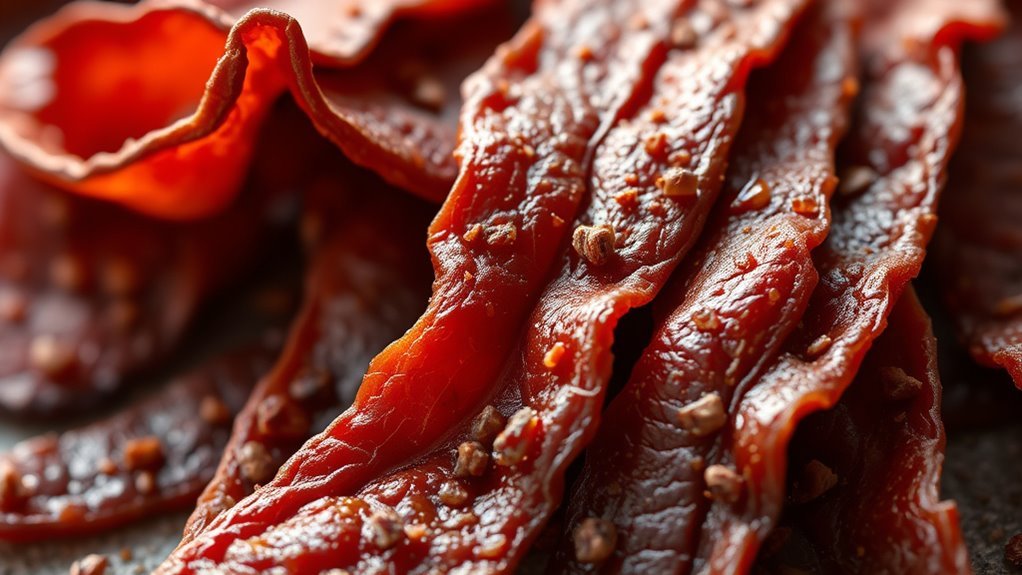
Although it might seem tricky at first, understanding the ideal texture of beef jerky is key to knowing when it’s done. You want the jerky to be firm yet pliable, not brittle or overly soft. When you bend a strip, it should crack slightly but not snap in half.
If it breaks too easily, it’s over-dried; if it’s too bendy or moist, it needs more drying time. The surface should feel dry to the touch without any sticky or tacky spots.
Press the jerky gently—if it feels spongy or leaves moisture on your fingers, keep drying. Mastering this tactile sense helps you avoid jerky that’s either chewy like leather or dangerously underdone, ensuring a safe, tasty snack every time.
Visual Indicators of Properly Dried Jerky
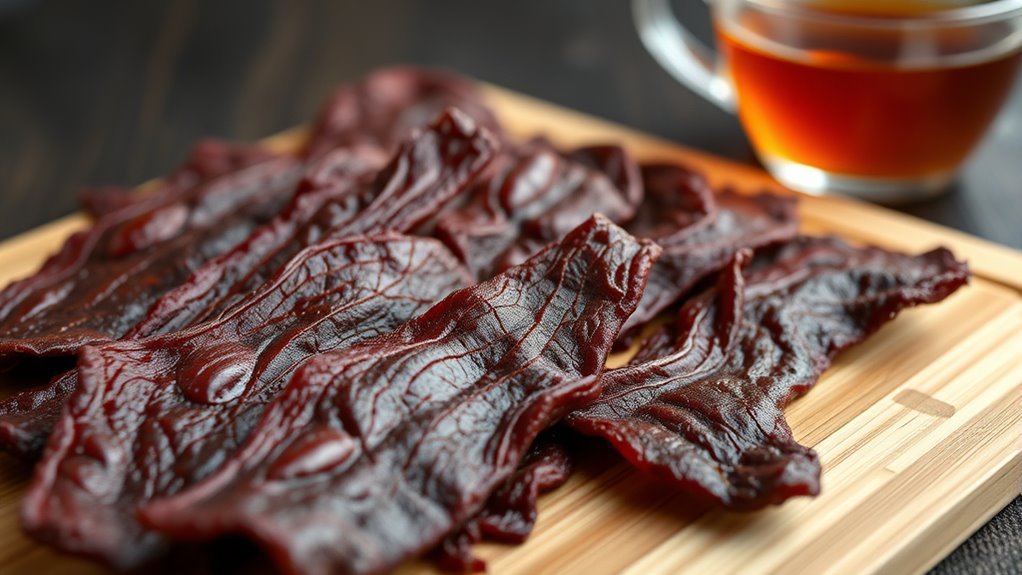
Feeling the texture gives you a good sense of doneness, but your eyes can confirm it too. Properly dried beef jerky has a darker, uniform color without any raw-looking red or pink spots. It should look dry and slightly glossy, not wet or sticky.
Check for any signs of moisture or uneven drying, which mean it needs more time. The edges might curl slightly, indicating moisture has evaporated well. Avoid jerky with visible fat spots that remain white or soft, as these can spoil.
Also, the surface should show fine grain lines, a sign of well-cooked muscle fibers. By focusing on these visual cues, you can confidently tell when your jerky is properly dried and ready to enjoy.
The Bend Test: How to Check Flexibility
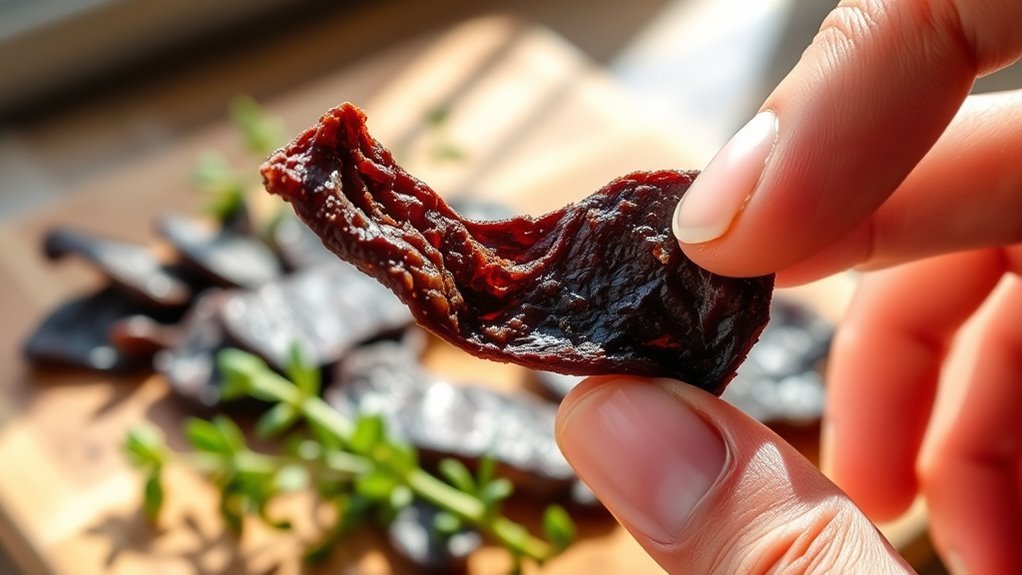
When you perform the bend test, you’ll quickly gauge your beef jerky’s flexibility, which reveals its moisture level and doneness. Simply take a strip and bend it gently.
Properly dried jerky should bend and crack slightly but not break immediately. If it snaps in half, it’s too dry and overdone. If it bends easily without cracking, it may still be too moist and need more drying time.
This test helps guarantee your jerky is chewy and flavorful without being brittle or soggy. Remember to test multiple pieces since thickness can vary.
The bend test is a quick, tactile way to confirm your jerky has the right texture before storing or enjoying it.
Using a Food Thermometer for Jerky
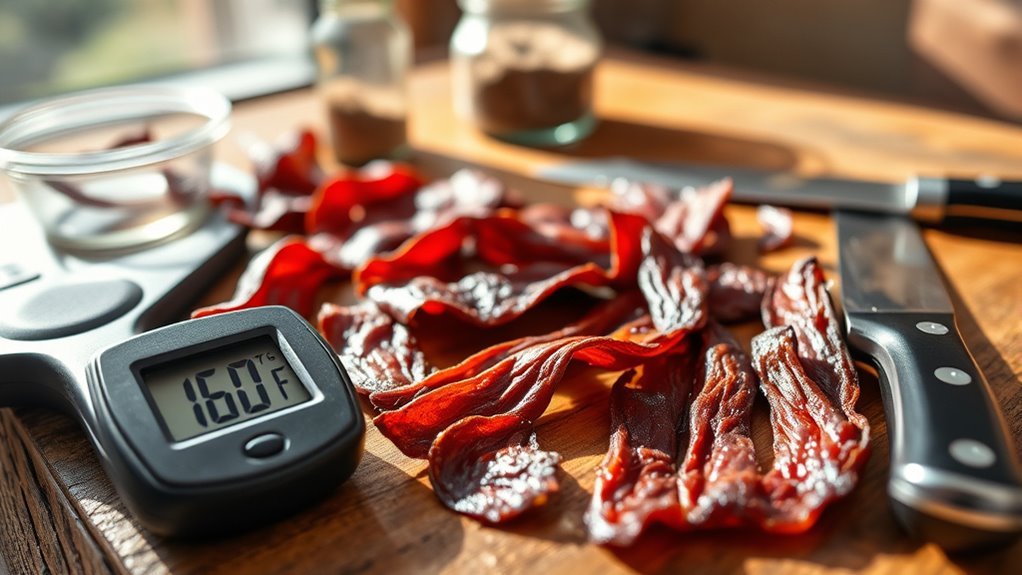
Since guaranteeing your beef jerky reaches a safe internal temperature is essential, using a food thermometer takes the guesswork out of the drying process. Insert the probe into the thickest part of the jerky strip to get an accurate reading. The USDA recommends an internal temperature of 160°F (71°C) for beef jerky to ensure harmful bacteria are eliminated.
| Feeling | Temperature | Result |
|---|---|---|
| Confident | 160°F+ | Safe & ready to eat |
| Anxious | Below 160°F | Needs more drying |
| Relieved | Steady 160°F | Perfectly done jerky |
Using a food thermometer guarantees safety and peace of mind, letting you enjoy your jerky without worry.
Timing Guidelines for Different Thicknesses
Although drying times can vary, knowing how thick your beef jerky strips are will help you determine the ideal drying duration. Thicker strips take longer to dry thoroughly, while thinner ones require less time to reach that perfect chewy texture.
Here’s a quick guide to timing based on thickness:
- 1/8 inch thick: Dry for about 2 to 3 hours.
- 1/4 inch thick: Expect 4 to 6 hours of drying time.
- 3/8 inch thick: Allow 6 to 8 hours to ensure even drying.
- 1/2 inch thick or more: Plan for 8 to 10 hours, checking frequently.
Adjust times based on your drying method, but this guide keeps you on track for consistently good jerky.
Differences Between Oven, Dehydrator, and Smoker Jerky
Choosing between an oven, dehydrator, or smoker affects how your beef jerky turns out, as each method uses different heat sources and airflow to dry the meat. You’ll notice texture, flavor, and drying time vary depending on your choice.
Here’s a quick comparison:
| Method | Key Characteristics |
|---|---|
| Oven | Uses dry heat, consistent temperature, faster drying |
| Dehydrator | Circulates warm air evenly, gentle drying, energy efficient |
| Smoker | Adds smoky flavor, lower heat, longer drying time |
With an oven, you get control and speed. A dehydrator ensures even drying without cooking, preserving texture. The smoker imparts a rich smoky taste but needs patience.
Pick the method that suits your flavor preference and time availability for the best jerky results.
How Moisture Content Affects Jerky Safety
When you reduce the moisture content in beef jerky, you lower the risk of bacterial growth that can cause spoilage or foodborne illness. Removing enough water creates an environment where harmful microbes can’t thrive, making your jerky safer to eat and store.
Lowering moisture in beef jerky prevents bacterial growth, ensuring safer, longer-lasting snacks.
To guarantee safety, focus on these key points:
- Aim for a moisture content below 20% to inhibit bacteria.
- Use a reliable method like a food dehydrator with temperature control.
- Check jerky firmness and flexibility; it should bend without breaking.
- Store jerky in airtight containers to prevent moisture reabsorption.
Signs of Over-Dried or Burnt Jerky
If you dry your beef jerky too long or at too high a temperature, it can become over-dried or burnt, affecting both texture and flavor.
Over-dried jerky feels extremely brittle and snaps easily instead of bending slightly. It loses its chewiness and can crumble in your hands.
Burnt jerky often has darkened or blackened edges and an acrid, bitter smell that overpowers the natural meat aroma. The flavor turns unpleasantly charred rather than smoky or savory.
These signs indicate that the jerky has gone beyond the ideal drying point.
To avoid this, monitor your drying time and temperature closely. Pull your jerky off the heat as soon as it’s dry but still pliable, ensuring a balanced texture and taste you’ll enjoy.
Storing Jerky After Drying to Maintain Quality
Although drying your beef jerky properly is essential, how you store it after drying plays an equally important role in maintaining its flavor and texture. To keep your jerky fresh and delicious, follow these storage tips:
- Cool Completely: Let the jerky cool to room temperature before storing to prevent moisture buildup.
- Use Airtight Containers: Store jerky in airtight bags or containers to protect it from air and humidity.
- Refrigerate or Freeze: For longer shelf life, refrigerate or freeze your jerky; this slows down spoilage.
- Avoid Direct Sunlight: Keep jerky in a cool, dark place to preserve its flavor and prevent deterioration.
Troubleshooting Common Jerky Drying Issues
Since drying beef jerky can be tricky, you might encounter issues like uneven drying, toughness, or spoilage. To fix uneven drying, make sure you slice the meat uniformly and arrange pieces with space between them for proper air circulation.
If your jerky turns out too tough, reduce drying time or slice the meat thinner next time. Overdrying removes too much moisture, making it brittle.
On the other hand, if jerky feels too moist or sticky, it’s prone to spoilage. Dry it longer at a lower temperature. Always use a reliable thermometer to keep your drying environment consistent.
Frequently Asked Questions
Can You Marinate Beef Jerky Before Drying?
Yes, you can marinate beef jerky before drying. Marinating adds flavor and tenderizes the meat. Just make sure to soak it long enough, usually 4-24 hours, then dry it properly for the best results.
What Cuts of Beef Are Best for Making Jerky?
You might think any beef works, but lean cuts like top round, sirloin, or eye of round are best for jerky. They dry evenly without excess fat, giving you that perfect chewy texture and rich flavor you want.
How Long Can Homemade Beef Jerky Be Safely Stored?
You can safely store homemade beef jerky for about 1 to 2 months at room temperature in an airtight container. For longer storage, keep it in the fridge or freezer, extending freshness up to 6 months.
Is It Necessary to Use Curing Salts in Jerky?
You don’t have to use curing salts, but they help prevent bacteria and extend shelf life. Without them, your jerky might spoil faster, so if you want safety and longevity, it’s wise to include them.
Can Beef Jerky Be Made Without a Dehydrator or Oven?
Yes, you can make beef jerky without a dehydrator or oven by using a smoker, grill, or even air-drying in a warm, well-ventilated area. Just guarantee the meat dries evenly and reaches a safe texture.
Conclusion
Now that you know how to tell when beef jerky is done, you can enjoy a safe, tasty snack every time. Did you know that properly dried jerky can last up to two months when stored correctly? That’s plenty of time to savor your homemade creation!
Just remember the bend test, check for a uniform dark color, and verify it hits 160°F. Follow these tips, and you’ll always end up with perfect jerky.
By mastering these signs, you ensure your beef jerky is safe, delicious, and has the ideal texture. Keep these beef jerky tips in mind for consistently great results every time you make your own jerky.