How Do You Cook Beef Tenderloin on the Grill in 7 Easy Steps?
Choose a fresh, well-marbled beef tenderloin for the best grilling results. Start by trimming, tying, and seasoning it generously to enhance flavor.
Preheat your grill for indirect heat at 375°F–400°F. Sear the beef on high heat for a few minutes per side to lock in the juices.
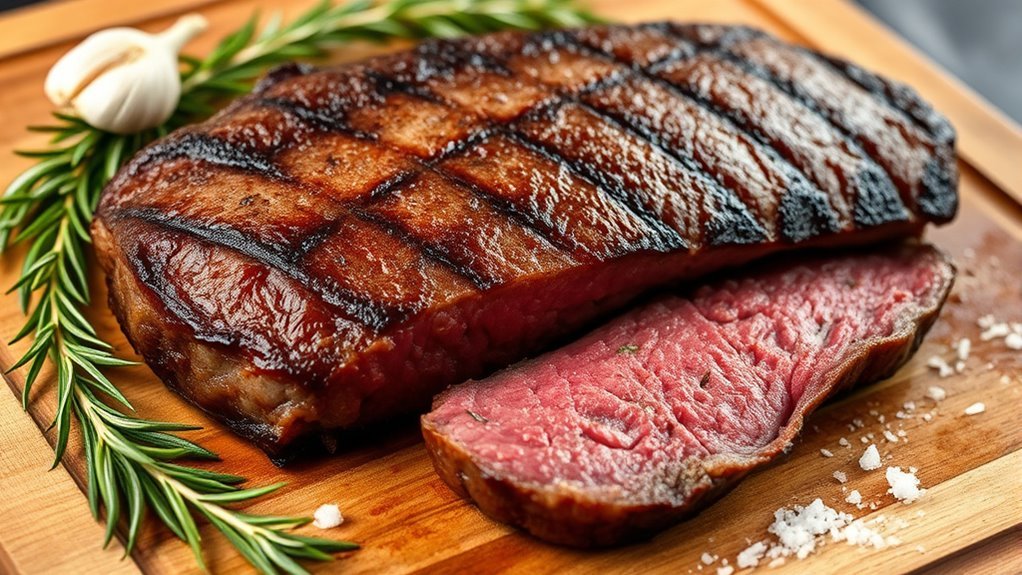
Move it to the cooler side for indirect grilling, carefully monitoring the internal temperature. Once done, let the tenderloin rest before slicing against the grain.
Want to master every step for a perfectly cooked tenderloin? You’re on the right track.
Choose the Right Beef Tenderloin
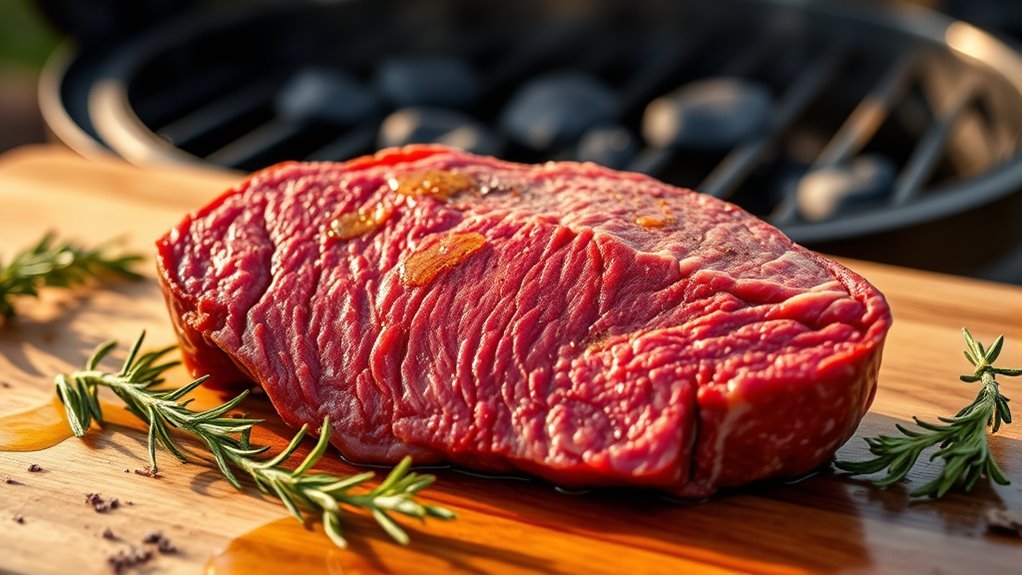
Before you fire up the grill, you need to pick the right beef tenderloin. Look for a tenderloin that’s fresh and bright red with minimal discoloration. Choose one that’s firm to the touch and has a fine grain, indicating quality.
Select a fresh, bright red tenderloin that’s firm and finely grained for the best grilling results.
You’ll want a whole tenderloin if you plan to cook it all at once, usually weighing between 4 to 6 pounds. If you prefer smaller portions, ask your butcher to cut it into smaller sections.
Check the fat content—some marbling adds flavor, but avoid excessive fat for a leaner cut.
Finally, consider USDA grades: Prime offers the best marbling, Choice is a great mid-range option, and Select is leaner but less tender. Picking the right tenderloin sets you up for grilling success.
Trim, Tie, and Season the Tenderloin
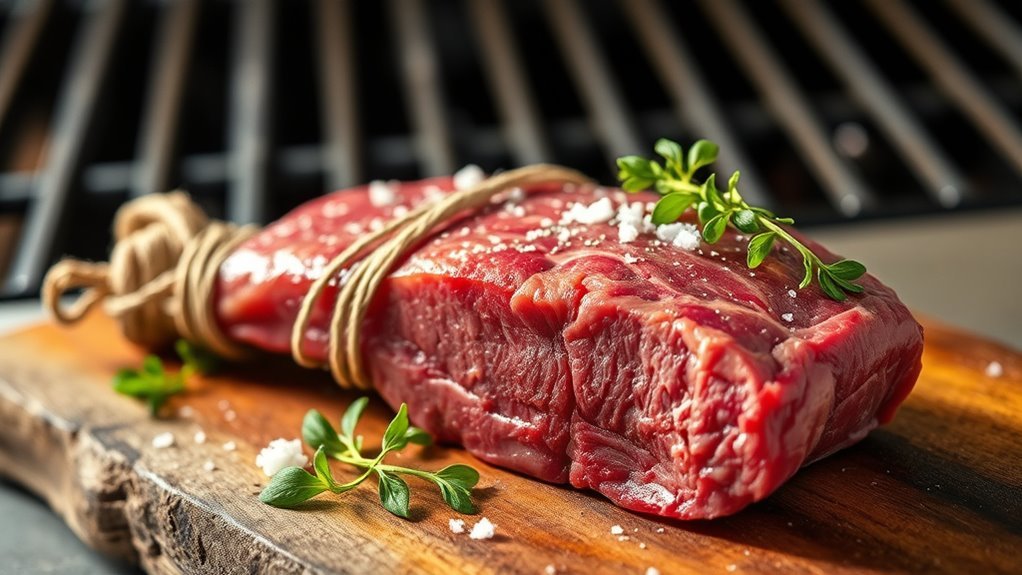
Once you’ve selected the perfect beef tenderloin, it’s time to prepare it for the grill. Proper trimming, tying, and seasoning make all the difference in flavor and even cooking.
- Trim away excess fat and silver skin using a sharp knife to prevent chewy bits.
- Tie the tenderloin with kitchen twine at 1- to 2-inch intervals to guarantee uniform thickness and even cooking.
- Season generously with kosher salt and freshly ground black pepper, covering all sides.
- Optionally, add garlic powder, fresh herbs like rosemary or thyme, or a light rub to enhance flavor.
Preheat Your Grill for Indirect Heat
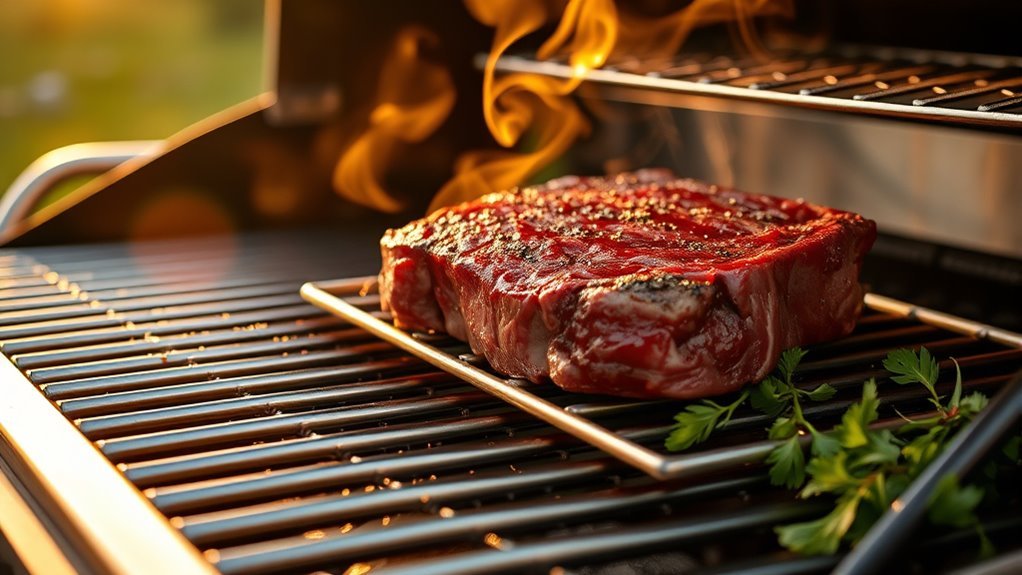
Although direct heat works well for searing, you’ll want to preheat your grill for indirect heat to cook the beef tenderloin evenly without burning the exterior.
Start by cleaning the grill grates, then light one side of your grill while leaving the other side off or on low. Close the lid and let the grill heat up to around 375°F to 400°F.
This setup creates a cooler zone where you’ll place the tenderloin, allowing it to cook gently without flare-ups.
Make certain your grill’s vents are open to maintain airflow and steady temperature.
Preheating properly guarantees consistent heat distribution, which is key to achieving a tender, juicy result.
Now, your grill is ready for the next step in cooking the beef tenderloin perfectly.
Sear the Beef Tenderloin to Lock in Juices
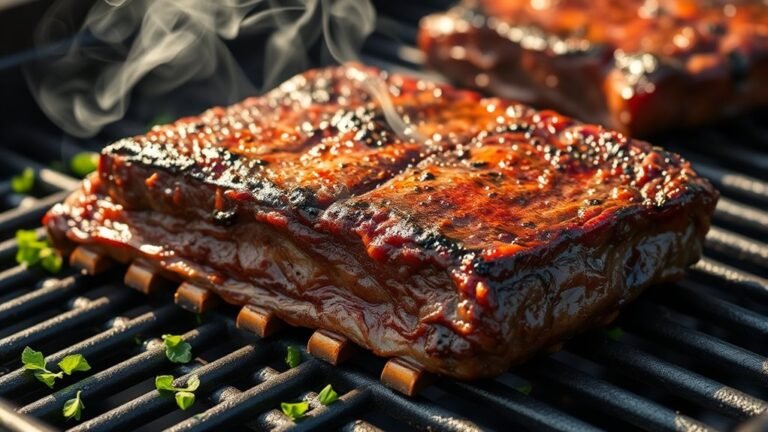
You’ll want to sear your beef tenderloin over high heat to lock in those flavorful juices. Make sure your grill is hot enough before placing the meat on it to get that perfect crust.
Timing is key—sear each side just long enough to create a rich, caramelized exterior without overcooking the inside.
Importance Of High Heat
When you grill beef tenderloin, applying high heat at the start is vital to searing the meat and locking in its natural juices. High heat creates a flavorful crust quickly, preventing moisture from escaping and ensuring a tender, juicy interior. It also enhances the meat’s texture and appearance, giving it an appetizing brown color.
To make the most of high heat, follow these steps:
- Preheat your grill to a high temperature before placing the tenderloin on it.
- Sear each side of the beef for a short time to form a crust.
- Avoid moving the meat too much to ensure even searing.
- Use high heat only initially, then lower the temperature for thorough cooking.
This technique guarantees a juicy, flavorful beef tenderloin.
Timing For Perfect Sear
Since timing plays a crucial role in grilling, you need to sear the beef tenderloin just long enough to lock in its juices without overcooking the exterior. Aim to sear each side for about 2 to 3 minutes over high heat. This quick, intense heat creates a flavorful crust while keeping the inside tender and juicy.
Watch the meat closely—if you leave it too long, the tenderloin can dry out or become tough. After searing, move the beef to a cooler part of the grill to finish cooking gently.
Using a meat thermometer helps you nail the perfect doneness.
Grill the Beef Tenderloin Indirectly
Although direct heat cooks quickly, grilling beef tenderloin indirectly helps guarantee even cooking without burning the exterior. After searing, move the tenderloin to the cooler side of the grill. Keep the grill lid closed to maintain a steady temperature around 300°F (150°C).
This method cooks the meat gently, allowing the heat to penetrate evenly.
Follow these steps to grill indirectly:
- Set up a two-zone fire by placing coals or burners on one side only.
- Position the tenderloin on the opposite side, away from direct flames.
- Close the lid and monitor the internal grill temperature.
- Rotate the meat occasionally for uniform heat exposure.
This approach prevents flare-ups and helps you achieve a perfectly cooked beef tenderloin.
Check Doneness and Rest the Meat
After grilling, you’ll want to check the beef tenderloin’s internal temperature to guarantee it’s cooked to your preferred doneness. Use a meat thermometer inserted into the thickest part without touching bone or fat.
Once it reaches the ideal temperature, remove it from the grill. Letting the meat rest for about 10-15 minutes allows juices to redistribute, ensuring a tender, juicy bite.
| Doneness Level | Internal Temperature (°F) | Description |
|---|---|---|
| Rare | 120-125 | Cool red center |
| Medium Rare | 130-135 | Warm red center |
| Medium | 140-145 | Pink center |
| Medium Well | 150-155 | Slightly pink center |
| Well Done | 160+ | Fully cooked through |
Resting is vital to lock in flavor and moisture.
Slice and Serve the Tenderloin
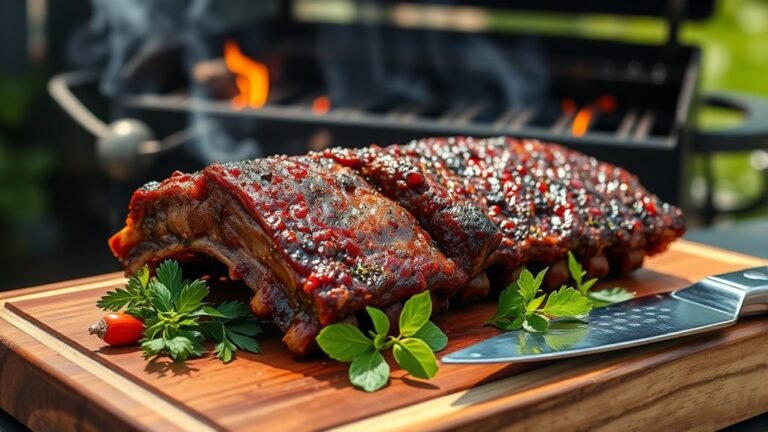
You’ll want to grab a sharp slicing knife to cut through the tenderloin cleanly.
Aim for slices about half an inch thick to keep each bite juicy and tender.
Finally, arrange the slices neatly on a platter to make your presentation look as good as the flavor.
Choosing The Right Knife
Selecting the right knife makes all the difference when slicing and serving beef tenderloin. Using a sharp, well-suited knife ensures clean cuts and preserves the tender texture of your meat.
Here’s what to take into account when choosing your knife:
- Blade Length – Aim for an 8 to 10-inch blade to slice smoothly without sawing.
- Sharpness – A razor-sharp edge prevents tearing and keeps slices neat.
- Blade Flexibility – A slightly flexible blade helps follow the meat’s contours.
- Handle Comfort – Choose a knife with a comfortable, non-slip grip for precise control.
Ideal Slice Thickness
When serving beef tenderloin, slicing it to the right thickness makes all the difference in taste and presentation. Aim for slices about ¾ inch thick to balance tenderness with a satisfying bite. Thinner slices can dry out quickly and lose juiciness, while thicker cuts may be harder to chew and overwhelm the palate.
Use a sharp knife to create clean cuts that hold the meat’s shape without shredding. Cutting against the grain ensures each slice stays tender and easy to eat. Remember to slice the tenderloin just before serving to preserve its warmth and flavor.
Presentation Tips For Serving
Slicing your beef tenderloin just right sets the stage for an impressive presentation that enhances the dining experience. After resting your meat, use a sharp knife to cut even slices about 1/2 inch thick. Arrange the pieces thoughtfully on a warm platter to keep them juicy.
Adding a garnish can elevate the look and appeal of your dish.
Here are four tips to serve your tenderloin like a pro:
- Slice against the grain for maximum tenderness.
- Fan the slices slightly overlapping for visual appeal.
- Use fresh herbs or microgreens as a garnish.
- Drizzle a bit of sauce or jus over or beside the slices for added flavor and moisture.
These steps make your grilled beef tenderloin both beautiful and inviting.
Frequently Asked Questions
What Cuts of Beef Are Best for Grilling Besides Tenderloin?
You’ll love grilling ribeye, strip steak, flank, and skirt steaks. These cuts have great marbling and flavor, so they stay juicy and tender over high heat.
Just season well and grill to your liking!
How Do You Store Leftover Cooked Beef Tenderloin?
You should let the cooked beef tenderloin cool to room temperature, then wrap it tightly in foil or plastic wrap. Store it in an airtight container in the fridge, and use it within 3 to 4 days for best flavor.
Can You Marinate Beef Tenderloin Before Grilling?
Yes, you can marinate beef tenderloin before grilling. Just keep it in the marinade for 1 to 4 hours to enhance flavor without overpowering the meat.
Avoid acidic marinades longer than that to prevent mushiness.
What Side Dishes Pair Well With Grilled Beef Tenderloin?
You know what they say, “variety is the spice of life.” You’ll love pairing grilled beef tenderloin with roasted vegetables, creamy mashed potatoes, or a fresh arugula salad to balance those rich, smoky flavors perfectly every time.
How Long Can Cooked Beef Tenderloin Be Kept in the Refrigerator?
You can keep cooked beef tenderloin in the refrigerator for 3 to 4 days.
Make sure to store it in an airtight container or tightly wrapped to maintain freshness and prevent it from absorbing other odors.
Conclusion
Grilling beef tenderloin is easier than you think! By following these 7 simple steps, you’ll enjoy a tender, juicy steak every time.
Did you know that beef tenderloin is the most tender cut, making up only about 2% of the cow’s weight? That’s why it’s so prized and worth the effort.
So fire up your grill, trust the process, and get ready to impress with a perfectly cooked tenderloin! Mastering how to cook beef tenderloin on the grill will ensure delicious results that highlight this exquisite cut’s tenderness and flavor.