How Do You Know If Beef Is Spoiled?
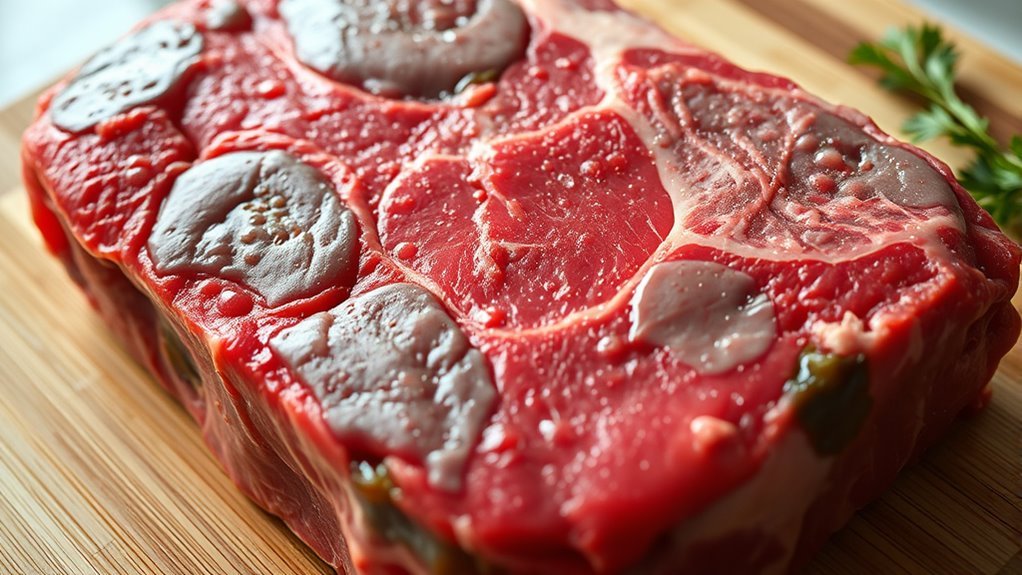
You can tell if beef is spoiled by checking its color, smell, and texture. These key indicators help you determine if the beef is safe to eat or not. If the beef looks dull, brown, greenish, or has dark spots, it’s likely bad.
A sour, ammonia, or rotten smell is a strong warning. Also, if the meat feels slimy, sticky, or mushy instead of firm, it’s unsafe. Don’t rely just on expiration dates—trust your senses to keep your meals safe and tasty.
Keep going if you want to spot spoilage with confidence.
Why It’s Important to Recognize Spoiled Beef
Because spoiled beef can cause serious health issues, recognizing it quickly is essential. When you eat bad beef, you risk food poisoning, which can lead to nausea, vomiting, diarrhea, and even more severe complications. You want to avoid those unpleasant symptoms and protect your health.
Additionally, spoiled beef loses its nutritional value and won’t taste good, so it’s simply not worth the risk. By spotting spoiled beef early, you prevent wasting money on food that’s no longer safe to eat.
Plus, you avoid contaminating other foods in your kitchen.
Taking a moment to check your beef before cooking helps guarantee your meals are both safe and tasty, keeping you and your family healthy and satisfied.
Color Changes That Show Beef Has Spoiled
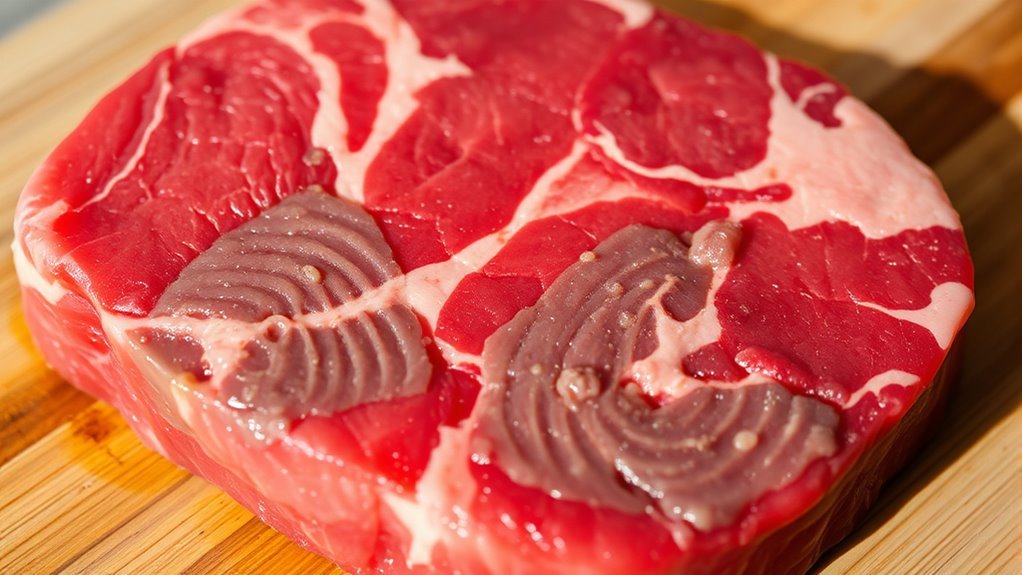
When you inspect beef, color changes often provide the first clear sign that it’s spoiled. Fresh beef usually has a bright, cherry-red color, thanks to oxygen interacting with myoglobin in the meat. If you notice the beef turning brown or gray, it doesn’t always mean it’s bad—it could just be oxidation.
However, if the color shifts to greenish, iridescent, or has dark spots, these are strong indicators that bacteria or mold have started to grow. Also, beef that appears dull or has an unusual, off-color tint suggests spoilage.
Always trust your eyes first; if the beef’s color looks off and inconsistent, it’s safer not to use it, even if it smells normal at this point.
Unusual Smells That Signal Spoiled Beef
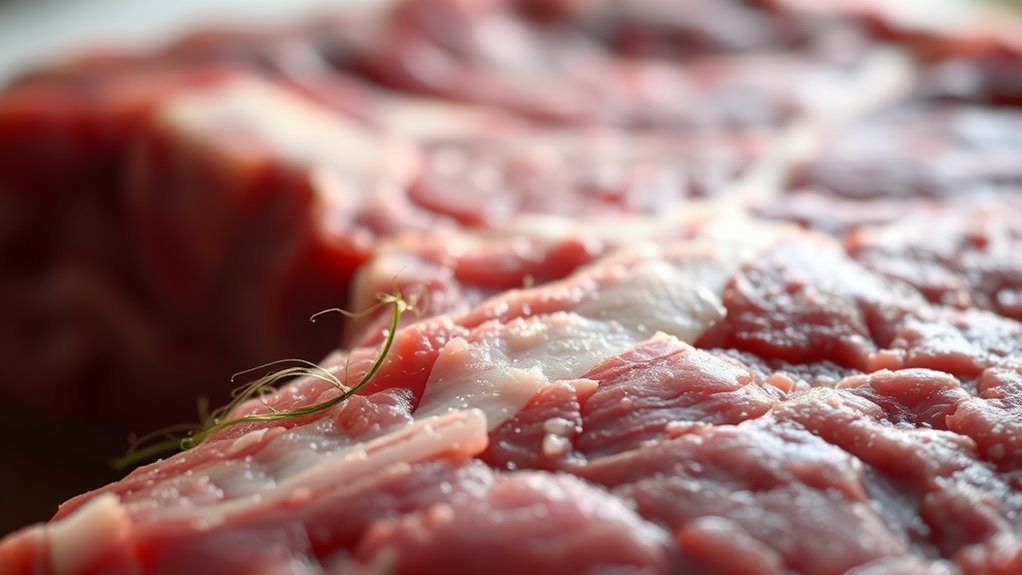
If you notice an unusual smell coming from your beef, it’s a strong signal that the meat has spoiled. Fresh beef usually has a mild, slightly metallic scent.
An unusual smell from beef is a clear sign it has spoiled.
When it goes bad, you might detect sour, ammonia-like, or even rotten odors.
These smells come from bacteria breaking down the meat, producing compounds that stink. Don’t ignore a pungent or off-putting smell—it’s a clear warning to avoid using the beef.
Even if the color looks okay, an unpleasant odor means the beef isn’t safe to eat.
Always trust your nose first when checking beef freshness. If the smell strikes you as strange or foul, it’s best to discard the meat to prevent foodborne illness.
Your senses are your best defense against spoiled beef.
How Sliminess and Texture Reveal Spoiled Beef
Though you might rely on smell to judge beef freshness, paying attention to sliminess and texture can reveal spoilage just as clearly. When you handle beef, trust these signs:
- Slimy Surface: If the beef feels sticky or slippery instead of firm and dry, it’s likely starting to spoil.
- Unusual Texture: Fresh beef should be slightly springy. If it feels mushy or overly soft, that’s a warning.
- Dry or Crusty Areas: Patches that are dry or crusty indicate the meat has been exposed to air too long and is deteriorating.
When to Trust Your Senses Over Expiration Dates
Even if the expiration date says your beef is still good, your senses often provide a more reliable gauge. Dates are estimates, but your nose, eyes, and touch give immediate clues.
If the beef smells sour or off, don’t eat it, regardless of the date.
Discoloration or a slimy texture means it’s time to toss it. Sometimes packaging delays or storage conditions affect freshness more than the printed date.
Trust what you observe over a label; your senses react to spoilage in real-time.
When in doubt, lean on smell, texture, and appearance—they’re your best indicators of safety. Expiration dates guide you, but your senses protect you.
Always choose caution to avoid foodborne illness.
Frequently Asked Questions
How Long Can Cooked Beef Be Safely Stored in the Refrigerator?
You can safely store cooked beef in the refrigerator for 3 to 4 days.
Make sure to keep it in an airtight container and reheat it properly to avoid any foodborne illness or spoilage.
Can Freezing Beef Kill Bacteria That Cause Spoilage?
Imagine freezing beef after a barbecue; it won’t kill bacteria but just pause their growth.
You’ll need to cook it properly later because freezing only preserves, not eliminates, spoilage-causing bacteria.
What Are the Health Risks of Eating Spoiled Beef?
Eating spoiled beef can give you food poisoning, causing nausea, vomiting, diarrhea, and stomach cramps. You might also risk serious infections or even kidney failure, so always avoid it and stay safe by checking freshness carefully.
How Should Beef Be Stored to Extend Its Freshness?
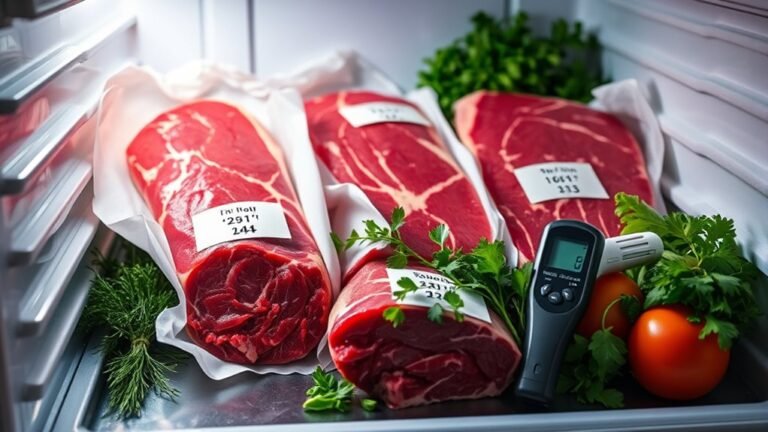
You should store beef in the coldest part of your fridge, wrapped tightly in plastic or foil.
For longer storage, freeze it in airtight bags, and always keep it at or below 40°F to stay fresh.
Are There Any Visual Differences Between Spoiled and Aged Beef?
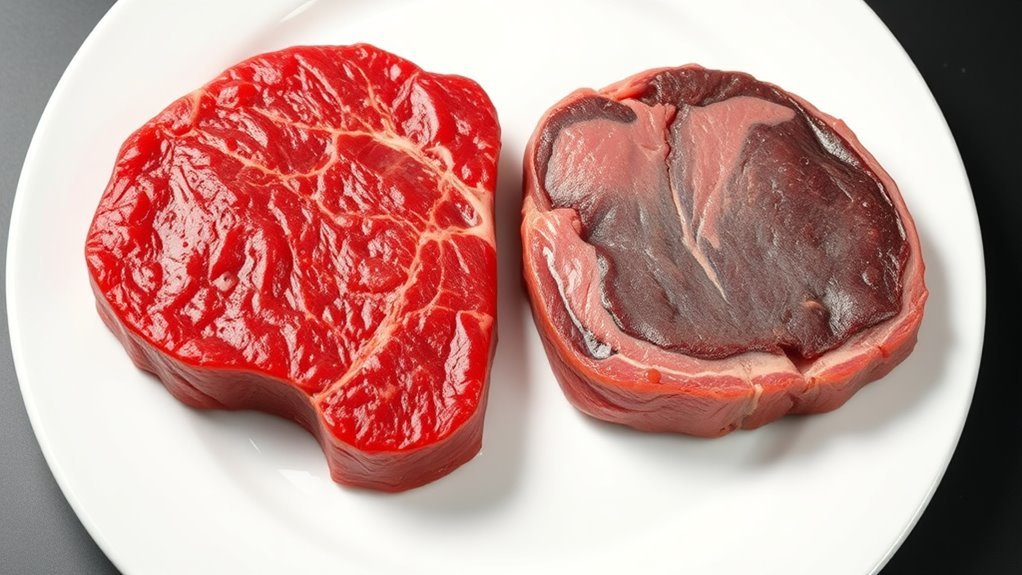
Yes, you’ll notice spoiled beef looks dull, grayish, or greenish, while aged beef maintains a deep red or brown color.
Spoiled beef also has a slimy texture and mold spots, unlike the firm, dry surface of aged beef.
Conclusion
So, trust me, if your beef looks like it’s auditioning for a horror movie, smells like a chemistry experiment gone wrong, or feels slimier than a soap opera plot twist, it’s time to toss it. Don’t just blindly follow expiration dates—they’re not psychic. Your nose and eyes are way better at this job.
After all, you want dinner, not a science project in bacterial growth, right? Stay sharp, and keep your steak—and your stomach—safe. Knowing how to tell if beef is spoiled is key to avoiding foodborne illness and enjoying every meal worry-free.