How Long Does Beef Broth Last in the Refrigerator?
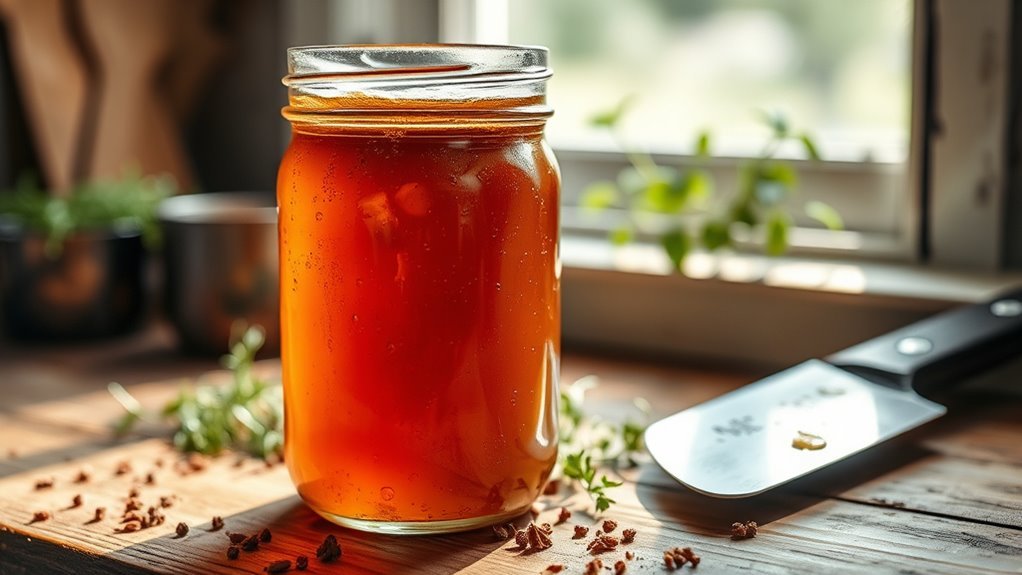
You can keep beef broth in the refrigerator for about 3 to 4 days when you store it in airtight containers and refrigerate it promptly. Proper storage and timely refrigeration are key to maintaining the quality and safety of your beef broth. Make sure to cool it quickly and avoid storing it on the fridge door to maintain a steady temperature.
Use small portions to prevent repeated exposure to air, which can speed up spoilage. Always check for sour smells or cloudiness before use to ensure it is still fresh. If you want tips on storage, spoilage signs, and extending freshness, keep exploring these helpful insights.
How Long Does Beef Broth Last in the Refrigerator?
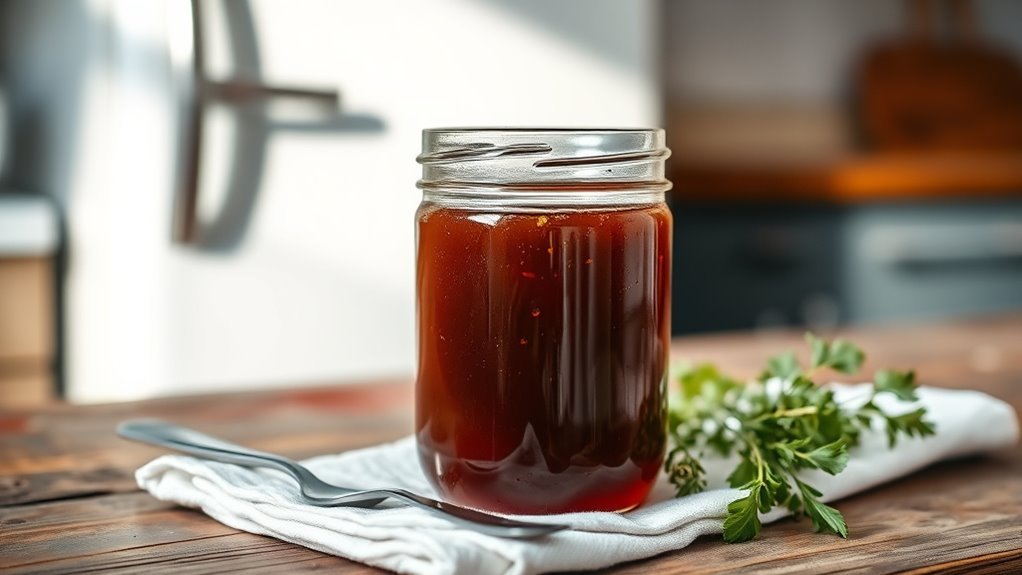
Although homemade and store-bought beef broth differ slightly, you can generally expect beef broth to last about 3 to 4 days in the refrigerator once opened. When you store it properly in an airtight container, it helps maintain freshness and prevents contamination.
If you leave the broth out at room temperature for too long before refrigerating, its shelf life shortens. Make sure you cool it quickly after cooking if it’s homemade.
You’ll know it’s gone bad when the broth develops a sour smell, changes color, or develops mold.
To avoid waste, try to use the broth within that 3 to 4-day window. If you don’t plan to use it soon, freezing is a better option to extend its usability beyond a few days.
What Affects How Long Beef Broth Lasts?
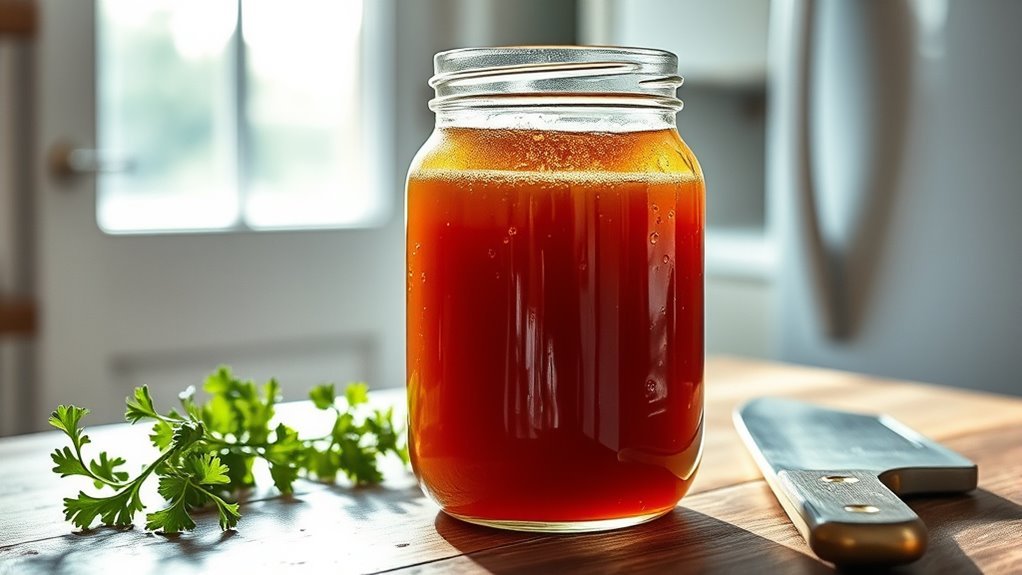
Because several factors influence how long beef broth lasts, understanding them can help you store it safely and reduce waste.
First, the broth’s initial freshness plays a big role—if it was prepared with fresh ingredients and handled properly, it’ll last longer.
How you store the broth matters too: airtight containers slow down spoilage by limiting exposure to air and bacteria.
Temperature is another key factor; keeping the broth consistently at or below 40°F (4°C) helps preserve it.
Also, the broth’s salt content can extend its shelf life since salt acts as a natural preservative.
Finally, how quickly you refrigerate the broth after cooking affects its longevity—you’ll want to cool and refrigerate it within two hours to minimize bacterial growth.
How to Tell If Beef Broth Has Gone Bad
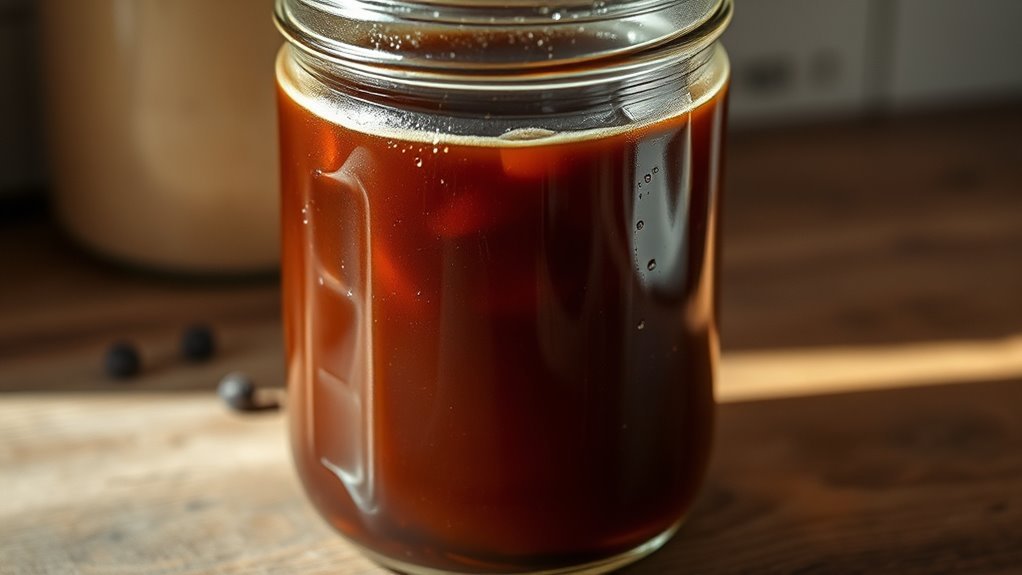
Knowing the factors that affect beef broth’s shelf life is just the first step. You need to confidently identify when it’s no longer safe to use.
Here’s how to tell if your beef broth has gone bad:
- Smell: A sour or off odor signals spoilage.
- Appearance: Cloudiness or mold growth indicates it’s unsafe.
- Texture: Slimy or thickened broth suggests bacterial growth.
- Taste: If it tastes sour or strange, discard it immediately.
- Expiration Date: Always check the date on store-bought broth; past that, it’s risky.
If you notice any of these signs, don’t risk your health—throw the broth away.
Trust your senses; they’re your best guide.
How to Store Beef Broth for Maximum Freshness
To keep your beef broth fresh, start by choosing the right container—airtight glass or BPA-free plastic works best.
Make sure your refrigerator is set to the ideal temperature, around 34-40°F (1-4°C), to slow bacterial growth.
Storing broth properly helps maintain its flavor and safety for longer.
Proper Container Selection
When you want to keep your beef broth fresh for as long as possible, choosing the right container plays a crucial role. You should select containers that prevent contamination and maintain flavor. Here’s what to take into account:
- Use airtight containers to minimize exposure to air.
- Opt for glass or BPA-free plastic for safety and easy cleaning.
- Avoid containers with cracks or stains, which can harbor bacteria.
- Choose containers with wide mouths for easy pouring and cleaning.
- Think about portion-sized containers to avoid repeatedly opening a large batch.
Ideal Refrigeration Temperature
How cold should your refrigerator be to keep beef broth fresh and safe? Ideally, set your fridge temperature to 40°F (4°C) or below. This range slows bacterial growth, preserving the broth’s quality for up to 3-4 days.
Temperatures above 40°F increase the risk of spoilage and foodborne illness. Use a fridge thermometer to monitor the temperature accurately, since built-in gauges can be unreliable.
Store your beef broth in airtight containers and place them on shelves rather than the door, where temperatures fluctuate more.
Keeping your refrigerator consistently cold guarantees your broth stays safe and flavorful longer, reducing waste and giving you peace of mind every time you reach for it.
How Does Homemade Beef Broth Compare to Store-Bought?
When you make beef broth at home, you control the ingredients, which often means better nutrition and a fresher taste.
Store-bought broth can contain preservatives and added sodium that affect both flavor and health benefits.
Let’s compare how these differences impact what you’re actually getting in each option.
Nutritional Differences
Although both homemade and store-bought beef broth serve as flavorful bases for many dishes, you’ll notice key nutritional differences between the two. When you make broth at home, you control the ingredients, which often means fewer additives and preservatives.
Store-bought versions may contain more sodium and artificial flavors to extend shelf life and enhance taste.
Here’s what to ponder nutritionally:
- Homemade broth usually has lower sodium content.
- It often contains more natural collagen and gelatin.
- Store-bought broth may include added sugars or MSG.
- Homemade versions provide more control over fat content.
- Store-bought broth can vary widely in nutrient density depending on the brand.
Knowing these facts helps you choose what fits your dietary needs best.
Flavor and Freshness
Since you control every ingredient and simmer time, homemade beef broth often delivers a richer, more complex flavor than store-bought versions. You can adjust seasoning, add fresh herbs, or increase simmering time to extract deeper flavors.
Store-bought broths, while convenient, sometimes contain preservatives or added salt that can mask natural taste.
Freshness plays a big role too—homemade broth tastes best within a few days of refrigeration, while store-bought broth may last longer but can lose its vibrant flavor once opened.
When you make broth yourself, you get that fresh, wholesome taste that’s hard to replicate with commercial products.
Ultimately, if flavor and freshness are your priorities, homemade broth is the way to go.
How to Freeze Beef Broth to Extend Shelf Life
To extend the shelf life of your beef broth, you can freeze it quickly and safely. Start by letting the broth cool completely to avoid raising your freezer’s temperature.
Pour the broth into airtight containers or freezer bags, leaving some space for expansion. Label each container with the date so you know when you froze it. Freeze the broth in portions that suit your cooking needs to minimize waste when thawing.
Keep these tips in mind:
- Use freezer-safe containers or bags
- Leave about an inch of headspace
- Remove as much air as possible
- Label with freezing date
- Freeze in small portions for easy use
Properly frozen beef broth can last up to 6 months, maintaining its flavor and safety.
How to Reheat Leftover Beef Broth Safely
When you’re ready to use your leftover beef broth, reheating it properly guarantees both safety and flavor. Start by transferring the broth to a pot or microwave-safe container.
Properly reheating your leftover beef broth ensures it stays safe and flavorful for your next meal.
Heat it over medium heat on the stove, stirring occasionally, until it reaches a rolling boil.
If you use a microwave, heat in short intervals, stirring in between to ensure even heating. Always bring the broth to at least 165°F (74°C) to kill any potential bacteria.
Avoid reheating more than once, as repeated heating increases spoilage risk.
Once heated thoroughly, use the broth immediately or keep it hot until served. Never leave reheated broth out at room temperature for extended periods to maintain safety and taste.
Tips to Reduce Waste and Maximize Beef Broth
Although beef broth can spoil if mishandled, you can easily reduce waste and get the most out of every batch by storing and using it wisely. Start by dividing broth into smaller, airtight containers to avoid repeatedly exposing the entire batch to air. Label each container with the date so you know when to use it up.
Freeze portions you won’t use soon to extend shelf life. Use leftover broth creatively in soups, stews, sauces, or even to cook grains.
Finally, keep your refrigerator at the right temperature (below 40°F/4°C) to slow spoilage.
- Store in small airtight containers
- Label with preparation date
- Freeze unused portions promptly
- Incorporate broth into various recipes
- Maintain proper fridge temperature
Frequently Asked Questions
Can Beef Broth Be Used as a Marinade?
Yes, you can use beef broth as a marinade. It adds rich flavor and moisture to your meat.
Just combine it with herbs, spices, and acid like vinegar or lemon juice for the best results.
Is Beef Broth Suitable for Low-Sodium Diets?
Beef broth can be suitable for low-sodium diets, but you’ll want to choose low-sodium or homemade versions.
Regular broth often packs a salty punch, so swapping it out helps you control your sodium intake easily.
What Are Common Substitutes for Beef Broth?
You can use vegetable broth, chicken broth, or mushroom broth as common substitutes for beef broth.
Soy sauce or Worcestershire sauce mixed with water also work well to add rich, savory flavor in your recipes.
Can Beef Broth Be Used in Desserts?
Beef broth in desserts is like a secret spice—uncommon but intriguing. You can use it to add depth to savory-sweet dishes like chocolate chili or rich caramel, but don’t expect it to shine in typical sweets.
How Does Beef Broth Affect Blood Pressure?
Beef broth can raise your blood pressure because it often contains a lot of sodium.
If you’re watching your salt intake, you’ll want to choose low-sodium options or limit how much broth you use in your meals.
Conclusion
You might be surprised to learn that homemade beef broth usually lasts about 4 to 5 days in the fridge, while store-bought can last up to a week unopened. Knowing this helps you plan meals better and avoid waste.
By storing broth properly and freezing leftovers, you can extend its life and save money.
So, keep these tips in mind to enjoy your broth safely and reduce unnecessary food waste in your kitchen. Proper storage and awareness of how long beef broth lasts in the refrigerator are key to maintaining its quality and safety.