Are Beef Broth and Bone Broth the Same?
Beef broth and bone broth aren’t the same, though they sound similar. Both are popular in cooking and health circles, but their ingredients and cooking methods differ significantly. Understanding these differences can help you choose the right broth for your needs.
Beef broth uses meat and veggies, simmered a few hours for a lighter, protein-rich flavor. It’s great for adding a subtle taste to soups and sauces without overpowering other ingredients.
Bone broth, on the other hand, uses bones and connective tissue, cooked for 12–24 hours to release collagen and minerals. This long cooking process makes it richer and gelatinous, offering more nutrients and a deeper flavor.
Your choice depends on the flavor and nutrients you want. Keep exploring to find which broth fits your cooking and health goals best.
What Is Beef Broth?
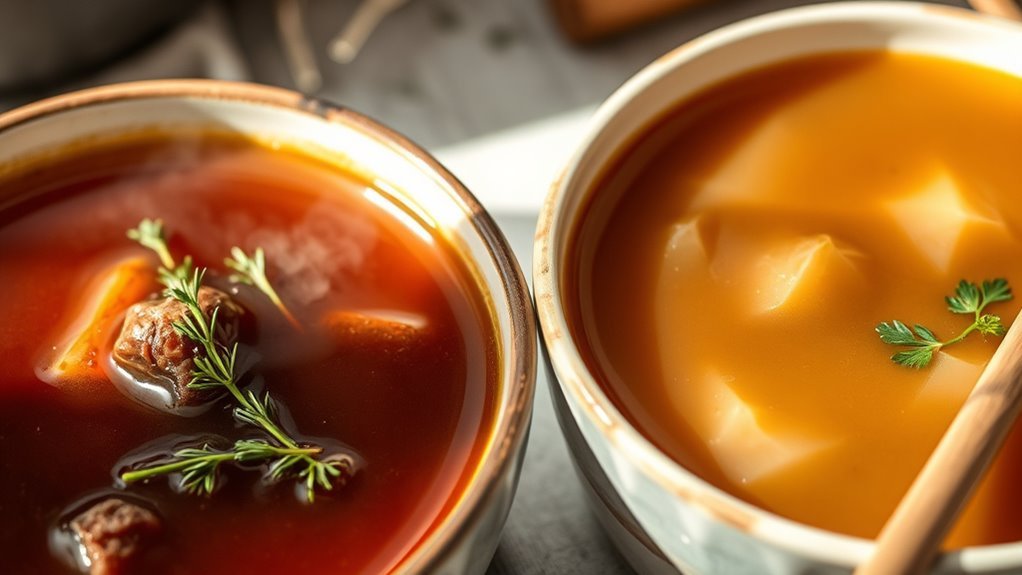
Although you might confuse it with bone broth, beef broth is a flavorful liquid made by simmering meat, vegetables, and seasonings in water.
Beef broth is a savory liquid simmered with meat, vegetables, and seasonings, distinct from bone broth.
When you make beef broth, you mainly use beef cuts with meat still attached, such as shanks or briskets. You’ll also add aromatics like onions, carrots, and celery, plus herbs and spices to enhance the taste.
The simmering process usually takes a few hours, allowing the flavors to meld and the broth to develop a rich, savory profile. Once done, you strain out the solids, leaving a clear, tasty broth.
You can use beef broth as a base for soups, stews, sauces, or to cook grains and vegetables, giving your dishes a hearty depth of flavor without overpowering them.
How Is Bone Broth Different From Beef Broth?
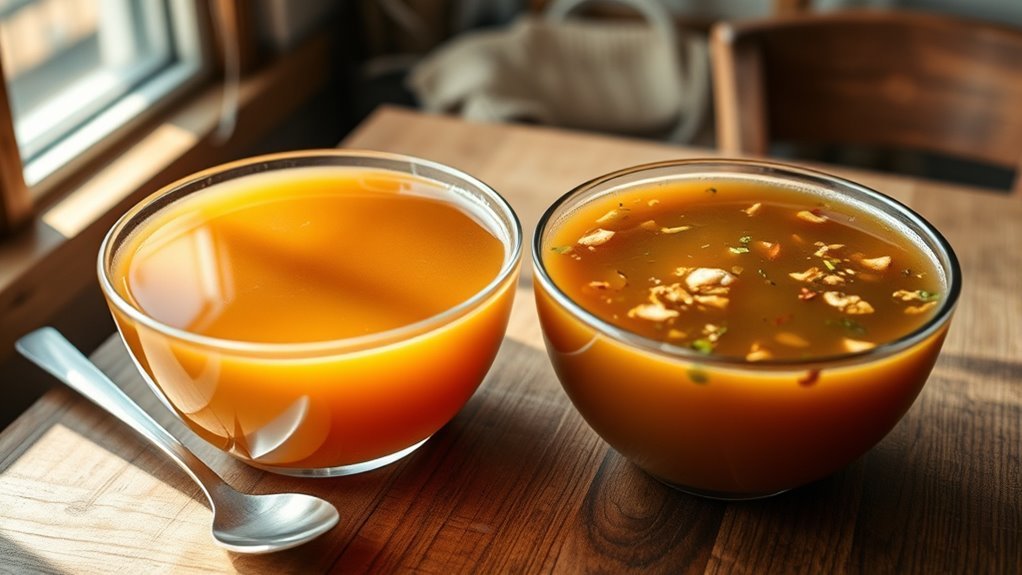
You’ll notice bone broth uses more bones and cooks much longer than beef broth, which usually focuses on meat and a shorter simmer.
This difference in ingredients and cooking time changes the nutritional profile, giving bone broth more collagen and minerals.
Let’s explore how these factors set the two broths apart.
Ingredients And Preparation
When you make bone broth, you focus on simmering bones—often with some meat, cartilage, and connective tissue—for an extended time to extract minerals and collagen. You typically use beef marrow bones, knuckles, or joints, adding vegetables like onions, carrots, and celery, along with herbs and a splash of vinegar to help break down the bones.
Beef broth, by contrast, starts with meat rather than bones and simmers for a shorter period, usually a few hours. You’ll often add similar vegetables and seasonings, but since it’s primarily meat-based, it doesn’t require the long cooking time needed to extract nutrients from bones.
Nutritional Content Differences
Since bone broth simmers for hours to extract nutrients from bones and connective tissues, it typically contains higher levels of minerals like calcium, magnesium, and phosphorus, as well as collagen and gelatin.
These components support joint health, skin elasticity, and gut function.
In contrast, beef broth, made mainly from meat and sometimes bones, offers a lighter nutritional profile with fewer minerals and less collagen.
While both broths provide protein and essential amino acids, bone broth’s richer nutrient density makes it a preferred choice if you’re aiming for added health benefits.
However, beef broth still delivers a tasty, protein-rich base for soups and stews.
Understanding these differences helps you pick the right broth to suit your nutritional needs and recipe goals.
Cooking Time Variations
How long you cook your broth makes a big difference in its flavor and nutrient content. Bone broth requires a much longer cooking time—usually 12 to 24 hours—to fully extract collagen, minerals, and gelatin from the bones.
Beef broth, on the other hand, cooks faster, typically simmering for 1 to 3 hours, focusing more on meat and vegetable flavors than deep nutrients.
Here’s why cooking time matters:
- Longer cooking breaks down bones, releasing healing compounds.
- Shorter cooking preserves fresh meat flavor but less gelatin.
- Extended simmering creates a richer, more satisfying mouthfeel.
- Overcooking can dilute flavors, so timing is key.
Choosing your cooking time shapes the broth’s purpose, taste, and health benefits.
How Cooking Times Affect Beef vs. Bone Broth
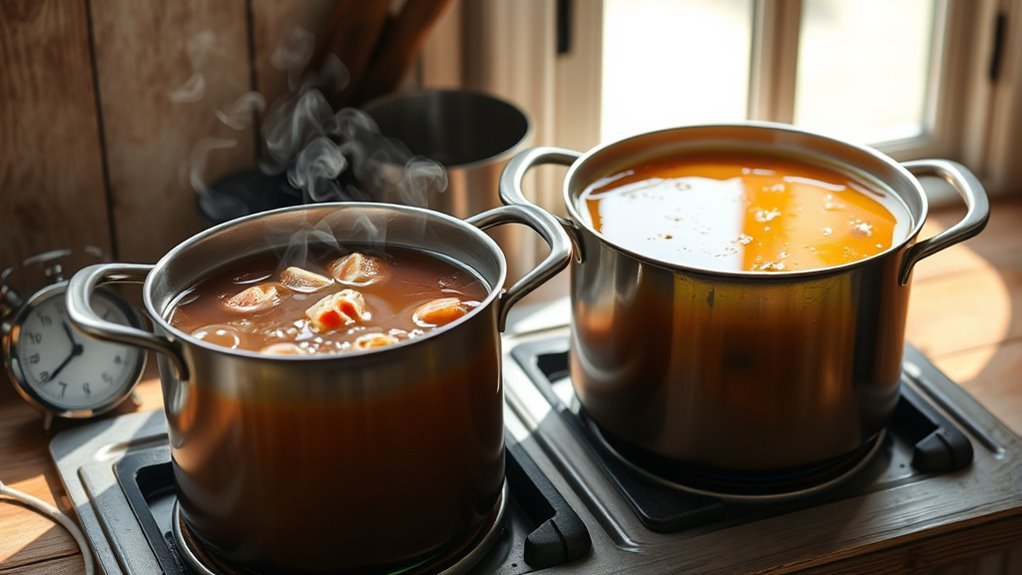
Although both beef broth and bone broth start with similar ingredients, their cooking times differ considerably, impacting flavor and nutrient extraction. When you simmer beef broth, you usually only need 1 to 2 hours because it primarily uses meat and some bones, which release their flavor quickly.
Bone broth, on the other hand, requires a much longer cooking time—often 12 to 24 hours or more. This slow simmer allows collagen, marrow, and minerals to break down fully, giving bone broth its rich texture and deeper taste.
If you shorten bone broth’s cooking time, you’ll miss out on that gelatinous quality and complexity.
What Are the Nutritional Differences Between Beef and Bone Broth?
When you compare beef broth and bone broth, you’ll notice they offer different nutritional profiles due to their ingredients and cooking methods. Beef broth mainly comes from meat and connective tissue, providing protein and a rich flavor.
Beef broth and bone broth differ nutritionally due to ingredients and cooking methods, each offering unique benefits.
Bone broth, simmered longer with bones, releases minerals and collagen, offering a distinct health boost.
Here’s what you should know:
- Beef broth delivers higher protein content, great for muscle repair.
- Bone broth is richer in collagen and gelatin, supporting joint and skin health.
- Bone broth provides more minerals like calcium, magnesium, and phosphorus.
- Beef broth tends to have fewer calories and less fat than bone broth.
Understanding these differences helps you choose the broth that best fits your nutritional goals.
Can Bone Broth Replace Beef Broth in Recipes?
Since bone broth and beef broth have different flavors and nutritional profiles, you might wonder if you can swap one for the other in your recipes. The answer is yes, but with some considerations. Bone broth has a richer, gelatinous texture and a deeper flavor, which can enhance soups or stews.
Beef broth is lighter and more neutral, perfect for delicate dishes. If you use bone broth as a substitute, expect a heartier taste and thicker consistency.
| Using Bone Broth Instead of Beef Broth | What You’ll Feel |
|---|---|
| Richer flavor | Comfort and warmth |
| Thicker texture | Satisfaction and fullness |
| More nutrients | Energy and robustness |
| Slightly stronger aroma | Nostalgia and coziness |
| Longer simmer time needed | Patience and care |
Which Broth Offers Better Health Benefits?
How do bone broth and beef broth compare when it comes to health benefits? Bone broth often edges out beef broth because it’s simmered longer, extracting more nutrients from bones and connective tissues.
If you want to boost your health, consider these points:
- Bone broth is rich in collagen, supporting your skin, joints, and gut health.
- It contains minerals like calcium and magnesium, essential for bone strength.
- Beef broth offers protein but usually lacks the same depth of nutrients bone broth provides.
- Both broths hydrate you, but bone broth’s amino acids help reduce inflammation and promote healing.
Choosing bone broth means you’re fueling your body with more than just flavor—you’re nurturing it from the inside out.
How to Choose Beef Broth or Bone Broth for Cooking
When choosing between beef broth and bone broth for cooking, consider their distinct flavor profiles—beef broth offers a lighter taste, while bone broth is richer and more robust.
You’ll also want to think about the nutritional benefits each provides, especially if you’re aiming for added collagen and minerals.
Knowing these differences helps you pick the best option for your recipe and health goals.
Flavor Profiles Comparison
What sets beef broth and bone broth apart in your recipes is their distinct flavor profiles. Beef broth delivers a lighter, cleaner taste, making it ideal when you want a subtle beef essence without overpowering other ingredients.
Bone broth, on the other hand, offers a richer, deeper flavor due to the collagen and marrow extracted during long simmering.
Consider these points when choosing:
- Beef broth adds a gentle beef flavor, perfect for soups and sauces.
- Bone broth brings a hearty, savory depth to stews and braises.
- Bone broth’s gelatinous texture enhances mouthfeel and richness.
- Beef broth’s clarity keeps dishes bright and balanced.
Knowing these differences helps you craft meals that truly satisfy your palate.
Nutritional Benefits Overview
Although both beef broth and bone broth offer nutritional value, their benefits vary depending on your cooking goals and dietary needs.
Beef broth, made mainly from meat and vegetables, provides protein and essential minerals like iron and zinc. Making it a solid choice if you want a lighter, nutrient-rich base.
Bone broth, simmered longer with bones and connective tissues, delivers collagen, gelatin, and amino acids. These support joint health, skin elasticity, and gut healing.
If you’re aiming for a broth packed with gut-friendly nutrients and want to boost collagen intake, bone broth is your go-to.
But if you prefer a broth with a cleaner, milder flavor and decent protein content for everyday cooking, beef broth works well.
Choose based on what nutrients you prioritize for your meals.
Frequently Asked Questions
Can Beef or Bone Broth Be Frozen for Later Use?
Yes, you can freeze beef or bone broth for later use. Just let it cool, pour it into airtight containers or freezer bags, and store it in the freezer.
It’ll keep well for several months without losing flavor.
What Are Common Allergens in Beef and Bone Broth?
You might encounter allergens like beef proteins, gelatin, or added ingredients like soy or gluten in beef and bone broth.
Always check labels carefully, especially if you have allergies or sensitivities to common additives or preservatives.
Are There Vegetarian Alternatives to Beef or Bone Broth?
Yes, you can use vegetable broth, mushroom broth, or seaweed broth as vegetarian alternatives to beef or bone broth. They offer rich flavors and nutrients, perfect for soups, stews, and sauces without any animal products.
How Do Beef and Bone Broth Affect Gut Health?
You’ll boost your gut health since bone broth contains up to 9 grams of collagen per cup, which supports your intestinal lining.
Beef broth also aids digestion but has less collagen and nutrients compared to bone broth.
What Is the Environmental Impact of Producing Beef vs. Bone Broth?
You’ll find beef broth has a bigger environmental footprint since it uses more meat, while bone broth repurposes bones, reducing waste. Both involve cattle farming, but bone broth’s impact is slightly lower due to resource efficiency.
Conclusion
Now that you know the difference, you can choose the right broth for your needs. Did you know bone broth can contain up to 70% more collagen than beef broth? This makes it a powerful option if you’re aiming to boost joint and skin health.
Whether you want rich flavor or extra nutrients, understanding these broths helps you cook smarter and feel better. So, next time you cook, pick the broth that suits your health and taste goals! Choosing between beef broth and bone broth can make all the difference in your recipes and wellness.